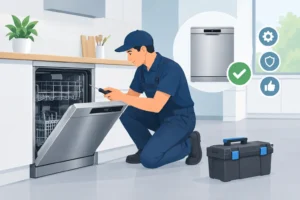
A refrigerator that stops cooling can put a week of groceries at risk. A washer that will not drain can leave a load of wet clothes sitting overnight. In those moments, appliance repair estimates should make the next step clearer, not add another layer of stress. A good estimate tells you what failed, what the repair involves, and what you can expect to pay before work begins.
For Orange County homeowners, clear pricing matters because appliance trouble rarely arrives at a convenient time. Whether the issue is a leaking dishwasher, a dryer that runs without heating, or an oven that will not reach temperature, the goal is to restore the appliance quickly while giving you an honest basis for deciding whether repair makes sense.
Why Appliance Repair Estimates Start With Diagnosis
An estimate is only as reliable as the diagnosis behind it. Many appliance symptoms can have more than one cause. For example, a refrigerator that feels warm may have a failed fan motor, a dirty condenser area, a control-board issue, a sealed-system problem, or a door that is not closing properly. Those repairs vary significantly in scope and cost.
That is why a trained technician should inspect the appliance in your home before quoting a repair. They can test components, check for error codes, inspect wiring and connections, and confirm whether the failure is isolated or part of a larger issue. This helps prevent the frustrating situation where a homeowner approves a guess, only to learn the original problem was not actually solved.
At AK Appliance Repair, the $75 service fee covers the in-home diagnostic visit and is waived when you proceed with the recommended repair. That approach gives homeowners a clear starting point: identify the problem first, then decide whether to move forward with the repair.
What a Clear Appliance Repair Estimate Includes
A useful estimate should be easy to understand without requiring you to know appliance terminology. You should not be left wondering whether a quoted price covers the part, the labor, or only the visit itself.
A clear appliance repair estimate generally addresses four things:
- The diagnosed issue: A plain-language explanation of what is not working and how it affects the appliance.
- Parts needed: The component or components required to complete the repair, including whether a genuine factory part is recommended or necessary.
- Labor and service charges: The cost of performing the repair work in your home, including the value of the diagnostic visit when applicable.
- The expected outcome: What the repair is intended to restore, along with any limitations if the appliance has additional age-related concerns.
The technician should also explain if a part needs to be ordered. Some common parts may be available quickly, while components for premium or luxury brands can require additional sourcing. A transparent estimate accounts for that reality rather than promising a same-day completion that may not be possible.
Why Repair Costs Can Vary From One Appliance to Another
Two appliances with similar symptoms may not have similar repair costs. The appliance type, brand, age, part availability, and failed component all affect the estimate.
A dishwasher that will not drain, for instance, may only need an obstruction removed from the drain path. It may also need a new drain pump, a control repair, or correction of an installation issue. The symptom is the same from the homeowner’s perspective: standing water and handwashing dishes. The repair is determined by what the technician finds.
Brand also matters. Mainstream appliances from GE, Whirlpool, LG, Samsung, and Bosch may use widely available components, although that depends on the model. Premium brands such as Miele, Sub-Zero, Thermador, Viking, Wolf, and Fisher & Paykel can require specialized knowledge and brand-specific parts. That does not automatically mean repair is not worthwhile. In many cases, preserving a high-quality appliance with the correct part is a better value than replacing it prematurely.
Age is another factor, but it should not be treated as a simple cutoff. An older appliance with a straightforward failed part can often be repaired reliably. On the other hand, an appliance with multiple recurring failures, major corrosion, or a costly sealed-system issue may deserve a conversation about replacement. An honest technician should explain both paths instead of pushing a repair that is unlikely to serve you well.
When a Repair Estimate Is Worth Approving
The best decision is not always the lowest immediate cost. It depends on the appliance’s condition, the severity of the problem, and how much disruption the breakdown is causing at home.
Repair is often a sensible choice when the appliance has been dependable, the failure is limited to a replaceable component, and the repair can restore normal operation for a reasonable investment. A dryer with a worn heating element, a washer with a failed drain pump, or an oven with a faulty igniter are common examples where a targeted repair may extend useful service.
Replacement may deserve consideration when repair costs are unusually high compared with the appliance’s value, when the unit has repeated breakdowns, or when the required part is no longer available. Refrigeration repairs can be especially case-specific. A simple ice maker, fan, or sensor repair is very different from a major compressor or sealed-system concern.
The key is having enough information to decide without pressure. Ask what caused the problem, whether the repair addresses the root issue, what part will be installed, and whether the technician sees signs of other near-term concerns. Those answers are often more useful than a price alone.
Avoiding Surprises After You Approve the Work
Most homeowners want one thing from a repair appointment: no unexpected costs after the technician arrives. Clear communication makes that possible.
Before work begins, confirm the total repair estimate and ask whether it includes parts, labor, and the service fee. If the technician discovers an additional issue during the repair, they should explain it and get your approval before proceeding with added work. This is particularly important with appliances that have hidden components or damage that cannot be fully assessed until the unit is opened.
It is also reasonable to ask about the part being used. Genuine factory parts are designed for the appliance model and can be especially important for premium refrigerators, induction cooktops, and electronically controlled washers and dryers. Less expensive alternatives can sometimes be appropriate, but the trade-off should be discussed clearly.
A professional in-home repair visit should leave you with more than a working appliance. You should understand what was repaired, what to watch for, and how to use the appliance normally once service is complete.
The Value of a Local, Straightforward Estimate
When food is warming in the refrigerator or water is spreading from the laundry room, waiting days for answers is not practical. Same-day, evening, or weekend availability can make a real difference, especially when the appliance is central to daily routines.
The right repair company does not need to make the decision complicated. It should diagnose the problem carefully, explain the repair in everyday terms, provide a clear estimate, and respect your choice. That is how a service call becomes a practical solution rather than another household headache.
If your appliance is interrupting meals, laundry, cleanup, or food storage, a professional diagnosis and straightforward estimate can give you a dependable next step before a manageable problem becomes a larger one.