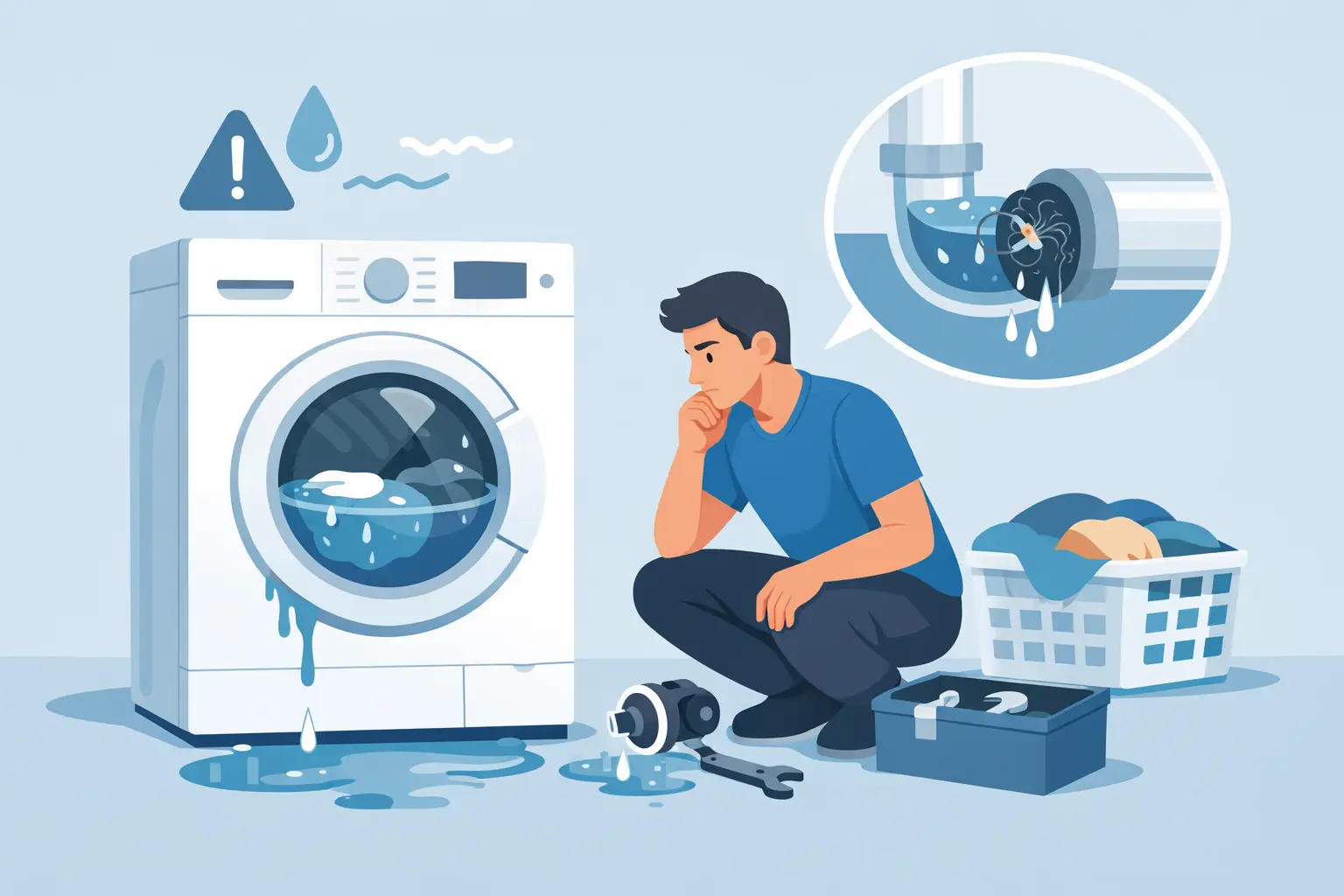
A washer that stops with a tub full of water can bring laundry day to a standstill fast. If you are wondering why washer will not drain, the problem may be as simple as a kinked hose or as involved as a failed drain pump. The key is to avoid forcing another cycle or opening the door while the drum is full, since standing water can overflow onto floors and cause additional damage.
Most draining problems have clear warning signs: clothes are soaking wet after a cycle, the machine hums but water stays in the tub, it pauses before spinning, or it displays a drain-related error code. A prompt diagnosis can protect your washer, prevent a leak, and get your household routine moving again.
Why Your Washer Will Not Drain
Your washer has to move used wash water from the tub through a drain hose and into your home’s plumbing. Several components must work together: the washer must release the water, the pump must run, the hose must remain clear, and the household drain must accept the flow. A failure at any point can leave water behind.
The most common causes are a blocked drain hose, a clogged pump filter, an item lodged in the pump, a worn or failed drain pump, a faulty lid or door lock, or a plumbing restriction. The right repair depends on the washer type, its age, and what happens during the cycle. For example, a front-load washer with a blocked filter may drain slowly, while a top-load machine with a bad lid switch may not enter the spin-and-drain portion of the program at all.
A kinked or clogged drain hose
The drain hose behind the washer is often the first place to check. A hose that has been crushed against the wall, bent sharply, or positioned incorrectly can restrict water flow. Lint, residue, and small debris can also build up inside over time.
Pull the washer away from the wall carefully and look for obvious bends or pinches. The hose should not be stretched tight, shoved too far down the standpipe, or sealed tightly into the drain opening. A properly installed hose needs an air gap to prevent drainage and siphoning problems.
If the hose looks normal but the machine still will not empty, the blockage may be farther inside the hose or in the home’s drain line. Avoid using harsh chemical drain cleaners in a washer system. They can damage components, create a safety risk during service, and may not address an obstruction in the appliance itself.
A clogged filter or foreign object in the pump
Many front-load washers include a drain-pump filter designed to catch coins, hair pins, small socks, lint, and other items before they reach the pump. When the filter fills up, water may drain very slowly or not at all. You may also hear a humming, clicking, or grinding sound as the pump tries to work around debris.
Some washer models provide easy access to this filter through a small lower front panel, while others require more involved disassembly. Check your owner’s manual before opening anything. Water can spill out quickly when a filter cap is removed, particularly if the washer is full. Unplug the appliance first, place towels and a shallow pan nearby, and do not proceed if you are unsure how your model is designed.
A technician can clear the filter, inspect the pump impeller, and make sure no fabric, metal object, or broken plastic piece remains hidden in the drain path. Removing the visible item is not always the whole repair – the pump can be damaged after trying repeatedly to run while obstructed.
A failed drain pump
The drain pump is the part that physically pushes water out of the washer. It can wear out with age, fail electrically, or become damaged by an object that slipped through the tub. A washer may make no sound during draining, give an error code, or produce a low hum without moving water when the pump is failing.
A drain pump cannot be diagnosed reliably based on sound alone. The same hum could indicate a clog, a seized impeller, a wiring issue, or a motor that is receiving power but cannot turn. Professional testing confirms whether the pump is functioning and whether replacing it is the practical solution.
For a newer or higher-value washer, pump replacement is often a sensible repair that restores years of service. On an older machine with multiple issues, an honest technician should explain the expected repair cost and whether replacement may make more financial sense.
A lid switch or door lock problem
Modern washers are built not to spin when the lid or door is open. That safety feature can also prevent draining on certain models if the washer cannot confirm that the lid or door is securely locked. A top-load washer may stop before spin, while a front-load washer may remain locked with water inside.
Check that no clothing is caught in the door or lid and that the latch area is clean. Do not force a locked door open or bypass a safety switch. The lock assembly, switch, wiring, or control board may need testing, especially if the washer drains inconsistently or the door-lock indicator behaves unusually.
A household plumbing backup
Sometimes the washer is working, but the water has nowhere to go. If water rises from the standpipe, backs up into a nearby sink, or appears around the drain connection, the issue may be a clogged household drain rather than the appliance.
This distinction matters. Replacing a washer pump will not resolve a blocked branch line, just as plumbing service will not fix a failed pump. An in-home diagnosis can identify where the water flow stops and help you choose the right next step without paying for an unnecessary repair.
Safe Checks Before You Schedule Washer Repair
A few basic checks can provide useful information without putting you at risk. First, unplug the washer or turn it off at the breaker if water is present near the appliance. Next, turn off the water supply valves if you see an active leak. Never reach into standing water while the washer is connected to power.
Then check whether the drain hose is visibly kinked and whether the laundry load is severely unbalanced. A bulky comforter, bath mat, or single heavy item can keep some washers from reaching a safe spin speed. Redistributing the load and selecting drain-and-spin may help, but only after the water level is manageable and the appliance is not showing signs of a mechanical failure.
Pay attention to what the washer does when it should drain. Does it stay completely silent? Does it hum? Does it drain slowly? Does water back up from the wall pipe? Those details help narrow the cause and allow a repair technician to arrive prepared.
Do not keep restarting a washer that has failed to drain. Repeated attempts can overheat a struggling pump, worsen a clog, or create an overflow. It is also best not to pull the washer apart or disconnect hoses if you are not prepared to manage a full tub of water.
When a Professional Diagnosis Is the Better Choice
Call for washer repair when water remains in the tub after a basic hose check, the washer makes grinding noises, the door stays locked, an error code returns, or water is leaking onto the floor. These symptoms can involve electrical parts, internal wiring, pump assemblies, control boards, or plumbing connections that require the right testing equipment and replacement parts.
This is particularly true for premium and electronically controlled washers from brands such as Miele, Bosch, LG, Samsung, and Fisher & Paykel. Their drain systems may use model-specific filters, sensors, access panels, and diagnostic procedures. Guessing can turn a contained repair into a larger issue.
AK Appliance Repair provides in-home washer diagnostics for Orange County households, with clear estimates before repair work begins. When repair is the right choice, trained technicians can address the drain system, replace failed components with appropriate parts, and verify that the washer fills, drains, and spins correctly before the visit is complete. The $75 service fee is waived when you proceed with a repair.
A full washer does not have to mean a lost weekend of laundry and towels on the floor. Protect the area around the machine, avoid repeated reset attempts, and arrange service before a small drainage fault becomes a water-damage problem.