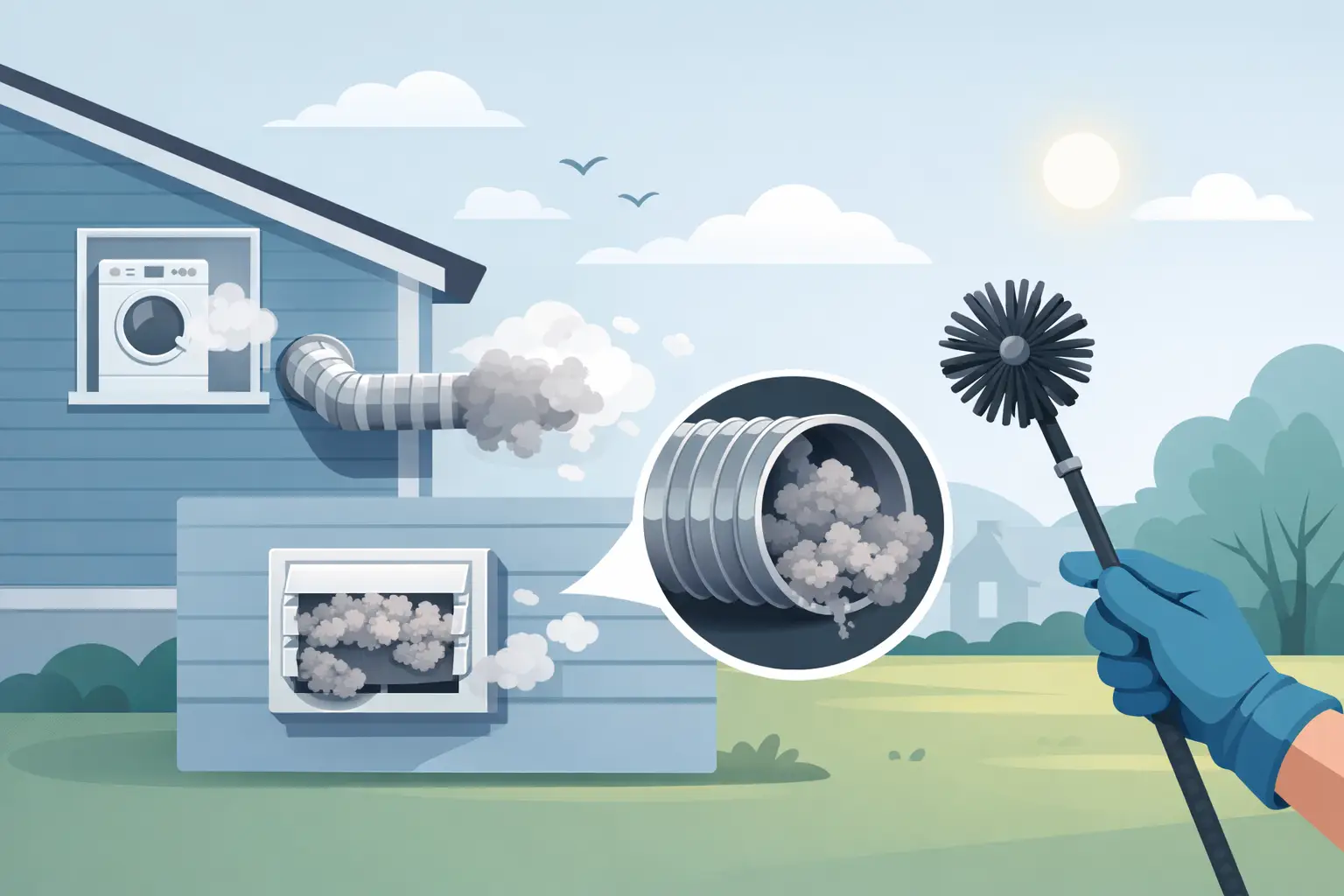
A load that once dried in 45 minutes now takes two cycles. The laundry room feels unusually warm, towels come out damp, and the dryer may smell hot while it runs. These are common signs that dryer vent cleaning may be overdue – and they should not be ignored as a minor inconvenience.
Your dryer depends on a clear path to move hot, moist air outdoors. When lint, dust, pet hair, nesting material, or a crushed vent line restricts that path, clothes take longer to dry and the appliance works much harder than it should. For Orange County households juggling work, school, and daily laundry, addressing the problem early can prevent a stressful breakdown and help reduce a serious fire risk.
What Dryer Vent Cleaning Actually Removes
Cleaning the lint screen after every load is necessary, but it only handles the lint collected at the dryer opening. Fine lint still passes beyond the screen and settles inside the vent pipe that runs through the wall, ceiling, attic, crawlspace, or roofline. Over time, that buildup narrows the airflow path.
Professional dryer vent cleaning addresses the full route from the back of the dryer to the exterior exhaust outlet. A proper service checks for lint accumulation, disconnected or damaged duct sections, crushed flexible connectors, blocked exterior flaps, and debris at the termination point. The goal is not simply to remove visible lint behind the dryer. It is to restore safe, effective airflow through the entire system.
The duct layout matters. A short, straight metal vent is easier to maintain than a long run with several turns. Homes with second-floor laundry rooms, roof exits, or vents that travel through attics may need more frequent attention because the exhaust has farther to travel. Older homes can also have outdated or poorly installed materials that collect lint more easily.
Signs Your Dryer Vent Needs Attention
The clearest warning is longer drying time. If a normal load needs more than one cycle, or clothes feel hot but remain damp, restricted airflow is a likely possibility. Before assuming the dryer itself has failed, the vent should be considered.
Watch for heat as well. The dryer cabinet, laundry room, or clothing may become noticeably hotter than usual. A dryer naturally produces heat, but excessive heat can mean moisture and hot air are not escaping outdoors as designed.
Other signs include a burning or musty odor while drying, lint collecting around the outdoor vent cover, a weak or nonexistent exhaust flow outside, and an exterior flap that does not open during operation. Your dryer may also shut off early, show an airflow-related error code, or run for long periods without fully drying the load.
For homes with gas dryers, a blocked vent deserves especially prompt attention. Venting problems can interfere with normal exhaust flow. If you smell gas, notice unusual fumes, or suspect a carbon monoxide concern, stop using the dryer and seek immediate professional help.
Why a Clogged Vent Affects More Than Laundry Time
A restricted vent makes the dryer run longer to remove the same amount of moisture. That can raise energy use, create unnecessary wear on heating components and sensors, and leave a household with piles of unfinished laundry. What starts as a slow-drying complaint can eventually look like a dryer repair issue because the appliance has been operating under strain.
Lint is also combustible. Heat, reduced airflow, and accumulated lint are a poor combination. Regular cleaning helps reduce the conditions that can lead to a dryer-related fire. It is practical home maintenance, similar to changing an HVAC filter or clearing leaves from a gutter, but the consequences of putting it off can be more immediate.
There is also a moisture concern. When warm, humid exhaust does not leave efficiently, moisture can linger in the laundry area and vent path. Over time, that can contribute to odors and unwanted humidity around walls, ceilings, or cabinets near the duct route.
How Often Should Dryer Vent Cleaning Be Scheduled?
For many households, annual cleaning is a sensible starting point. However, the right schedule depends on how much laundry your home produces and how the vent is installed. A family that runs several loads each week, a home with pets, or a household that regularly dries towels, bedding, and heavy fabrics may benefit from more frequent inspection and cleaning.
Short vent runs with rigid metal ducting generally stay clearer than long, winding runs. On the other hand, a dryer vent that exits through the roof or has multiple bends can collect lint faster and may be harder to assess without the right equipment. If your drying times begin changing before the one-year mark, do not wait for the calendar.
A newly purchased dryer does not eliminate the need for vent maintenance. In fact, connecting a new appliance to an existing vent without checking the duct can leave the same airflow problem in place. The dryer may be new, but the exhaust path may still be restricted.
Dryer Vent Cleaning vs. Dryer Repair
These services solve different problems, though the symptoms can overlap. Dryer vent cleaning restores airflow outside the appliance. Dryer repair addresses failed or worn parts inside the appliance, such as a heating element, thermal fuse, thermostat, belt, rollers, motor, moisture sensor, control board, or door switch.
A dryer that tumbles but does not heat at all may have a component failure. A dryer that heats but takes far too long to dry may have a vent obstruction, an internal lint buildup, or both. Noisy operation, a drum that will not turn, repeated tripping, or a dryer that will not start are also more likely to require appliance diagnostics than vent cleaning alone.
The trade-off is simple: cleaning a vent will not fix a failed heating element, and replacing dryer parts will not clear a blocked exhaust duct. A careful diagnosis prevents homeowners from paying for the wrong service. AK Appliance Repair can evaluate common dryer performance problems at your home and provide a clear estimate when appliance repair is needed.
What Homeowners Can Safely Do Between Cleanings
Routine habits make a real difference. Clean the lint screen before every load, and wash it occasionally with warm water and mild soap if fabric-softener residue has built up. That residue can reduce airflow through the screen even when it looks clean.
Keep the area around the dryer free of loose lint, laundry piles, cardboard, and stored items. Check the exterior vent cover while the dryer is running. You should feel warm air moving out, and the flap should open freely. If it is blocked by lint, leaves, or a bird nest, stop using the dryer until the issue is resolved.
Avoid pushing the dryer tightly against the wall. This can crush the connector hose and restrict airflow immediately. A rigid or properly installed semi-rigid metal connector is generally safer than thin plastic or foil-style vent material, which can sag, tear, and trap lint.
Do not attempt to solve a serious blockage by forcing air through the line with improvised tools. Brushes can become stuck, debris can be pushed deeper into the duct, and disconnecting an appliance without care can create additional problems. If the vent route is long, inaccessible, or visibly damaged, professional cleaning and inspection are the safer choice.
When to Stop Using the Dryer
Stop running the appliance if you notice a burning smell, smoke, excessive heat, or a dryer that repeatedly shuts down during a cycle. The same applies when no air is reaching the outdoor vent while the dryer is on. Unplug an electric dryer if it is safe to do so, and avoid restarting it until the source of the problem has been checked.
A dryer that is slow only once may be dealing with an overloaded load or unusually heavy items. A dryer that is slow every week is telling you something different. Paying attention to that change protects the appliance, your laundry routine, and the home around it.
A clear vent gives your dryer the airflow it was designed to use. If clothes are taking longer to dry or the laundry room is running hotter than normal, treating that warning early is a practical way to keep a small maintenance issue from becoming a much larger household interruption.