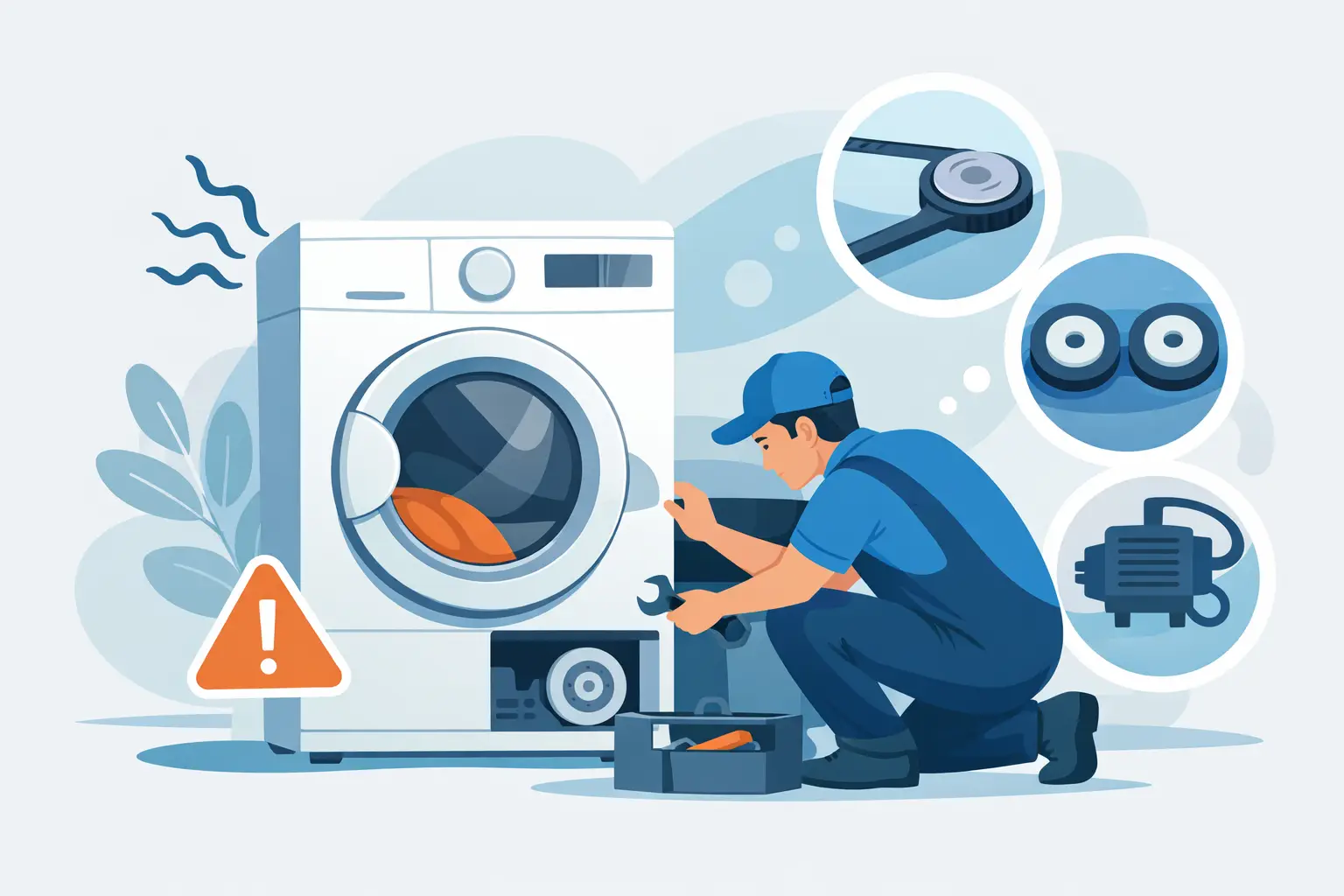
A dryer that suddenly squeaks can turn a normal laundry load into a warning you cannot ignore. Dryer squeaking noise repair often comes down to a worn moving part inside the cabinet, and addressing it early can prevent a small repair from becoming a damaged drum, broken belt, or dryer that stops heating and turning altogether.
The sound may be a high-pitched squeal, a rhythmic chirp, or a metal-on-metal scraping noise. Each one can point to a different issue. While a few simple checks are safe for homeowners, the dryer cabinet contains electrical connections, sharp edges, and components that require proper access and testing. A clear diagnosis is the best way to avoid replacing the wrong part or creating a larger problem.
What a Squeaking Dryer Usually Means
Your dryer drum is supported and turned by several parts working together. Depending on the make and model, that system can include drum rollers, a drive belt, an idler pulley, glides or slides, a rear bearing, and a blower wheel. When one begins to wear out, friction creates noise.
The timing of the squeak matters. A squeal that begins the moment the drum turns commonly points to the belt, idler pulley, or rollers. A sound that gets louder with a heavy load may indicate worn drum support parts. Scraping or grinding deserves more urgent attention because the drum may be rubbing against a damaged glide, bearing, or internal panel.
Dryers from GE, LG, Samsung, Whirlpool, Bosch, Miele, and other manufacturers use different drum-support designs. That is why a noise that sounds similar from the outside may require a different repair inside the machine.
Common Causes of Dryer Squeaking Noise Repair
Worn drum rollers
Drum rollers support the dryer drum as it rotates. Over time, their bearings can dry out, wear unevenly, or seize. The result is often a repetitive squeak, thump, or rumbling sound that follows the drum’s rotation.
A dryer may still run with worn rollers, but continuing to use it can put extra strain on the belt and motor. If one roller has failed, a technician will usually inspect the full roller set and related hardware. Replacing only the visibly damaged part is not always the most cost-effective choice if the remaining parts are near the end of their service life.
A failing idler pulley
The idler pulley keeps tension on the drive belt. Its small wheel and bearing can produce a sharp squeal when they wear out. This noise is often most noticeable during startup, then may change as the dryer warms up.
An idler pulley is a relatively compact component, but reaching it requires disassembling the dryer correctly. A slipping or failing pulley can also allow the belt to wear prematurely, so it is worth repairing before the dryer stops turning.
A worn or damaged drive belt
A drive belt wraps around the drum and allows the motor to rotate it. A worn belt can squeak, chirp, or make a slapping sound. Cracks, frayed edges, glazing, and looseness are signs that it may need replacement.
Belts do not always make noise on their own. Sometimes the belt is the visible symptom while a seized roller or pulley is creating the resistance. A complete inspection identifies the actual cause and helps prevent the new belt from failing too soon.
Drum glides, slides, or rear bearings
Many dryers use felt seals and plastic or Teflon drum glides near the front of the drum. Others rely on a rear drum bearing. When these parts wear down, the drum can sag or rub against metal surfaces. The noise may sound like scraping, squealing, or a rough dragging sound.
You may also notice marks on clothing, a drum that feels loose when moved by hand, or items catching near the front edge of the drum. These symptoms should be checked promptly. Continued rubbing can damage the drum, front bulkhead, or other parts that are more expensive to replace.
Something caught in the drum or blower area
A coin, bra wire, zipper piece, or small object can slip past the drum seal and create an intermittent squeak or scrape. A damaged blower wheel can also make noise, especially if the dryer has reduced airflow or an unusual vibration.
Do not reach into internal dryer openings or run the appliance repeatedly to locate the noise. A technician can safely inspect the drum area, blower housing, and motor assembly while checking for related damage.
Safe Checks to Make Before Scheduling Service
First, stop the dryer and unplug it. For a gas dryer, also avoid disturbing the gas connection. Then check inside the drum for loose objects, damaged clothing hardware, or obvious items caught around the drum edge.
Next, turn the empty drum by hand. It should rotate with some resistance but without loud scraping, grinding, or a pronounced wobble. If it squeaks while turned manually, the issue is likely mechanical rather than related to airflow or the heating system.
It also helps to consider when the noise happens. Note whether it begins only with a full load, continues throughout the cycle, occurs during the first few minutes, or is accompanied by a burning smell, vibration, poor drying, or a drum that does not turn. These details help speed up in-home diagnosis.
Avoid spraying lubricants into the dryer or onto the belt. Household oils can attract lint, damage certain materials, and create a fire risk near a heat-producing appliance. Do not continue operating a dryer that is grinding, scraping, smelling hot, or leaving marks on clothes.
When a Squeaking Dryer Needs Professional Repair
A brief chirp from an older dryer may not always mean immediate failure, but a recurring squeak is not normal. Professional service is the right choice when the sound is getting louder, the drum is wobbling, drying times are increasing, or the dryer shuts off unexpectedly.
It is especially wise to schedule service for premium and specialty appliances. Miele, Thermador, Viking, Wolf, and other high-end laundry systems can require model-specific parts and careful disassembly. Using the right replacement part matters for performance, fit, and long-term reliability.
During a professional dryer squeaking noise repair visit, the technician can inspect the belt path, rollers, pulley, drum supports, motor, blower wheel, and internal seals. The goal is not simply to quiet the sound for a few days. It is to identify the worn component, check what caused it to wear, and provide a clear estimate before repair work begins.
For Orange County homeowners, AK Appliance Repair provides in-home dryer diagnostics and repair with convenient scheduling, including same-day and emergency availability when possible. The $75 service fee is waived when you proceed with the repair, so you can make a decision based on a clear assessment rather than guesswork.
Can You Keep Using a Squeaky Dryer?
It depends on the sound and the condition of the appliance. A mild, occasional chirp may allow time to schedule a regular service appointment. But loud squealing, metal scraping, a burning odor, or a drum that struggles to turn means the dryer should be stopped until it is inspected.
Continuing to dry clothes with failing support parts can wear through a belt, overload the motor, and increase the chance of clothing damage. If airflow is also restricted, excess lint and heat can add another layer of concern. A repair made early is often simpler than waiting for the dryer to fail in the middle of a busy week.
A quiet dryer should not be something you have to think about. If yours is squeaking through every load, set it aside before the noise becomes a breakdown, and have the cause identified while the repair is still straightforward.