A gas cooktop that suddenly will not light can stop dinner plans fast. If your gas cooktop wont ignite, the problem may be as simple as a wet burner cap after cleaning, or it may involve a worn igniter, blocked burner ports, or an electrical issue that needs professional diagnosis. The key is knowing which checks are safe to make and when to stop.
Start With Safety Before Troubleshooting
If you smell gas, do not keep turning burner knobs or repeatedly pressing the ignition. Turn all controls to the off position, open windows and doors if it is safe to do so, avoid switches and open flames, leave the home, and contact your gas utility or emergency services from outside. A strong or persistent gas odor is not a cooktop repair project to handle on your own.
If there is no gas odor, give the cooktop a moment between ignition attempts. Repeated clicking without a flame can allow a small amount of unburned gas to collect near the burner. Turn the knob off, wait several minutes for the area to clear, then continue with the basic checks below.
Why a Gas Cooktop Wont Ignite
A gas cooktop needs three things to light: gas flow, a working spark, and a properly positioned burner assembly. When one of those pieces is interrupted, you may hear clicking but see no flame, or you may get no clicking at all.
The symptom often narrows down the likely cause. One burner that will not light is commonly a local burner-cap, food-debris, moisture, electrode, or burner-port issue. When none of the burners ignite, the cause is more likely related to power, the igniter module, a shared gas supply concern, or the appliance’s ignition switches.
The burner cap is out of position
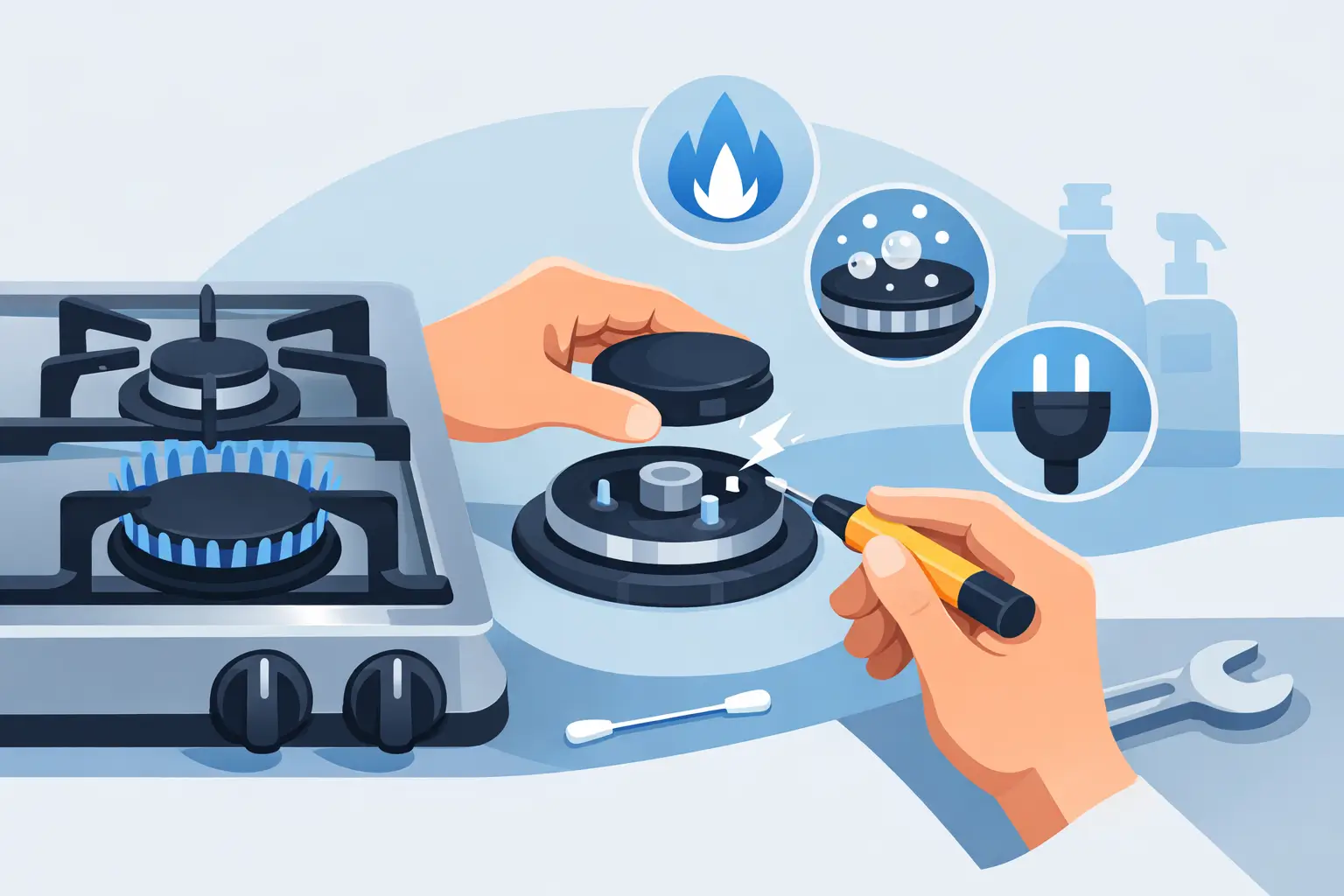
Many cooktop burners use a removable cap that must sit flat and align correctly over the burner base. After cleaning, a cap can look properly installed while sitting slightly off center. That small gap can prevent gas from flowing evenly toward the spark, so the burner clicks but does not catch.
Wait until the surface is cool, remove the grate, lift the cap, and set it back in place carefully. It should rest level without rocking. Do not force it. Premium cooktops from brands such as Wolf, Thermador, Viking, and Miele may have burner components designed to fit in a specific orientation, so check that all removable pieces are seated as intended.
Moisture is interfering with the igniter
Water from a wipedown, boil-over, or deep cleaning can collect near the ceramic electrode and burner base. The cooktop may click continuously, spark weakly, or fail to spark at the right point. This is especially common after the cooktop has been cleaned while still warm or after a pot has boiled over.
Turn off the burner, allow the surface to cool, and dry the cap, burner base, and surrounding area with a clean towel. Leave the parts off briefly so trapped moisture can evaporate. Avoid spraying cleaner directly around the igniter. If clicking continues after the area is dry, shut off power to the cooktop at the breaker before arranging service.
Food debris is blocking burner ports
Grease, sauce, crumbs, and cleaning residue can clog the small burner openings where gas exits. You may see a flame on only one side of the burner, a delayed ignition, or no ignition at all. A burner that finally lights with a small pop is another sign that gas is not reaching the spark evenly.
With the cooktop cool and the gas controls off, remove the cap and gently clean visible debris using a soft brush or a wooden toothpick. Do not use a metal pin, drill bit, or anything that can enlarge or damage the ports. Do not push debris deeper into the burner openings. Once clean and dry, reassemble the parts and test the burner again.
The cooktop has lost electrical power
Even though the cooktop uses gas for heat, electronic ignition still needs electricity. A tripped breaker, unplugged power cord, failed outlet, or recent power interruption can leave the burners without a spark. Some models may still allow manual lighting, but this should only be considered if the owner’s manual specifically permits it and you are comfortable doing so safely.
Check whether the display, clock, hood light, or nearby outlet has power. Then inspect your electrical panel for a tripped breaker. Reset a breaker once if needed. If it trips again, leave it off and schedule a technician. An electrical fault should not be bypassed just to get a burner working for the evening.
The igniter or ignition switch has failed
The igniter is the small electrode that creates a spark near the burner. Over time, it can crack, corrode, become loose, or lose the ability to produce a strong spark. A worn switch beneath the burner knob can also fail to send the signal that starts ignition.
If one burner does not click while the others work, its igniter or switch may be the issue. If every burner clicks whenever one knob is turned, that may be normal for your model because many cooktops use a shared spark system. But if no burners spark, or they spark intermittently after the basic checks, a trained technician should test the ignition circuit and replace the failed component with the correct part.
What You Can Safely Check at Home
Before scheduling repair, you can confirm a few simple conditions without taking apart gas connections or internal wiring. Make sure the burner cap is seated correctly, dry any visible moisture, remove surface debris from accessible burner ports, and check that the cooktop has power.
You can also observe what happens when you turn the knob. Does the burner click? Is there a visible spark? Does gas appear to flow but fail to light? Does only one burner have the problem, or all of them? These details help a technician arrive prepared and can shorten the diagnostic visit.
Do not remove the cooktop from the counter, disconnect the gas line, take apart burner valves, or attempt to repair wiring under the knobs. Gas appliances require the right testing equipment and a careful inspection for leaks after work is completed. A quick do-it-yourself fix can become an unsafe situation if a part is reassembled incorrectly.
When to Call for Gas Cooktop Repair
Schedule professional service when a burner keeps clicking after it is dry, sparks weakly, lights only after several attempts, or produces an uneven flame. You should also call when the cooktop repeatedly trips a breaker, all burners fail at once, a burner knob feels loose or does not control the flame normally, or you smell gas.
Older cooktops can often be repaired without replacing the entire appliance. Igniters, spark modules, switches, electrodes, and burner components are common service parts, but the correct repair depends on the cooktop’s make, model, and symptoms. This matters even more with high-end gas cooktops, where burner design and electronic controls can be brand-specific.
For Orange County homeowners, AK Appliance Repair provides in-home diagnostics for standard and premium gas cooktops, clear estimates before repair, and genuine replacement parts when available. The $75 service fee is waived when you proceed with the repair, helping you make a practical decision without guessing whether replacement is necessary.
Keep Ignition Problems From Returning
Regular cleanup helps, but the method matters. Wipe spills once the surface has cooled, remove burner caps periodically for gentle cleaning, and make sure every part is completely dry before putting it back. Avoid soaking igniter areas or using heavy amounts of cleaner around the electrodes.
If a burner begins taking longer to light, address it before it becomes a complete no-ignition problem. A cooktop that lights promptly, burns evenly, and shuts off reliably makes everyday meals easier and gives you one less household interruption to manage.