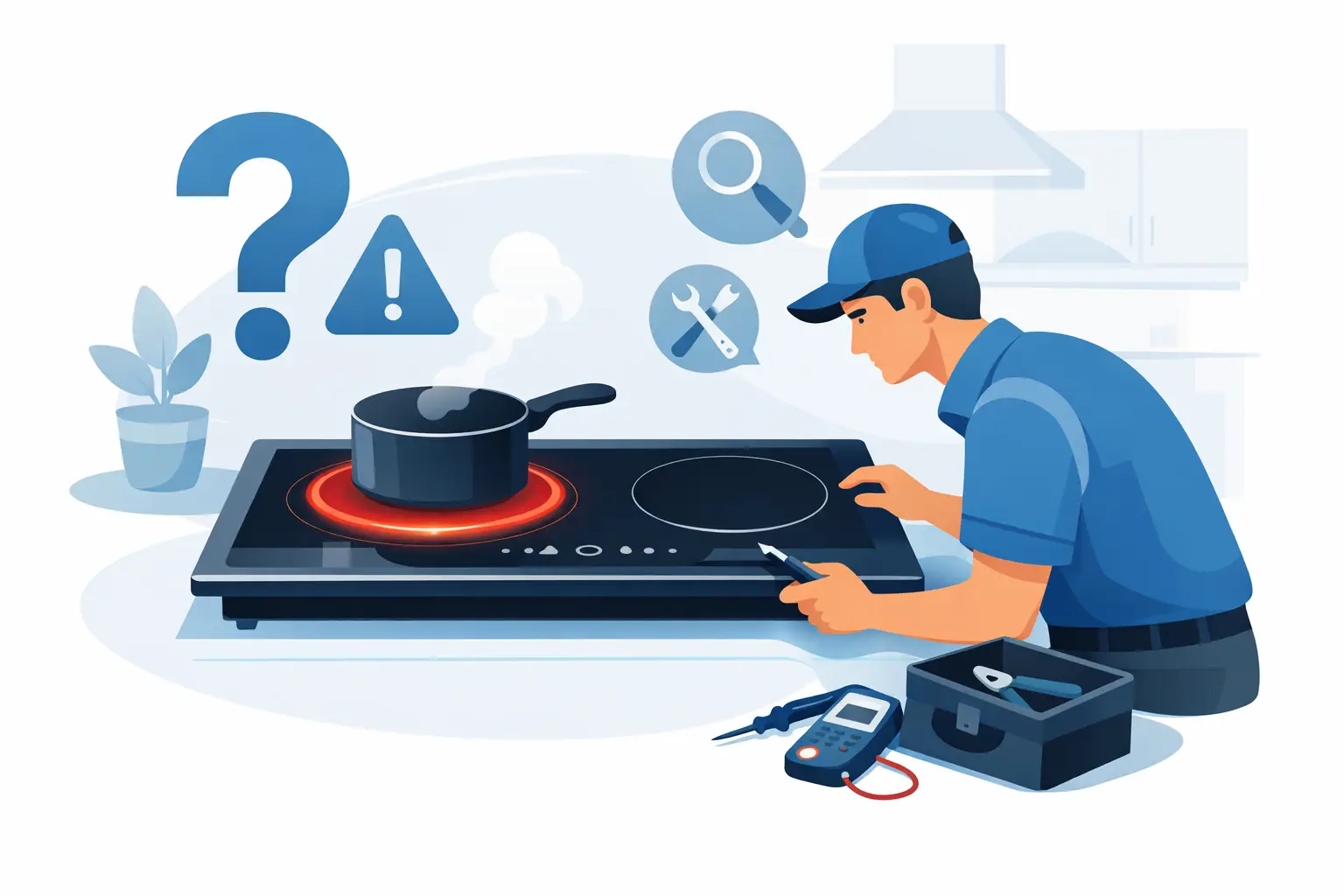
A meal can come to a stop fast when an induction cooktop not working leaves a pan cold, a burner unresponsive, or a display flashing an unfamiliar code. Unlike a standard electric cooktop, induction relies on electronic controls, sensors, and compatible cookware working together. That means the cause may be simple, but it can also involve components that should only be tested by a qualified appliance technician.
Before assuming the cooktop has failed, take a few safe checks that can help narrow down the problem. If the issue persists, especially with a built-in or premium model, professional diagnosis can prevent a small electrical or control issue from becoming a more expensive repair.
Start With the Pan and Cookware Detection
An induction burner heats the pan itself, not the glass surface beneath it. If the cooktop turns on but does not heat, cookware is the first thing to rule out.
The pan must have a magnetic base. Cast iron and many stainless-steel pans work well, while aluminum, copper, glass, and some stainless cookware will not heat unless they have an induction-compatible layer. A quick magnet test is useful: if a magnet sticks firmly to the bottom of the pan, it is generally compatible.
Size and placement matter, too. A small pan on a large cooking zone may not be detected. Center the pan over the marked zone and make sure its bottom is flat and clean. Warped cookware can cause poor contact, inconsistent heating, or repeated on-and-off cycling.
If one pan will not work but another compatible pan heats normally on the same burner, the cooktop is likely functioning properly. If no compatible pan works on any zone, the problem is more likely related to power, controls, or internal components.
Check for a Control Lock or Incorrect Setting
Many induction cooktops have a control lock designed to prevent children from changing settings or turning on the appliance. When the lock is active, the display may show an L, LOC, key symbol, or similar indicator. The exact unlock method differs by brand and model, but it often requires pressing and holding the lock icon for several seconds.
Also confirm that the correct cooking zone is selected before setting the power level. On some models, the display will light up even though a zone has not been activated. Other units use touch controls that can be less responsive when the surface is wet, greasy, or covered by a utensil.
Dry the control area with a soft cloth, remove anything resting on the panel, and try again. Do not scrape or press hard on the glass. If touch controls remain unresponsive after the surface is dry and the lock is off, the control board or touch interface may need service.
When the Entire Induction Cooktop Has No Power
A completely blank display can point to a power supply issue, but it is not always as straightforward as a tripped breaker. Induction cooktops typically require a dedicated high-voltage electrical circuit. A partial power loss can sometimes allow lights or a display to work while preventing the burners from heating correctly.
Start at the home electrical panel and check whether the cooktop breaker has tripped. Turn it fully off, then back on once. If it trips again, leave it off and arrange service. A repeatedly tripping breaker can indicate an electrical fault in the appliance, wiring, or circuit and should not be ignored.
Avoid removing the cooktop, opening electrical panels, or attempting to test wiring yourself. Built-in induction units carry high voltage even when they appear inactive. A technician can safely inspect the terminal connections, power supply, fuses, wiring, and internal electronics to identify where the failure is occurring.
A Recent Outage May Be Relevant
If the cooktop stopped working after a power outage, surge, or electrical work in the home, mention that during service scheduling. A voltage event can affect a control board, power module, or communication circuit. In some cases, turning the breaker off for a few minutes and restoring power may reset the appliance. If the same error returns, the unit needs diagnosis rather than repeated resets.
Why Only One Burner May Stop Heating
When one induction zone fails but the others still operate, the cooktop is receiving power. The issue may involve that zone’s coil, sensor, wiring, or part of the power module. Some models also pair zones internally, so one component problem can affect two burners on the same side of the cooktop.
Do not assume a working display means the burner is safe to keep using. A zone that cuts in and out, overheats, makes unusual clicking sounds, or shows an error code may have an underlying component failure. Continued use can lead to more interruptions and may place extra stress on the remaining electronics.
Premium brands such as Wolf, Thermador, Miele, Bosch, Viking, and Fisher & Paykel may use model-specific error codes and control systems. Accurate diagnosis depends on identifying the exact model and testing the right components, not replacing parts based on a symptom alone.
Error Codes, Beeping, and Cooling Fan Noise
An error code is the cooktop’s way of reporting a condition it cannot resolve on its own. It may relate to cookware detection, overheating, a communication error, a cooling problem, or an internal electrical fault. Write down the code exactly as it appears, including letters, numbers, and whether it occurs on one zone or across the entire display.
Some sounds are normal. Induction cooktops can make a low hum, clicking noise, or fan sound while cooking. The cooling fan may continue running after the burners are turned off because it is protecting internal electronics from retained heat.
The concern is a new or unusually loud sound paired with poor heating, burning odor, repeated beeping, or an error message. Turn the cooktop off at the breaker and schedule service if you notice smoke, sparks, a hot electrical smell, cracked glass, or a breaker that will not stay on.
Overheating and Ventilation Problems
Induction cooking is efficient, but the electronic components beneath the glass still create heat and require airflow. If the cooktop shuts off during cooking and works again later, it may be responding to an overheating condition.
Blocked ventilation beneath the unit, a failed cooling fan, or a nearby oven generating excess heat can contribute to shutdowns. Storage installed too tightly under a cooktop can also restrict airflow. Do not block designed air vents or place towels, foil, or other materials where they can interfere with cooling.
Because installation clearances differ by model, it depends on the appliance and cabinet layout. A technician can determine whether the issue is a failed fan or sensor, an internal power component, or an installation-related ventilation concern.
When to Call for Induction Cooktop Repair
A compatible pan and a breaker reset can resolve a few common issues. But if the cooktop still will not heat, loses power repeatedly, shows persistent error codes, or has a damaged glass surface, professional repair is the safer choice.
AK Appliance Repair provides in-home diagnostics for induction cooktops throughout Orange County, including standard and luxury brands. A trained technician can inspect the appliance, explain what failed in clear terms, and provide a transparent estimate before repair work begins. The $75 service fee is waived when you move forward with the repair.
Having the model number, symptoms, and any error code ready can help make the visit more efficient. Until service arrives, keep the unit off if there are electrical symptoms or visible damage. A prompt, accurate repair can get dinner back on schedule without replacing a cooktop that may still have years of useful life left.