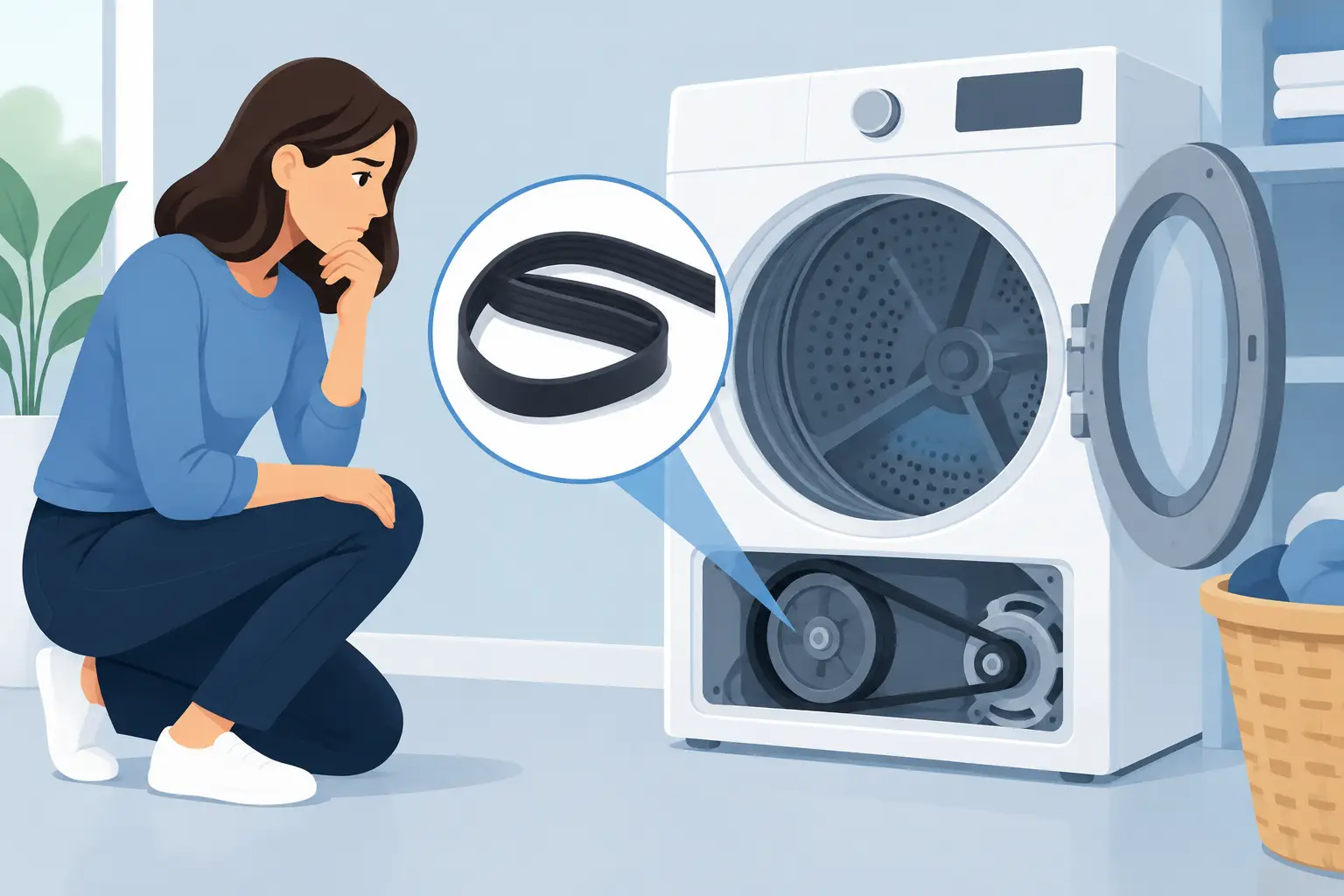
A dryer that hums but will not tumble can turn a normal laundry day into a pile of wet clothes and second guesses. One of the most common causes is a worn or broken drive belt. Recognizing dryer belt symptoms early can help you avoid repeated failed cycles, excess strain on other dryer parts, and the inconvenience of hauling laundry to a laundromat.
The belt is a heavy-duty rubber loop that wraps around the dryer drum and connects to the motor and pulley system. When the motor runs, the belt turns the drum so warm air can circulate through clothing. If the belt slips, cracks, stretches, or breaks, the dryer may still power on and produce heat, but it cannot do its main job properly.
The Most Common Dryer Belt Symptoms
A broken belt does not always cause the same behavior in every dryer. The exact symptoms depend on the dryer model and whether the belt has completely snapped or is simply worn. Still, a few warning signs are especially common.
The dryer runs, but the drum does not turn
This is the clearest sign of a broken dryer belt. You may hear the motor humming or running after you press Start, and you may feel heat inside the drum, but the drum stays still. Because clothes are not tumbling through the airflow, they will remain damp no matter how long the cycle runs.
Many dryers have a safety switch that stops the motor when a belt breaks. On those models, the dryer may appear completely dead even though it has power. A technician can determine whether the issue is the belt, a failed door switch, a motor problem, or another component that produces similar symptoms.
Clothes are still wet after a full cycle
Damp laundry is not automatically a belt issue. A clogged vent, weak heating element, overloaded drum, or poor airflow can also extend drying time. But if clothes are wet and the drum is not moving normally, the belt deserves immediate attention.
Check through the dryer door during a cycle rather than opening the cabinet or reaching inside. If the dryer is running but the drum is motionless, turn it off. Continuing to run a dryer with a failed belt can place unnecessary stress on the motor and pulley assembly.
You hear thumping, squealing, or a slapping sound
A belt that is loose, frayed, or beginning to separate can make noise before it breaks. Some homeowners notice a rhythmic thump as the damaged section passes around the drum. Others hear a squeal or chirp when the belt slips on the pulley.
Noise alone does not confirm a belt failure. Worn drum rollers, a damaged idler pulley, or items caught in the drum can make similar sounds. The useful detail is when the noise occurs. A sound that starts when the drum begins turning and changes with its rotation points to a mechanical issue that should be inspected.
The drum turns slowly or seems to struggle
A healthy dryer drum should turn smoothly at a steady speed. If it hesitates, rotates slowly, or stops and starts during a cycle, the belt may be stretched or slipping. You may also notice a faint burning-rubber smell caused by friction.
Stop using the dryer if you smell burning, see smoke, or hear loud scraping. Those symptoms can involve more than the belt, including the motor, rollers, wiring, or pulley. A prompt diagnosis is the safer choice.
The drum feels loose when turned by hand
With the dryer unplugged and completely off, a drum that feels unusually loose or moves too freely may have a broken belt. This is only a basic observation, not a full diagnosis. Dryer cabinets contain electrical connections, sharp metal edges, and components that are not practical for most homeowners to inspect safely.
Avoid pulling the dryer apart just to confirm the problem. Modern dryers, including premium models, can have specific disassembly procedures and parts that must be installed with the correct tension and alignment.
Why a Dryer Belt Fails
Dryer belts are wear items. Heat, regular friction, age, and the weight of repeated laundry loads gradually weaken the rubber. Even a well-maintained dryer may eventually need a new belt.
Overloading can speed up the process because a heavy drum places more resistance on the belt, motor, and support rollers. Small loads are not necessarily better, but stuffing the drum so tightly that clothing cannot tumble freely creates strain and reduces drying performance.
A belt may also fail because another part has created extra resistance. A seized drum roller, worn idler pulley, or obstructed blower wheel can make a new belt work harder than it should. That is why replacing only the belt without checking the supporting parts can lead to another breakdown soon afterward.
What to Do When You Suspect a Belt Problem
First, stop the dryer if the drum is not turning, the appliance is making a new loud noise, or there is any burning smell. Unplug an electric dryer before doing any simple exterior checks. For a gas dryer, avoid moving or disconnecting gas connections yourself.
Next, make note of what happened: Did the dryer stop in the middle of a load? Does it hum without tumbling? Is there heat? Does the noise occur only while the drum turns? These details help speed up an in-home diagnosis.
You can also check the lint screen and exterior vent hood for visible lint buildup. Restricted venting is a separate issue from a broken belt, but it can cause long dry times and overheating. If the drum is turning normally but clothes remain damp, airflow is often the more likely concern.
Do not keep restarting a dryer that will not tumble in hopes that it will catch again. A belt rarely repairs itself, and repeated starts can cause a minor mechanical issue to become a more involved repair.
Belt Failure or Something Else?
Several dryer problems can look like a bad belt from the outside. A failed start switch can keep the dryer from starting at all. A worn motor may hum but lack the power to turn the drum. Broken rollers or an idler pulley can cause squealing and thumping. Heating failures and clogged vents can leave clothes damp even when the drum tumbles normally.
This overlap is why a professional diagnostic visit is valuable. The technician can inspect the belt condition, drum support components, motor operation, electrical connections, and airflow instead of guessing based on one symptom. The right repair may be a simple belt replacement, or it may involve correcting the part that caused the belt to wear prematurely.
For homeowners with Miele, Bosch, LG, Samsung, Whirlpool, GE, Thermador, Viking, or other specialty dryer models, correct parts selection matters as much as the diagnosis. A belt that looks similar may not provide the proper fit, tension, or durability for a particular model.
When to Schedule Dryer Repair
Schedule service promptly if the dryer runs without turning, makes persistent mechanical noises, smells hot or burnt, or suddenly takes much longer to dry clothes. These are not problems to put off for several weeks, especially in a busy household where the dryer is used often.
AK Appliance Repair provides Orange County homeowners with in-home dryer diagnostics, clear estimates, and repair options using appropriate replacement parts. A technician can identify whether the belt is the issue and explain the condition of the surrounding components before work begins. The $75 service fee is waived when you proceed with a repair.
A dryer belt replacement is often a practical repair when the rest of the appliance is in good condition. If the dryer is older and has multiple failing components, an honest assessment can help you decide whether repair still makes financial sense. Either way, getting a clear diagnosis before buying a new dryer can prevent an unnecessary replacement.
When laundry suddenly stops moving, treat it as a signal to pause rather than push through another cycle. A timely inspection can get the drum turning again, protect the dryer from added wear, and get your household back to dry clothes without the extra disruption.