A weeknight dinner should not turn into a guessing game about whether the oven will heat, stay at the right temperature, or shut off safely. When baking takes twice as long, food comes out unevenly cooked, or the display flashes an error code, professional oven service can identify the cause before a minor issue interrupts every meal you prepare.
For Orange County households, a working oven is more than a convenience. It supports busy schedules, family dinners, holiday cooking, and daily routines. The good news is that many oven problems can be repaired at home without replacing the entire appliance.
Signs You Need Oven Service
Some oven failures are obvious. The unit will not turn on, the bake element stays cold, or the broiler will not heat. Other issues are less clear, especially when the oven still works but no longer cooks reliably.
If cookies burn on one side of the pan, casseroles remain cold in the center, or a recipe that normally takes 30 minutes suddenly needs an hour, the oven may not be reaching or maintaining the selected temperature. A faulty temperature sensor, heating element, igniter, control board, or thermostat can create these symptoms. The display may say 350 degrees while the actual cavity temperature is far lower or fluctuating widely.
Strange behavior during preheating also deserves attention. An oven that takes too long to preheat, clicks repeatedly, trips the breaker, produces sparks, or turns itself off may have an electrical or control-related problem. Gas ovens can develop ignition issues that prevent the burner from lighting properly or cause delayed ignition.
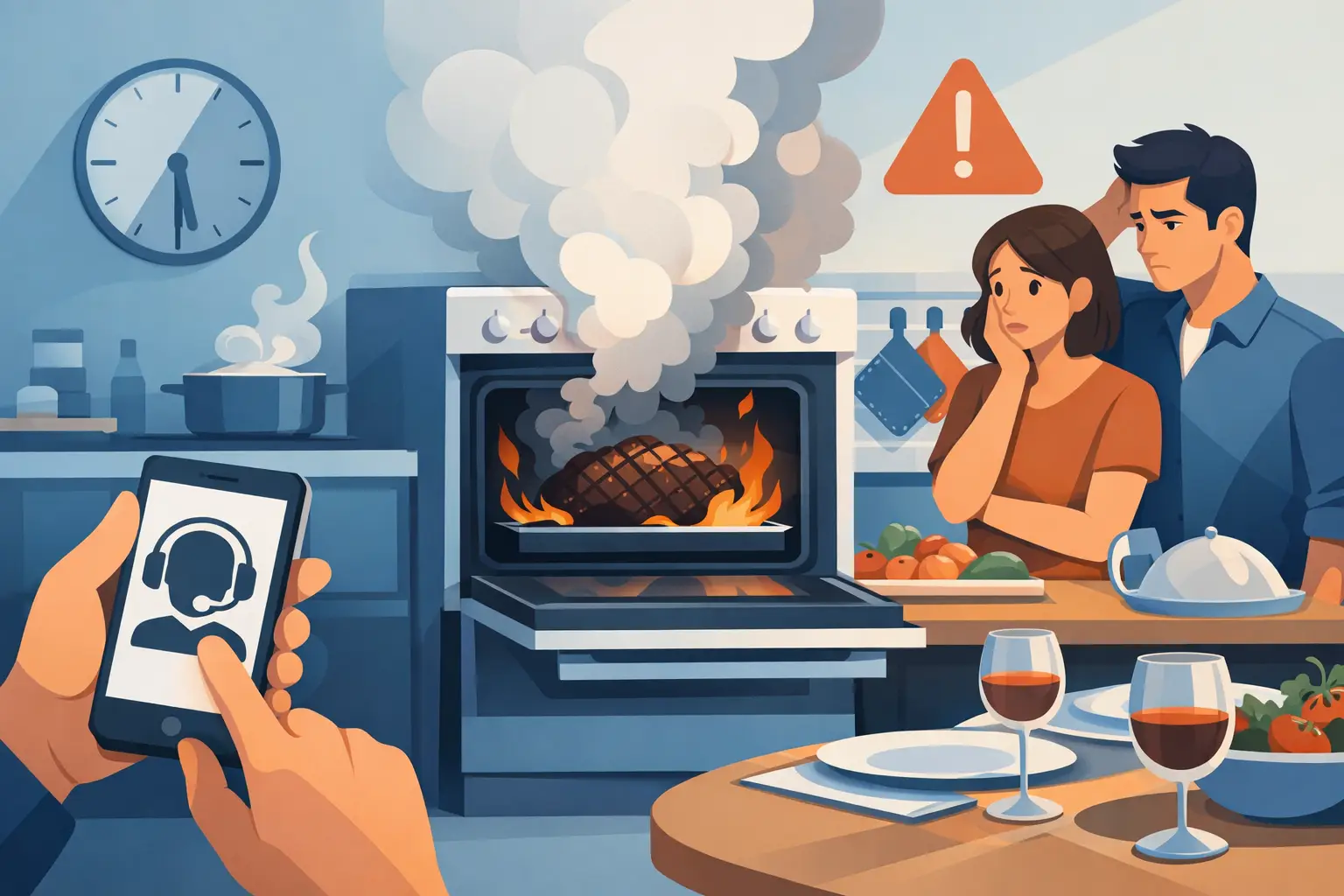
Burning odors should be treated based on context. A brief smell during first use after a spill may come from food residue. A persistent burning-plastic smell, visible smoke, sparks, or a hot electrical odor is different. Turn the oven off, avoid using it again, and arrange service. If you smell gas, leave the area, avoid switches and open flames, and contact your gas utility or emergency services from a safe location before scheduling an appliance repair.
Common Oven Problems a Technician Can Repair
An accurate diagnosis matters because similar symptoms can come from very different parts. Replacing a visible component without testing the oven can waste time and money.
Oven will not heat or heats slowly
Electric ovens rely on bake and broil elements, while gas models rely on an igniter and gas valve system. A weak igniter may glow but still fail to draw enough current to open the gas valve. In an electric oven, an element can fail completely or develop damage that causes uneven heat. A trained technician can test the components and confirm which part is responsible.
Temperature is incorrect or inconsistent
When the oven runs too hot, too cool, or changes temperature during a cooking cycle, the issue may involve the sensor, thermostat, control board, or door seal. A worn gasket can allow heat to escape, making the oven work harder and extending cooking times. Calibration may help in some cases, but calibration cannot correct a failing component.
Oven door will not close, lock, or unlock
A door that does not seal properly affects temperature performance and can make surrounding surfaces unusually hot. Problems with hinges, springs, latches, or the self-clean lock mechanism are common repair concerns. Avoid forcing a locked door open after a self-clean cycle, as that can damage the latch assembly or glass.
Controls, lights, and displays are not working
A blank screen, unresponsive keypad, flashing clock, or error message may point to a failed control board, damaged wiring, failed thermal fuse, or power supply issue. Modern wall ovens and ranges often use electronic controls that require model-specific testing and replacement parts. This is especially true for premium brands, where the correct part and proper installation are essential for reliable operation.
Why DIY Oven Repair Has Limits
Cleaning the oven, checking whether a breaker has tripped, and confirming that the clock is set are reasonable first steps. Beyond that, oven repair can involve live electrical connections, high-voltage components, sharp metal edges, gas connections, and parts that remain hot long after use.
Do not attempt to bypass a thermal fuse, force an oven door latch, or keep using an oven that is sparking or tripping the breaker. These actions can create a larger repair and introduce a safety risk. Gas appliance repairs require particular caution because an improper adjustment or loose connection can affect ignition and combustion.
Professional service also prevents the common mistake of ordering parts based only on an online symptom match. Two ovens can show the same error code or heating issue but need different repairs. A proper diagnosis checks the appliance’s operation, confirms the failed component, and helps avoid replacing parts that were never the problem.
What Happens During an In-Home Oven Service Visit
A good repair visit should make the situation clearer, not more confusing. The technician begins by asking what you have noticed: whether the oven heats at all, when the problem started, which cooking modes are affected, and whether any error codes appear. Details such as a breaker trip, delayed ignition, or temperature changes during baking can speed up diagnosis.
The appliance is then inspected and tested. Depending on the symptom, this may include checking heating elements, igniter performance, sensors, wiring, switches, fuses, door components, and electronic controls. The goal is to identify the root cause rather than offer a guess.
After diagnosis, you should receive a clear estimate and an honest recommendation. At AK Appliance Repair, the $75 service fee is waived when you proceed with the repair. If the needed part is available, many repairs can be completed during the same visit. If a special-order factory part is required, you will know what to expect before work moves forward.
Repair or Replace: How to Make the Right Call
Replacement is not automatically the best answer when an oven stops working. A quality range, wall oven, or premium built-in appliance may be well worth repairing, particularly if the problem involves a single serviceable part such as an igniter, heating element, sensor, or latch.
The decision depends on the age and condition of the appliance, the cost of the repair, the availability of parts, and whether there have been repeated failures. A newer oven with one failed component is often a straightforward repair. An older unit with major control issues, extensive corrosion, or multiple recurring problems may deserve a conversation about replacement instead.
For luxury kitchen appliances from brands such as Miele, Thermador, Viking, Wolf, and Fisher & Paykel, replacement can be especially disruptive and expensive. Specialized diagnosis and genuine parts can help protect the investment you have already made in your kitchen.
Small Habits That Help Your Oven Last Longer
Regular use naturally creates wear, but a few practical habits can reduce avoidable problems. Wipe spills after the oven has cooled, especially sugary spills that can burn onto the cavity floor. Avoid lining the bottom of the oven with foil unless the manufacturer specifically allows it, since foil can block airflow, trap heat, or damage heating elements.
Use the self-clean feature carefully. It creates extremely high temperatures that can stress older components, particularly door locks, fuses, and electronic controls. If the oven already has heating, display, or door issues, schedule service before running a self-clean cycle.
When an oven begins acting differently, do not wait until a holiday meal or a gathering to address it. Early service can often prevent a complete failure and gives you a better chance of restoring dependable cooking on your schedule.