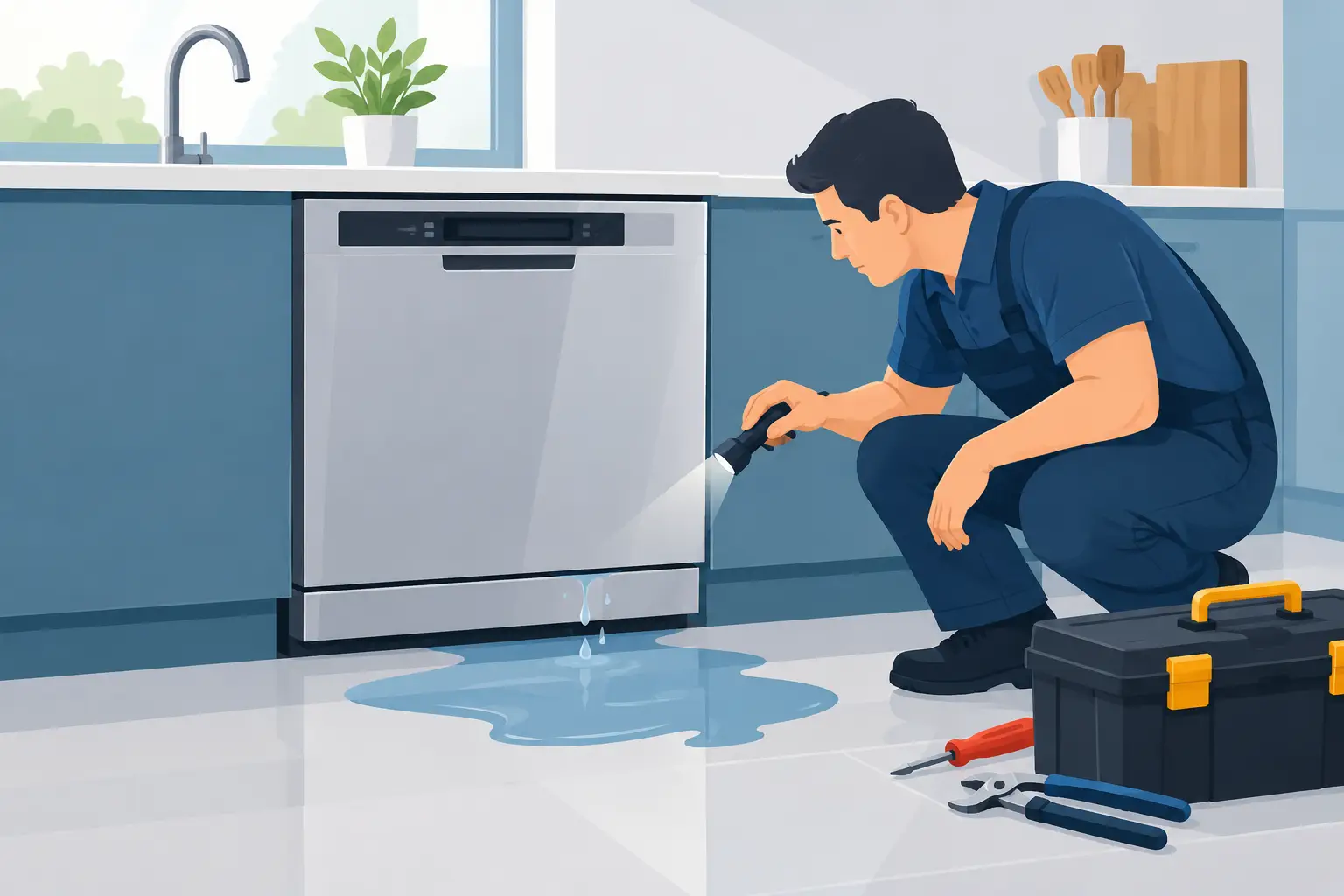
A small puddle beneath the dishwasher can turn into damaged flooring, swollen cabinets, or a musty smell faster than most homeowners expect. So, can dishwasher leaks be fixed? In many cases, yes. A worn door seal, loose hose connection, failing pump seal, or cracked spray arm can often be repaired without replacing the entire appliance. The key is finding the source before repeated cycles send more water where it does not belong.
For Orange County households, a dishwasher leak is not something to wait out between busy workdays or family meals. Even if the machine still washes dishes, water can move under flooring or behind cabinets where the damage is harder and more expensive to correct.
Can Dishwasher Leaks Be Fixed Without Replacing the Machine?
Most dishwasher leaks are repairable when the appliance is otherwise operating well and the damaged part is available. A technician can inspect the door, tub, hoses, pump, inlet valve, and internal components to determine whether the repair makes practical sense. The right answer depends on the leak location, the dishwasher’s age, the condition of related parts, and whether the appliance has already needed several major repairs.
A leaking door gasket, for example, is usually a straightforward repair. A cracked plastic tub on an older, basic dishwasher may be a different situation because the part and labor can approach the cost of replacement. Premium units from Bosch, Miele, Thermador, Fisher & Paykel, and other specialized brands may require brand-specific parts and diagnosis, but their higher value often makes repair worthwhile.
A professional diagnosis matters because the spot where water appears is not always the spot where the leak begins. Water dripping from the front corner of the dishwasher may come from an overfilled tub, a damaged lower spray arm, or a door that is not closing squarely.
Common Dishwasher Leak Causes and What They Mean
Door gasket problems
The rubber gasket around the dishwasher door creates the seal that keeps wash water inside. Over time, it can flatten, tear, collect residue, or pull away from its channel. If water appears along the front edge or at the lower corners during a cycle, the gasket is a likely suspect.
Cleaning minor buildup may help the seal sit properly, but a torn, stiff, or misshapen gasket should be replaced. Forcing the door shut or adding adhesive without identifying the issue can make the leak worse.
Loose or damaged hoses
Dishwashers use several water connections, including the incoming water line and drain hose. A loose clamp, cracked hose, or corroded fitting can allow water to escape under or behind the machine. These leaks may only show up while the dishwasher is filling or draining.
Hose repairs are often manageable, but access can be difficult in tight installations. Pulling a built-in dishwasher forward without shutting off power and water first can damage the line, flooring, or cabinetry. This is one reason a small leak is usually better handled before it becomes an emergency.
Pump and seal failures
The circulation pump moves water through the spray arms, while the drain pump removes water at the end of the cycle. Both rely on seals, housings, and connections that can wear out. A leak under the center of the dishwasher, especially one that occurs during washing or draining, can point to a pump-related issue.
Some pump seals can be replaced. In other cases, replacing the full pump assembly is the more dependable repair. A technician should also check for debris, damaged impellers, or installation issues that may have contributed to the failure.
Cracked spray arms or excessive water pressure
A split lower spray arm can direct a strong stream of water toward the door instead of across the dishes. That water can overwhelm the door seal and create a leak that looks like a gasket problem. A blocked or poorly positioned spray arm can create similar symptoms.
Using too much detergent is another possible cause. Excess suds can push water out through the door or vents. Only use detergent labeled for automatic dishwashers, and follow the detergent manufacturer’s dosing guidance. Hand dish soap should never go into a dishwasher because it can create heavy foam and a major overflow.
Faulty inlet valve or float switch
A dishwasher should stop filling once it reaches the proper water level. If the inlet valve sticks open or the float switch does not signal correctly, the dishwasher can overfill. Water may spill from the front, through the door, or into the base beneath the tub.
Overfilling is not a repair to postpone. Turn off the dishwasher, stop the water supply if water continues entering, and arrange for service. Continued use can damage electronic components and create a larger cleanup problem.
What to Do When You Find Water Around the Dishwasher
First, stop the cycle if it is safe to do so. Turn off the dishwasher at the control panel, then disconnect power at the breaker if water is near outlets, wiring, or the electrical connection. Avoid standing in water while handling electrical switches.
Place towels around the leak and remove standing water from the floor. If possible, note when the leak occurred: while filling, washing, draining, or after the cycle ended. That detail helps narrow down the likely cause.
You can also check for obvious issues without disassembling the appliance. Look for a utensil or rack blocking the door, visible food buildup on the gasket, detergent foam, or a loose kick plate. Do not run another full cycle just to see if the leak repeats. A short test performed by a qualified technician is safer than risking another round of water damage.
When a Dishwasher Leak Needs Professional Repair
Call for service promptly if water is coming from underneath the dishwasher, the unit is overfilling, the leak returns after cleaning the gasket, or there is any sign of electrical trouble. You should also schedule service if the floor feels soft, cabinet panels are swelling, or the dishwasher leaves water behind after draining.
A repair professional can isolate the leak, check the appliance for more than one failing part, and provide a clear estimate before work begins. This is particularly valuable for integrated, panel-ready, and luxury dishwashers, where incorrect removal or generic parts can create additional problems.
AK Appliance Repair provides in-home dishwasher diagnostics and repair throughout Orange County, with genuine replacement parts available for many major and premium brands. The $75 service fee is waived when you proceed with a repair, so you can get a clear answer about the leak before deciding on the next step.
Is Repair Worth It for a Leaking Dishwasher?
If the dishwasher is under about 10 years old, cleans effectively, and needs a hose, gasket, valve, or pump repair, fixing it is commonly the sensible choice. Repair can preserve a built-in installation, avoid the disruption of replacement, and keep an otherwise dependable appliance in service.
Replacement may be the better option when the tub is badly cracked, multiple expensive components have failed, or the dishwasher has a history of recurring breakdowns. The most useful recommendation is not automatically repair or replacement. It is an honest assessment based on the appliance’s condition, part availability, and the cost of preventing further water damage.
A dishwasher leak rarely improves on its own. Dry the area, stop using the appliance until the source is known, and get the problem checked while the repair may still be simple.