Water on the kitchen floor after a cycle is never something to ignore. A dishwasher door seal leak may start as a small puddle near one corner of the door, but repeated leaks can swell cabinet bases, damage flooring, and create moisture problems where they are hard to see. The good news is that the gasket is not always the problem, and a clear diagnosis can prevent replacing parts that are still working.
How to recognize a dishwasher door seal leak
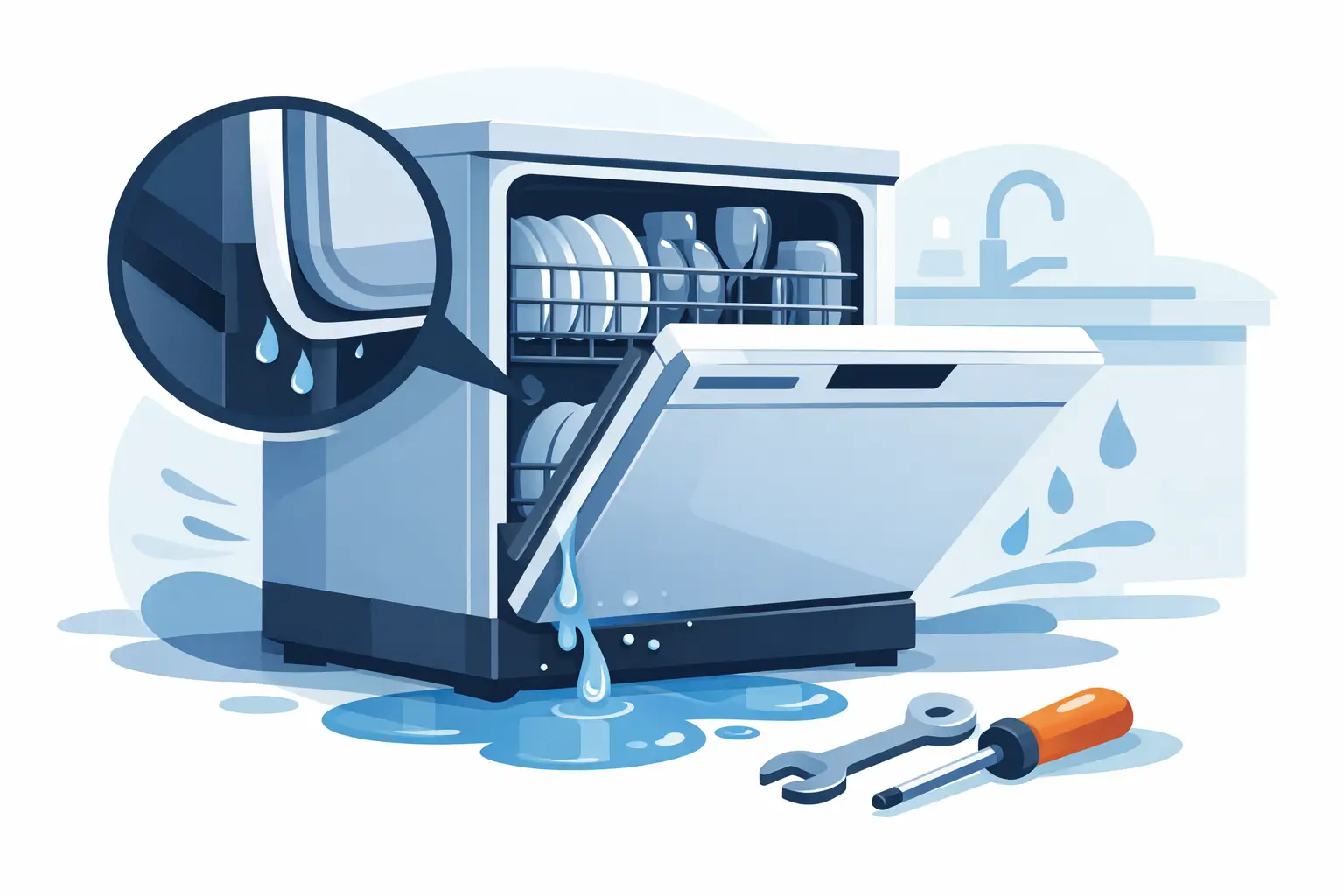
A failing door seal, also called a gasket, usually causes water to appear along the front or sides of the dishwasher door. You may notice droplets on the inner edge of the door, a damp towel needed after every wash, or water collecting directly beneath the lower corners of the unit.
The timing of the leak offers useful clues. Water that appears early in the wash cycle may point to a door that is not closing fully, a warped gasket, or a latch issue. A leak that occurs only during heavy spraying can be caused by an overloaded rack, a damaged spray arm, or excess suds pushing water toward the door. If water is found after the cycle has ended, the source could be a hose, pump, or water connection rather than the door seal.
Do not assume a drip means the entire dishwasher needs replacement. Many leaks are repairable, including on premium built-in models from Bosch, Miele, Thermador, Viking, and Fisher & Paykel. The key is identifying where the water begins, not just where it lands.
Why a dishwasher door gasket starts leaking
The rubber gasket runs around the dishwasher opening and creates a tight barrier when the door closes. Over time, heat, detergent residue, food particles, and normal wear can make that rubber stiff, flattened, torn, or pulled out of its channel. A gasket that no longer sits evenly against the door can allow spray water to escape.
Age is one factor, but it is not the only one. A dishwasher that has been slammed shut, used with a bent rack, or installed slightly out of level may place uneven pressure on the gasket. Some homeowners also find that a new leak starts after switching detergent products. Using too much detergent or dish soap by mistake creates excessive suds, and suds can force water out at the door even when the seal is in good condition.
The door itself also has to close squarely. Loose or worn hinges can let the door sag slightly. A weak latch may keep it from pulling tight against the gasket. On some models, a lower door seal or splash guard directs water back into the tub. If that component is cracked, misplaced, or worn, it can look exactly like a perimeter gasket failure.
Simple checks you can safely make
Before running another full cycle, turn off the dishwasher and dry the area around the door and floor. Open the door and inspect the gasket from top to bottom. Look for visible tears, flattened sections, hardened rubber, gaps in the corners, or sections that have slipped out of place. Wipe away food debris and residue with a soft cloth and warm water.
Check that no tall pan, utensil, or lower rack wheel is preventing the door from closing. The lower rack should slide in smoothly without hitting the inside of the door. Inspect the lower spray arm as well. If it is split, loose, or blocked by a large item, it may shoot water directly toward the door with more force than intended.
You can also confirm that the dishwasher is not tilted forward. A unit that leans toward the door can make water collect where it should not. This is especially common after flooring work, cabinet adjustments, or a recent dishwasher installation. Avoid pulling a built-in dishwasher out yourself unless you are comfortable disconnecting water and electrical connections. A small adjustment can turn into a damaged supply line or cabinet issue if the unit is not secured correctly.
Never use household glue, silicone, or tape to patch a dishwasher gasket. Those temporary fixes often fail under heat and moisture, can make the seal harder to replace correctly, and may interfere with the door closing.
When the seal is not the real problem
A dishwasher door seal leak is a common diagnosis, but other faults can produce the same symptom. This is why a technician should inspect the appliance before ordering a gasket.
A damaged lower spray arm can send a concentrated stream of water against the bottom of the door. A worn door latch or hinge can prevent proper compression around an otherwise healthy seal. A dispenser problem, wrong detergent, or too much rinse aid can create suds that spill from the front. On some dishwashers, a clogged filter or drainage issue can contribute to water behavior that looks unusual during the cycle.
Leaks from underneath deserve special attention. If the water appears from the center or rear of the dishwasher rather than at the door edge, the issue may involve the circulation pump, drain hose, inlet valve, or tub assembly. Continuing to run the dishwasher while guessing at the source can damage the floor beneath the appliance and nearby cabinetry.
A professional diagnosis separates a worn gasket from a spray, alignment, latch, or internal water-system issue. That matters because the correct repair may be simpler and less expensive than replacing several parts based on appearance alone.
What professional dishwasher leak repair includes
A proper in-home repair visit begins with locating the leak under controlled conditions. The technician checks the door closure, hinges, latch, gasket seating, rack position, spray arms, detergent use, leveling, and signs of water escaping from below the tub. This approach helps identify intermittent leaks that may not be obvious when the dishwasher is empty and dry.
If the door gasket is worn, the replacement must match the dishwasher model and be installed evenly around the tub opening. On certain machines, the door may need adjustment at the same time so the new seal compresses correctly. For luxury and specialty brands, using the correct factory part is especially important. A similar-looking universal seal may not fit the channel or provide the right pressure at the corners.
Once the repair is complete, the dishwasher should be tested for proper operation and leaks. You should also receive a clear explanation of the cause, the recommended repair, and the expected cost before work moves forward. For busy Orange County households, that clarity makes it easier to decide whether repair is the sensible choice.
AK Appliance Repair provides in-home dishwasher diagnostics and repair for standard and premium residential models, with transparent estimates and genuine replacement parts when needed. The $75 service fee is waived when you proceed with a repair, helping you put the cost toward restoring the appliance rather than paying twice for the same problem.
Should you stop using the dishwasher?
If water reaches the floor during a cycle, it is best to stop using the dishwasher until the source is identified. Place towels around the area, remove standing water, and check for moisture inside the cabinet opening. If the leak is near an electrical outlet, under-sink wiring, or a hardwood floor seam, do not run another test cycle.
A tiny amount of water from an occasional overfilled or poorly loaded cycle may not mean a failed part. Still, a repeated leak is not normal. Waiting can turn a gasket replacement or door adjustment into a flooring, cabinet, or mold remediation expense.
If you see water at the front of the dishwasher, take a photo before drying it and note when in the cycle it happens. Those details can help speed up the diagnosis. Then schedule service before the next load of dishes gives that leak another chance to spread.