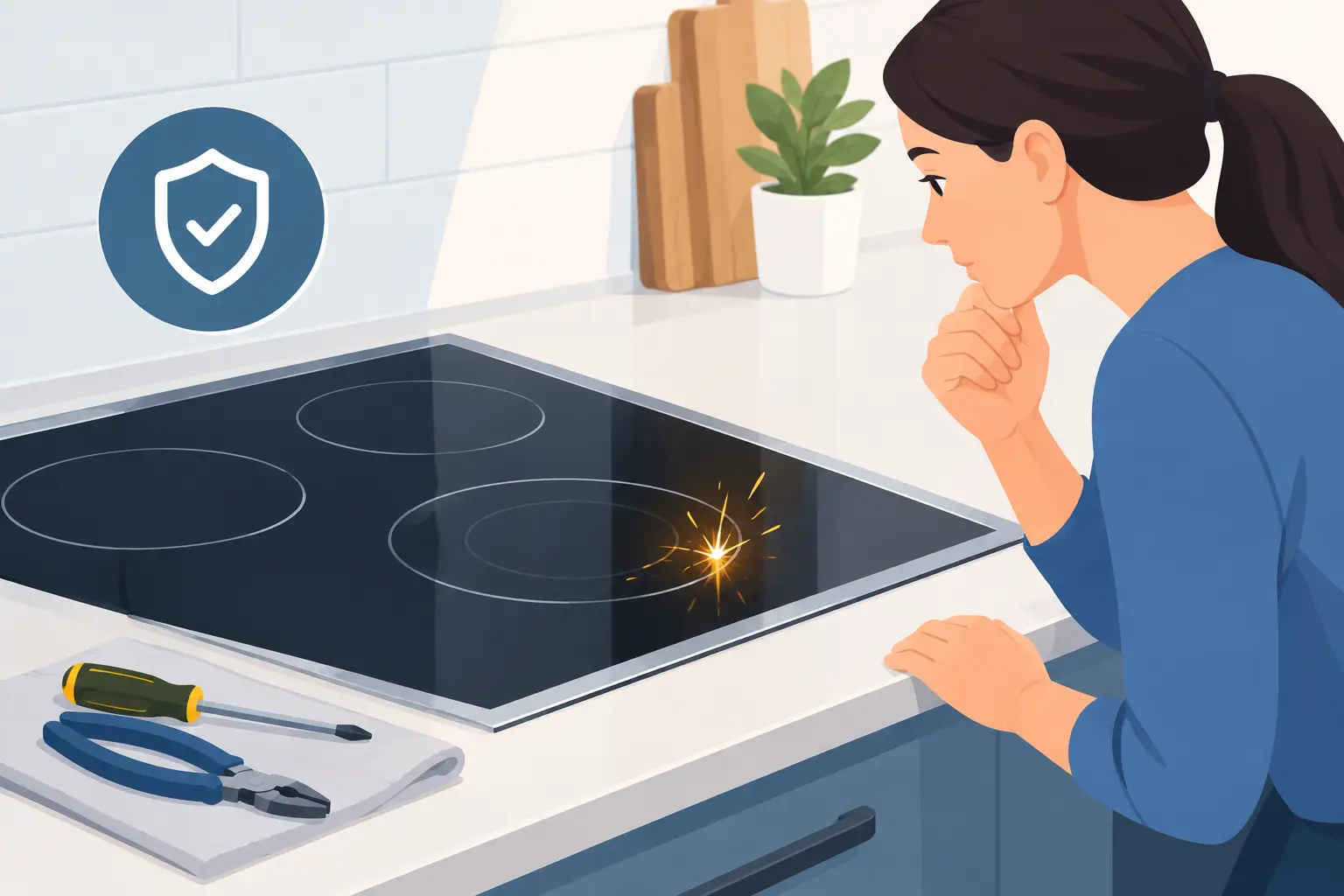
A cooktop that clicks once before lighting is doing its job. A cooktop that keeps clicking after the flame is on, sparks with every burner turned off, or flashes a visible arc is telling you something needs attention. Knowing how to troubleshoot cooktop sparking can help you rule out a simple cleanup issue, protect your kitchen, and avoid being without a working stove when dinner needs to get on the table.
For most gas cooktops, the clicking sound comes from the electronic ignition system. When you turn a burner knob to light, an igniter electrode creates a spark near the burner so gas can ignite. Continuous clicking usually means the system still thinks a burner needs ignition. The cause may be as simple as water under a burner cap, but it can also be a damaged igniter, faulty switch, wiring problem, or failed spark module.
Start With Safety Before Troubleshooting Cooktop Sparking
If you smell gas, hear a hissing sound, see a flame where it does not belong, or notice visible electrical sparking outside the normal burner ignition point, stop using the cooktop immediately. Turn all burner knobs to the off position. Do not light matches, operate electrical switches, or try to test the appliance again. Leave the area and follow your gas utility’s emergency instructions.
For persistent clicking without a gas smell, unplug the cooktop or switch off its circuit breaker before cleaning or inspecting it. Even a gas cooktop uses electricity for ignition, and moisture or damaged wiring can create an electrical hazard. If your unit is hardwired, use the breaker rather than attempting to access electrical connections.
A standard gas burner should produce a brief, controlled spark only when you are trying to light that burner. A visible arc across the cooktop surface, scorch marks, melted parts, or a breaker that trips are not normal signs of ignition. Those symptoms call for professional diagnosis.
Check for Moisture Around the Burners
Moisture is one of the most common reasons a cooktop begins clicking unexpectedly. A boil-over, recent cleaning, steam from a pot, or even a damp cloth can leave water around the igniter electrode or beneath a burner cap. The moisture can create a path for electrical current and keep the ignition system activated.
With power disconnected and the surface cool, remove the grates and burner caps. Check for standing water, food residue, or cleaning solution around each burner base and the small ceramic igniter. Dry the area carefully with a clean towel. Let the cooktop air-dry fully before restoring power. A fan nearby can help, but do not use a heat gun, open flame, or excessive heat on burner components.
Make sure each burner cap is returned to the correct position. Many modern ranges and cooktops will click or light poorly if the cap is slightly off-center. The cap should sit level and fit securely over the burner base. Do not force it into place, especially on premium models with precisely fitted sealed burners.
Clean Food Debris From the Burner Assembly
Grease, sauce, and crumbs can block gas ports and interfere with ignition. After the cooktop is cool and power is off, wipe away loose debris from the burner cap and base. A soft brush or dry toothpick can clear clogged burner holes without enlarging them.
Avoid soaking igniters, spraying cleaner directly into the burner assembly, or using metal tools near the ceramic electrode. Strong cleaners and abrasive pads can damage the igniter tip, wear away markings, or leave moisture behind. If the electrode has a white ceramic body, check it for cracks. A cracked igniter can send the spark to the wrong place instead of toward the burner.
Once the components are dry and correctly reassembled, restore power and test one burner at a time. If the burner lights promptly and the clicking stops, the issue was likely moisture, debris, or cap alignment. If it continues clicking after the flame is established, turn the knob off and move to the next step.
Check Whether a Knob or Ignition Switch Is Sticking
On many gas cooktops, each burner knob operates a small ignition switch. When the knob is turned to the light position, the switch signals the spark module. A switch that is wet, worn, or stuck can keep the entire cooktop clicking, even when every knob appears to be off.
Try gently turning each knob from off to light and back again after the cooktop has dried. Do not force a knob that feels tight, loose, or difficult to turn. If clicking begins or changes when you move one particular knob, that burner switch may be the source of the problem.
This is not usually a safe do-it-yourself repair. Accessing the switch harness requires opening the appliance, and gas cooktops have both electrical connections and gas components below the surface. A trained technician can test the switches and replace the failed part without guessing.
Watch for Signs of an Igniter or Spark Module Failure
A faulty igniter may click but fail to light the burner, spark only intermittently, or create a weak spark in the wrong direction. You may notice one burner takes several attempts to light while the others work normally. A damaged electrode, loose wire, or poor ground can cause this behavior.
When every burner clicks continuously, especially after the surface is dry and the caps are aligned, the spark module or a shared wiring connection may be failing. The spark module distributes power to the igniters. Replacing it often restores normal operation, but the correct part and diagnosis matter. A module problem can look similar to a bad switch, and replacing parts at random can add cost without solving the issue.
Older cooktops, high-use family kitchens, and luxury appliances can each have different ignition layouts. Thermador, Wolf, Viking, Miele, Bosch, GE, Whirlpool, Samsung, and LG models may use different burner designs and part configurations. Model-specific testing helps ensure the repair matches the appliance rather than relying on a generic fix.
When Sparking Means You Should Stop Using the Cooktop
Some symptoms should not wait for another cleaning attempt. Schedule service promptly if you notice any of the following:
- The cooktop clicks continuously after being dried and reassembled.
- You see sparks away from the igniter or find burn marks, damaged insulation, or melted plastic.
- A burner will not light, lights with a delayed whoosh, or produces an uneven flame.
- The circuit breaker trips when the cooktop is used.
- You smell gas, even if the odor seems faint or intermittent.
A delayed ignition can allow gas to collect briefly before it lights, creating a larger flare-up than normal. An electrical arc outside the igniter area can also damage surrounding components over time. Continuing to use the cooktop may turn a repairable ignition issue into a more extensive service call.
What a Professional Cooktop Repair Visit Can Resolve
A technician can safely inspect burner alignment, igniters, switches, wire connections, grounding, and the spark module. They can also check for gas-flow issues that may be affecting ignition, including blocked burner ports or burner components that no longer seat properly.
The value of an in-home diagnosis is clarity. Instead of replacing an entire cooktop because it clicks or fails to ignite, you can get an honest recommendation based on the failed component, the appliance’s condition, and the availability of genuine replacement parts. In many cases, an ignition repair is far more practical than premature replacement.
For Orange County homeowners, AK Appliance Repair provides in-home cooktop diagnostics and repair for gas, electric, and induction appliances, including major and premium brands. Clear estimates let you understand the repair before work begins, and the $75 service fee is waived when you proceed with the repair.
A cooktop should make meal preparation easier, not leave you wondering whether it is safe to use. If drying and careful cleaning do not stop the clicking, treat that sound as a reason to get the appliance checked before your next busy weeknight meal.