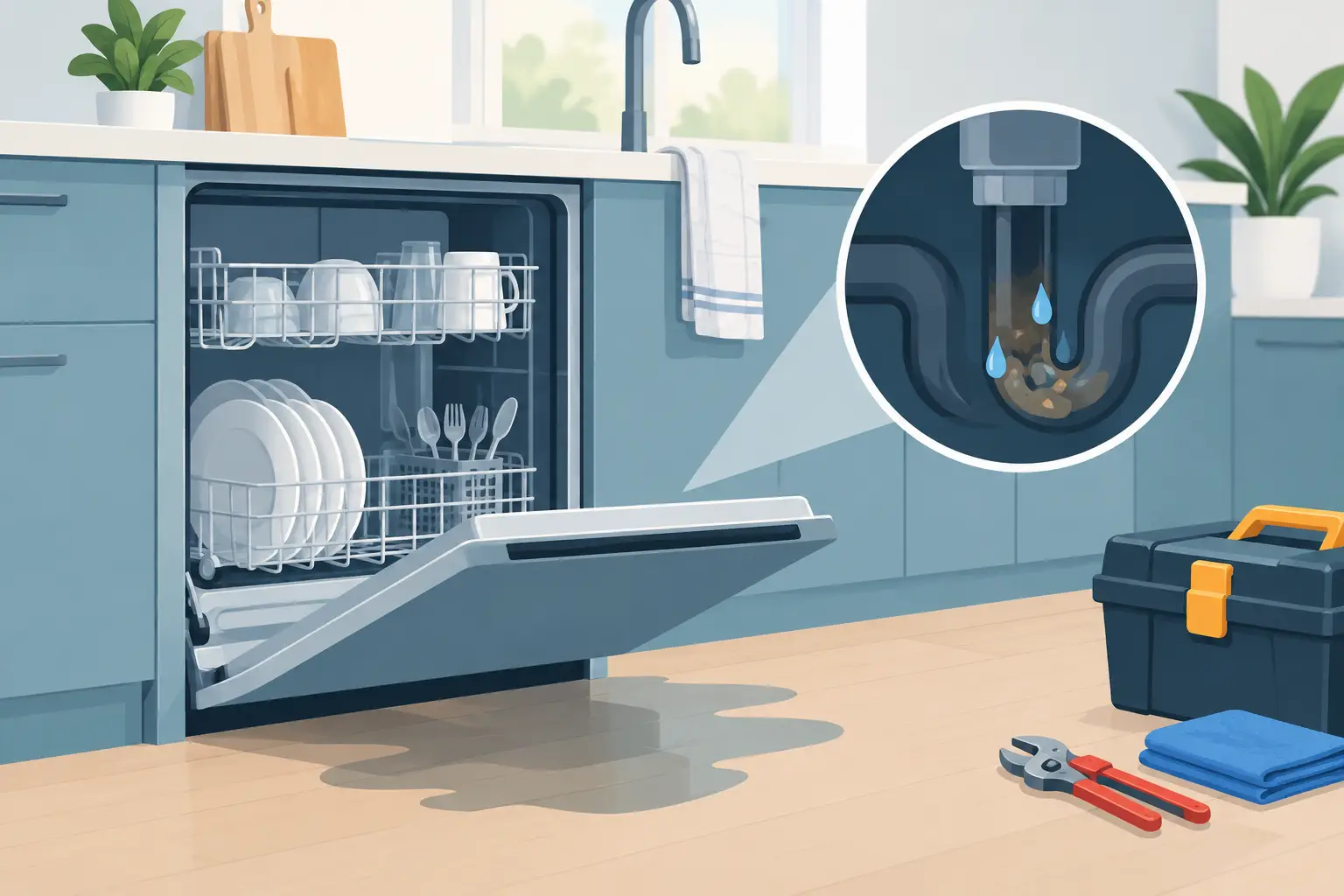
A few inches of cloudy water in the bottom of the dishwasher can stop a normal evening cold. Dishes are trapped, the kitchen may smell unpleasant, and running another cycle can risk a leak onto the floor. This homeowner guide to dishwasher drainage issues explains what may be causing the problem, what you can safely inspect, and when a professional repair is the better choice.
What a Dishwasher Drainage Problem Usually Looks Like
Not every drainage issue looks the same. The clearest sign is standing water left in the tub after a cycle, but slow draining, a gurgling sound at the sink, dirty water backing up, or a strong odor can point to the same system.
A dishwasher normally sends used water through a filter and drain pump, then out through a drain hose connected to the garbage disposal or sink drain. If any part of that path is blocked, kinked, damaged, or not operating correctly, water cannot leave as it should.
The timing matters. Water that appears only after the dishwasher has finished often suggests a restricted filter, hose, or pump. Water that returns to the dishwasher while the sink is draining may be a plumbing or garbage disposal connection issue instead. That distinction can save time and prevent an unnecessary appliance repair.
Safe Checks Before You Schedule Dishwasher Repair
Start by turning off the dishwasher and avoiding another cycle until you know why it is not draining. If water is close to the door opening or has reached the kitchen floor, place towels around the base and do not attempt to force the door shut.
Clean the filter and remove visible debris
Many modern dishwashers have a removable filter at the bottom of the tub. Food particles, labels, broken glass, grease, and small utensils can collect there and restrict water flow. Consult your owner’s manual for the correct removal method, then rinse the filter under warm water and use a soft brush if needed.
While the filter is out, look carefully in the sump area below it. Remove only debris that is clearly visible and easy to reach. Do not put your hand into an area where broken glass may be present, and do not pry at internal components.
A dirty filter is one of the more manageable causes of poor drainage, especially in homes where dishes are loaded with heavy food residue. Still, cleaning it will not solve a failing pump, a damaged hose, or a drainage problem farther down the line.
Check the garbage disposal connection
If the dishwasher drain hose connects to a garbage disposal, run cold water and operate the disposal briefly. A buildup inside the disposal can interfere with dishwasher drainage.
This is especially common after a new disposal installation. The dishwasher inlet has a small knockout plug that must be removed before the dishwasher can drain into the disposal. If the plug remains in place, the dishwasher may never drain properly from the first day of use. This is a straightforward diagnosis for a technician, but it is not something to guess at if the plumbing configuration is unfamiliar.
Look under the sink for a kinked hose
With a flashlight, inspect the flexible dishwasher drain hose beneath the sink. It should not be crushed behind cleaning supplies, sharply bent, or sagging in a way that traps water. A hose that has been pushed out of position during cabinet cleaning or other work can create an immediate drainage problem.
Also look for dampness around hose connections. A loose clamp or split hose can lead to a slow leak inside the cabinet before it becomes visible on the kitchen floor.
Consider the sink drain itself
If your sink is draining slowly, the dishwasher may not be the original problem. A partial clog in the kitchen drain line can prevent dishwasher water from moving out efficiently. In some cases, wastewater can back up into the dishwasher after the sink is used.
Avoid relying on chemical drain cleaners near a dishwasher connection. They can damage plumbing components, create a safety hazard during service, and often do not address the actual obstruction. If both the sink and dishwasher are affected, a plumbing inspection may be needed.
When a Dishwasher Drainage Issue Needs a Technician
A clean filter and clear hose do not rule out an appliance failure. Modern dishwashers use pumps, sensors, electronic controls, and sometimes sophisticated filtration systems to manage water movement. Bosch, Miele, Thermador, Fisher & Paykel, and other premium models can require brand-specific diagnostic steps and parts.
Call for service when the dishwasher hums but does not drain, repeatedly stops with water in the tub, displays an error code, leaks from the bottom or door area, or has a burning smell. These symptoms may involve a failed drain pump, obstruction in the pump housing, damaged impeller, faulty check valve, wiring issue, or control board problem.
A technician can test the pump and electrical components safely, inspect the complete drain path, and identify whether repair makes financial sense. That matters because replacing a pump without confirming the cause can leave the underlying issue unresolved.
For Orange County homeowners, AK Appliance Repair provides in-home diagnostics and repair for standard and premium dishwasher brands. The service fee is waived when you proceed with the repair, and clear estimates help you decide what to do before work begins.
Why You Should Not Ignore Standing Water
Leaving water in the dishwasher for a day or two may seem harmless, but it can create bigger problems. Food residue and moisture encourage odors and bacterial growth. If water reaches door seals or weak connections repeatedly, it can also increase the chance of a leak.
There is also a practical concern: a dishwasher that drains slowly may still appear to complete a cycle. The dishes can come out with residue, and homeowners may assume the detergent or water temperature is to blame. In reality, dirty water may be circulating or remaining in the machine between loads.
If the dishwasher has leaked, check the flooring, cabinet toe-kick, and space beneath the sink. Catching moisture early is far less costly than discovering warped flooring or cabinet damage later.
Preventing Future Dishwasher Drainage Issues
You do not need to prewash every dish, but scraping off bones, large food pieces, produce stickers, and toothpicks helps protect the filter and pump. Check the filter regularly, particularly in a busy household that runs the dishwasher daily.
Use the detergent amount recommended for your machine and water conditions. Too much detergent can leave buildup, while the wrong product for the dishwasher can cause excessive suds and poor performance. Run the disposal before starting the dishwasher if they share a drain connection, and keep the space under the sink clear enough that the drain hose will not be crushed.
Maintenance has limits, though. A dishwasher that suddenly stops draining after years of normal operation may simply have a worn drain pump or internal part nearing the end of its service life. Prompt diagnosis can often restore the appliance without the expense and disruption of premature replacement.
A dishwasher should leave the tub clean and nearly dry after its cycle, not leave you bailing out water before breakfast. If basic checks do not restore normal draining, scheduling a professional diagnosis early can protect your kitchen, your time, and the appliance you rely on every day.