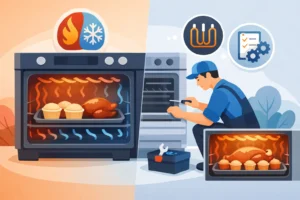
A Thermador oven that will not heat, takes too long to preheat, or cooks one side of dinner faster than the other can disrupt more than one meal. Thermador oven repair is often the practical answer when a premium built-in oven begins acting unpredictably, especially when the issue is traced to a heating component, sensor, control, or door problem rather than the appliance reaching the end of its useful life.
Thermador ovens are designed for precise cooking performance, so even a small change can be noticeable. A roast that takes far longer than usual, cookies that burn on the bottom, or an oven display that will not respond are all reasons to schedule a professional diagnosis before the problem becomes more expensive or leaves you without a working kitchen.
Signs Your Thermador Oven Needs Repair
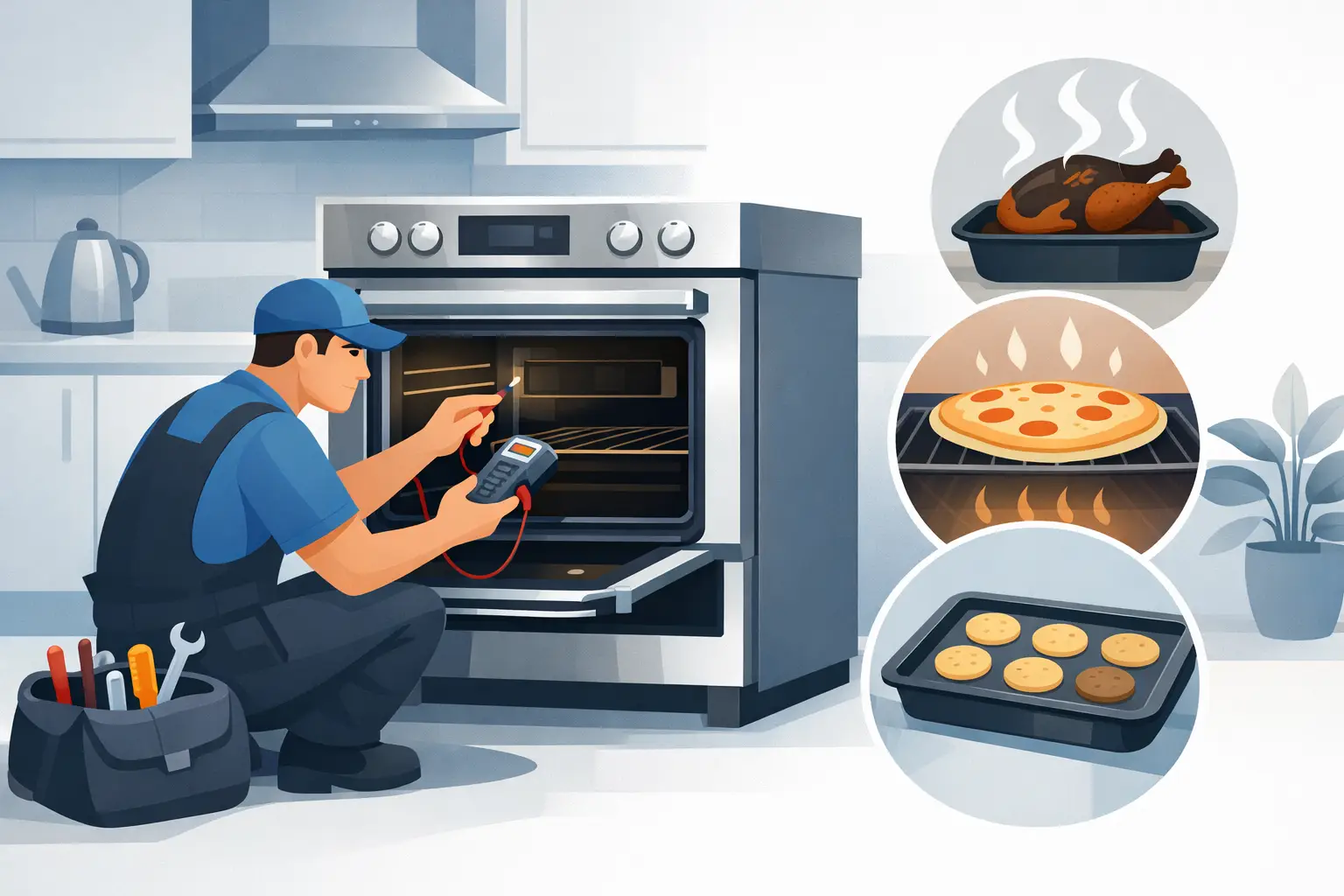
The most common complaint is an oven that does not reach the selected temperature. You may set the oven to 350 degrees, wait through the preheat cycle, and find that food still cooks slowly or unevenly. In an electric model, a weak bake or broil element may be part of the problem. In a gas oven, the igniter, burner system, or gas valve may need attention. A faulty temperature sensor or electronic control can also cause inaccurate heating in either type of oven.
Uneven baking is another clear warning sign. If the top of a casserole is browned while the center remains undercooked, or one rack consistently cooks faster than another, the oven may not be circulating or regulating heat correctly. Convection fans, fan motors, elements, sensors, and door seals all affect how heat moves through the oven cavity. The right repair depends on the specific model and the symptoms, which is why guessing at a part can lead to wasted time and money.
A Thermador oven that will not turn on should also be inspected promptly. Sometimes the cause is simple, such as a tripped breaker or an activated control lock. Other times, the issue involves an electrical connection, thermostat, display, relay board, or control board. If the oven powers on but the display flickers, shows an error code, beeps continuously, or will not accept settings, professional testing can identify whether a component needs to be repaired or replaced.
Door problems deserve attention as well. A door that will not close fully lets heat escape, causing longer cooking times and putting extra strain on heating components. Damaged hinges, a worn gasket, misalignment, or a failed latch can all be responsible. If a self-clean cycle has left the door locked, do not force it open. The locking assembly and related controls need to be checked without damaging the door or surrounding cabinetry.
When a Thermador Oven Repair Is the Better Choice
A premium oven is a significant part of a kitchen, particularly in homes with built-in Thermador appliances and custom cabinetry. Replacing it is not always as straightforward as purchasing a new freestanding range. Cabinet dimensions, electrical or gas connections, ventilation, trim, and matching appliances can all affect the cost and timeline of replacement.
For many common failures, repairing the oven is the more sensible option. Replacing an igniter, heating element, sensor, fan motor, gasket, or switch can restore normal performance at a much lower cost than a replacement appliance. A trained technician can test the oven, explain what failed, and provide a clear estimate before work begins.
That said, repair is not automatically the right answer in every situation. If an older oven has repeated failures, extensive electronic damage, unavailable parts, or repair costs that approach the value of a suitable replacement, an honest recommendation may be to consider replacement instead. The goal is not to sell a repair at any cost. It is to help you make a practical decision based on the appliance’s condition, age, and the repair required.
Why accurate diagnosis matters
Modern Thermador ovens use multiple components to control temperature and cooking modes. A temperature issue may look like a failed heating element, but the actual cause could be a sensor sending incorrect information to the control board. Likewise, a convection problem may involve the fan motor, the element around the fan, a door switch, or wiring.
Replacing parts based on a symptom alone can create more frustration. Proper diagnosis involves checking the oven’s operation, verifying power or gas-related components as appropriate, testing relevant parts, and confirming that the repair solves the original problem. This approach helps protect your appliance and avoids unnecessary part replacement.
What You Can Check Before Calling for Service
There are a few safe checks that can help you describe the problem clearly. First, confirm that the oven has power and that the household breaker has not tripped. If the display is dark, resetting a tripped breaker may restore operation. If it trips again, leave it off and schedule service rather than repeatedly resetting it.
Next, verify that the control lock is not active and that the clock or timer settings are correct. On some models, an incorrect setting can make the oven seem unresponsive. If the oven is heating but food is coming out wrong, try using an oven thermometer as a general reference. Significant temperature differences or major swings during cooking are useful details to share with the technician.
Look at the door gasket for obvious tears, flattening, or areas that no longer contact the oven frame. You can also note whether the oven is failing in every mode or only during bake, broil, convection, or self-clean. These observations help narrow the diagnosis, but they are not a substitute for disassembling or testing the appliance.
Do not remove panels, attempt wiring repairs, or try to bypass a door lock or safety switch. Electric wall ovens use high voltage, and gas oven repairs involve ignition and fuel-system components. A do-it-yourself fix can create a shock, fire, gas, or further equipment-damage risk, particularly in a built-in premium appliance.
What to Expect From In-Home Oven Service
A good service visit should begin with listening to the issue you have noticed: the error code, the cooking mode that fails, when the problem started, and whether it is consistent or intermittent. The technician can then inspect the oven and test the components connected to that symptom.
After diagnosis, you should receive a clear explanation of the recommended repair and its cost. At AK Appliance Repair, the $75 service fee is waived when you proceed with the repair, and technicians use genuine factory parts when available for the appliance. This is especially valuable for Thermador ovens, where correct fit and compatibility matter.
Some repairs can be completed during the first appointment when the required part is available. Others may require ordering a model-specific component, particularly for built-in or specialty configurations. In that case, a straightforward explanation of the needed part and next step helps you plan around the interruption instead of being left wondering what happens next.
Protecting your oven after the repair
Once the oven is working properly, avoid lining the oven floor with foil unless the manufacturer specifically permits it. Foil can interfere with heat circulation and damage surfaces or heating components. Keep spills from building up around the door gasket, and use the self-clean feature according to the model’s instructions. High-heat cleaning cycles can place added stress on older components, so it may not be the best option if the oven already has temperature, door-lock, or electronic-control concerns.
If cooking results start changing again, address the issue early. A minor preheating delay or intermittent error code is easier to diagnose before it turns into a complete no-heat failure on the day you need to host dinner. A prompt, professional repair can help your Thermador oven return to the dependable performance your kitchen relies on.