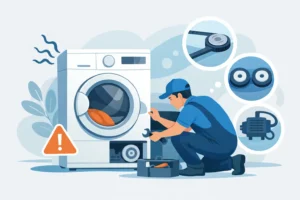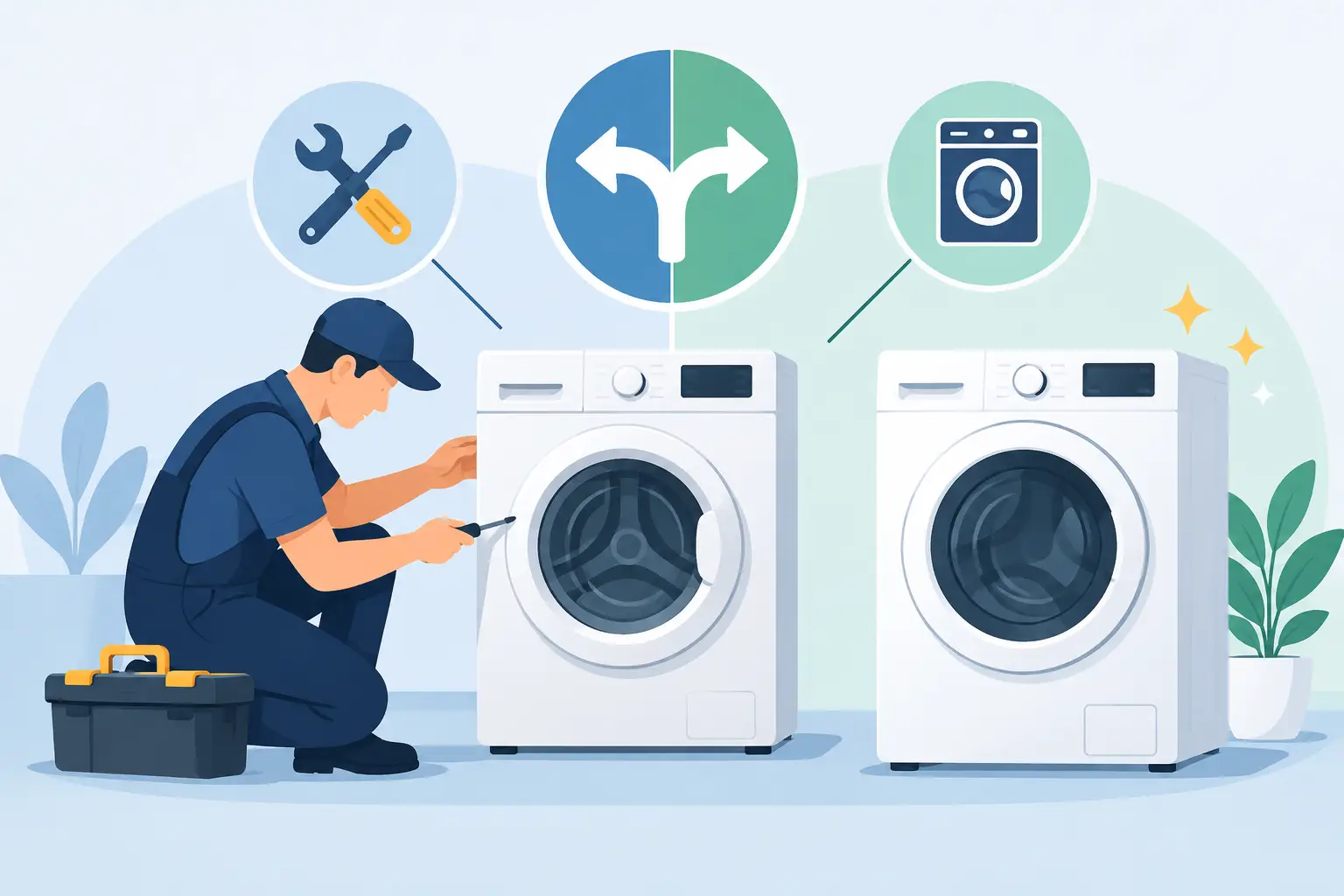
A washer that stops with a tub full of water, shakes hard enough to rattle the laundry room, or leaves clothes soaking wet can throw off an entire day. The right answer to washer repair versus replacement is rarely based on one symptom alone. It comes down to the machine’s age, the cause of the failure, the expected repair cost, and whether a properly completed repair can give your household several more dependable years of service.
For Orange County homeowners, a prompt diagnosis is often the fastest way to turn a frustrating breakdown into a clear decision. A professional can identify whether the issue is a replaceable part, such as a drain pump or door latch, or a more significant problem involving the tub, transmission, or control system.
Washer Repair Versus Replacement: Start With the Diagnosis
A washer can show the same symptom for very different reasons. Water on the floor may come from a loose hose, worn door boot, damaged inlet valve, or a crack in the outer tub. A machine that will not spin may have an unbalanced load, a worn belt, a failed lid switch, a motor problem, or an electronic control issue.
That is why replacing a washer before diagnosing it can be an expensive guess. Many common failures can be repaired at your home with the correct part and testing. A technician should explain what failed, why it caused the problem you noticed, and what the repair will cost before work begins.
A clear estimate also helps you compare options fairly. The purchase price of a new washer is only part of replacement. Delivery, installation, haul-away, new hoses, possible electrical or plumbing adjustments, and time spent selecting a model can all add to the real cost.
The age of the washer matters, but it is not the whole story
Most washers can provide roughly 10 to 15 years of service, depending on the model, usage, maintenance, and water conditions. A machine under seven years old with a repairable part failure is often a strong repair candidate. A washer nearing or past its expected service life deserves a closer cost comparison, especially if it has needed several repairs recently.
Still, age alone should not decide the issue. A well-built premium washer may be worth repairing at an age when a lower-cost model would be harder to justify. Likewise, a newer machine with major tub damage or an unusually costly electronic failure may be better replaced.
A useful rule of thumb is to consider replacement when the repair approaches half the cost of a comparable new washer. It is a guideline, not a fixed rule. If the repair restores a reliable, high-quality machine and the rest of the washer is in good condition, repair may still offer better value. If multiple components are worn or the machine has a history of recurring failures, replacement can be the more practical choice.
When Washer Repair Usually Makes Sense
Repair is often the sensible option when the washer has a single, identifiable failure and has otherwise been working well. Pumps, valves, belts, door locks, lid switches, hoses, suspension components, and many motor-related parts can frequently be replaced without replacing the entire appliance.
Homeowners should also consider repair when the issue is affecting convenience more than the washer’s core structure. For example, a washer that will not drain, fills slowly, displays an error code, or will not start may need a targeted component repair. Once that part is replaced and the machine is tested through a cycle, the washer may return to normal operation.
Repair can be particularly worthwhile for high-end and specialty models. Brands such as Miele, Bosch, LG, Samsung, GE, Whirlpool, and Fisher & Paykel use different designs, controls, and parts. A technician with multi-brand experience can determine whether genuine factory parts are available and whether the repair offers a reasonable service life.
It also makes sense to repair when you want to avoid the disruption of shopping for, receiving, and installing a new machine. For busy families and working households, restoring the current washer quickly can be more valuable than waiting for a replacement delivery window.
When Replacing the Washer May Be Better
Replacement becomes more attractive when the washer has a major structural or mechanical failure. A cracked tub, severe bearing damage, a failed transmission on an older unit, or extensive corrosion can require labor and parts that exceed the appliance’s remaining value.
Repeated breakdowns matter, too. If you have recently paid for multiple unrelated repairs and the washer is still unreliable, putting more money into it may only delay the next interruption. The same is true when replacement parts are discontinued or difficult to obtain for an older model.
Consider replacement if your laundry needs have changed. A growing family may benefit from a larger-capacity washer, while a household with limited space may need a different configuration. Newer machines can also offer improved water use, cycle options, and noise control. Those benefits are real, but they should be balanced against the upfront expense and the fact that a repaired washer may still meet your needs well.
Do not ignore leaks or burning smells
Some washer issues should be addressed right away, whether repair or replacement is ultimately the answer. Shut off the water supply and stop using the appliance if you notice a significant leak, burning odor, smoke, sparking, or repeated electrical tripping. Continuing to run the machine can damage flooring, create a mold risk, or turn a manageable repair into a larger household problem.
Other warning signs deserve prompt service before they worsen:
- Grinding, banging, or roaring noises during spin cycles
- Water remaining in the tub after a cycle ends
- A washer that walks, shakes violently, or will not balance
- Error codes, failed starts, or cycles that stop unexpectedly
These symptoms do not automatically mean the washer is finished. They mean the appliance needs a qualified assessment before another load creates more damage.
Look Beyond the Repair Price
A low repair quote is not automatically the best value, and a high quote does not automatically mean replacement is necessary. Ask what is included: the diagnosis, labor, part quality, installation, testing, and any applicable warranty information. A repair using the correct factory part and completed testing is different from a temporary fix that leaves the original cause unresolved.
It also helps to think about the washer’s condition as a whole. Has it been maintained? Does it run quietly outside of the current issue? Is the drum stable? Are there signs of rust, recurring leaks, or control problems? A technician can use these details to give an honest recommendation rather than simply recommending the most expensive option.
At AK Appliance Repair, the goal is to give homeowners a clear answer after an in-home diagnosis. The $75 service fee is waived when you proceed with a repair, and the estimate should make it easier to decide whether repairing the machine is a sound investment or whether replacement is the wiser next step.
Make the Decision Before Laundry Piles Up
If possible, avoid running repeated test loads when your washer is malfunctioning. Note the error code, where any water appeared, which part of the cycle failed, and any unusual sounds. Those details can speed up diagnosis and help prevent additional damage.
The best choice is the one that restores dependable laundry service without wasting money on a short-lived fix or replacing a machine that still has useful life left. A straightforward professional diagnosis gives you the information to choose with confidence, then get back to clean clothes and a normal routine.