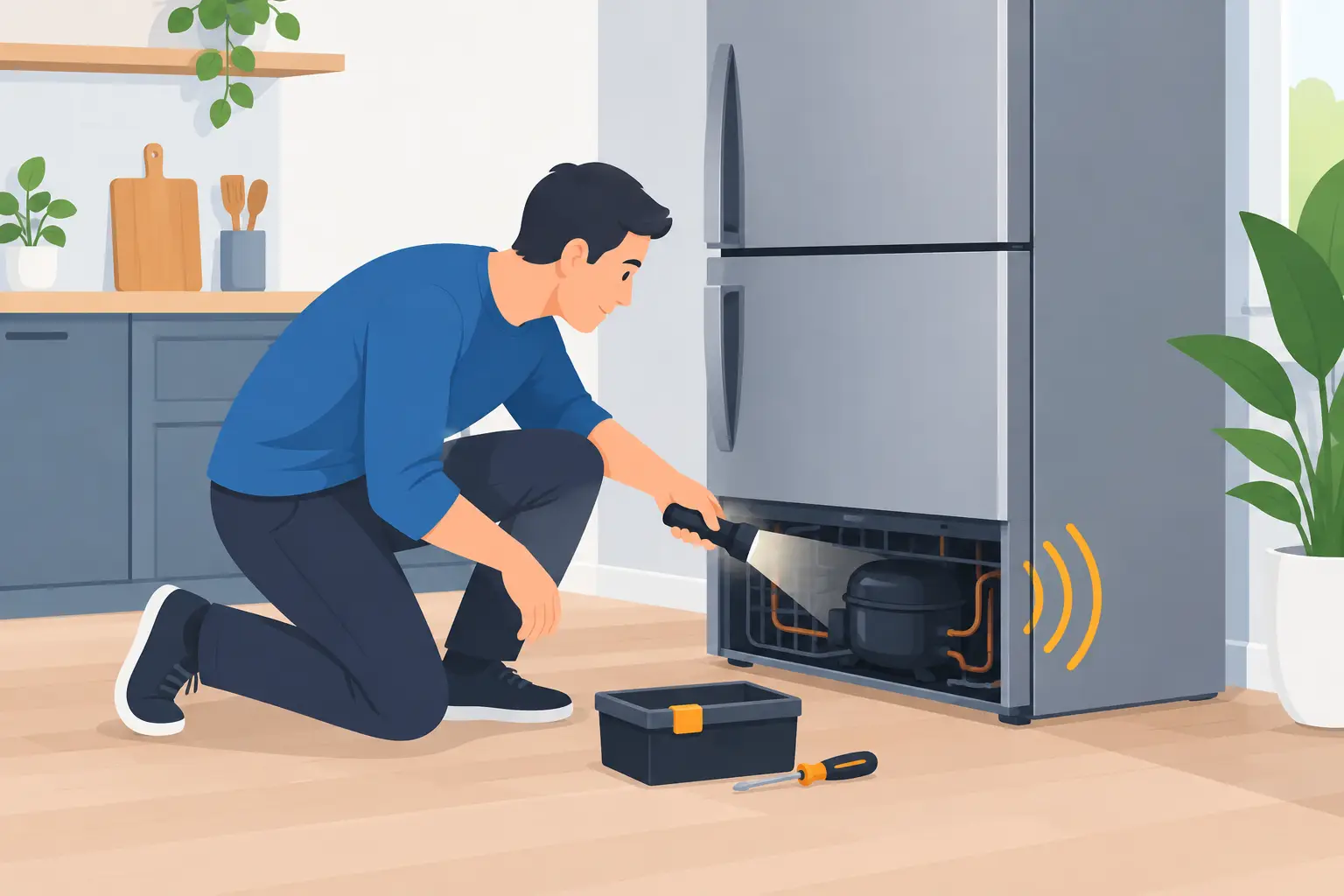
A refrigerator that suddenly buzzes louder than usual can make the whole kitchen feel like something is about to fail. Before you search for how to fix refrigerator buzzing, listen closely to when the sound happens and check whether the refrigerator is still cooling normally. Some buzzing is part of normal operation. A persistent, harsh, vibrating, or new buzzing sound can point to a simple adjustment or a part that needs professional attention before food begins to spoil.
Start by identifying the type of buzz
Refrigerators make several ordinary sounds during the day. The compressor may hum or buzz as it starts, fans may run while the unit cools, and an ice maker can make a brief mechanical sound as it fills or harvests ice. These sounds should be relatively quiet and intermittent.
A problem is more likely when the buzzing is loud enough to hear from another room, lasts for long periods, comes with rattling or clicking, or appears alongside warm food compartments, frost buildup, water leaks, or a refrigerator that runs almost constantly. The timing of the noise matters too. A buzz from behind the refrigerator usually has a different cause than a sound coming from inside the freezer.
Before inspecting anything, protect your food. Keep refrigerator and freezer doors closed as much as possible. If the appliance is not cooling, move perishable items to a cooler with ice or another working refrigerator while you arrange service.
Check the easy causes first
Make sure the refrigerator is level and not touching the wall
A refrigerator can buzz or vibrate when it sits unevenly on the floor, presses against cabinetry, or touches the wall behind it. Pull it forward carefully, leaving adequate space around the cabinet for ventilation. Check that the water line, power cord, and rear panel are not pressed tightly against the wall.
Then place a level on top of the refrigerator. Many models have adjustable front leveling legs. A slightly forward-tilted position often helps the doors close properly, but the exact adjustment depends on the model. If you are unsure, avoid forcing the legs or moving a heavy built-in unit without help.
Secure loose items and exterior panels
Sometimes the appliance itself is fine. A loose magnet, a dish stored on top of the refrigerator, or an item wedged between the cabinet and wall can amplify normal compressor vibration. Remove objects from the top and sides, then listen again.
If the buzzing seems to come from the back, look for an obviously loose rear access panel or drip tray. Unplug the refrigerator before touching any panel. Do not remove covers around electrical components simply to investigate a noise. A loose exterior screw can be tightened, but a bent panel, damaged wiring, or persistent vibration needs a technician to determine the real source.
Check the water supply and ice maker
A refrigerator with an ice maker may buzz when the water inlet valve opens. A brief buzz during the fill cycle is usually normal. A loud buzz that occurs repeatedly, especially when no water enters the ice maker, can mean the water supply valve is shut off, the line is kinked, or the inlet valve is failing.
First, confirm the household water shutoff valve behind or beneath the refrigerator is fully open. Check for a visibly pinched water line after moving the appliance. If you do not use the ice maker, turn it off according to your model’s instructions. Running an ice maker without a water supply can create an irritating buzz and may contribute to unnecessary wear.
How to fix refrigerator buzzing from the freezer
A buzz or hum inside the freezer is often related to the evaporator fan. This fan circulates cold air through the refrigerator and freezer compartments. When frost accumulates around the fan blade, it may begin to buzz, scrape, or make a muffled grinding sound.
Open the freezer and look for heavy frost on the rear interior panel or around the air vents. Frost may indicate a defrost-system issue, a door left slightly open, or a worn door gasket allowing warm, humid air inside. Make sure food packages are not blocking the door from sealing. Wipe the gasket clean with warm, soapy water and check for tears, gaps, or areas that no longer sit flat.
Do not chip ice away with a knife, screwdriver, or other sharp object. It is easy to puncture a refrigerant line or damage the liner, turning a manageable repair into a major replacement decision. A full manual defrost may temporarily stop fan noise on some models, but recurring frost means the underlying cause still needs to be diagnosed.
Look behind the refrigerator with care
If the buzzing comes from the lower rear of the appliance, the compressor area, condenser fan, or start components may be involved. Dust-covered condenser coils and a dirty fan can make the refrigerator work harder and run louder. On many standard models, you can safely vacuum loose dust from accessible coils after unplugging the unit. Use a brush attachment and avoid bending the coil fins or disturbing wires.
Not every refrigerator has exposed coils in the same location. Premium, built-in, and counter-depth models may use a different configuration, and moving them improperly can damage flooring, water connections, or cabinetry. If you own a Sub-Zero, Miele, Thermador, Viking, Wolf, or another specialty appliance, model-specific service is often the safer choice.
A condenser fan with a damaged blade, worn motor, or obstruction can buzz loudly. Likewise, a failing compressor relay may create a buzz followed by a click every few minutes. Those are not do-it-yourself repairs. Compressor electrical components can retain risk even after the refrigerator is unplugged, and the correct diagnosis requires testing rather than guesswork.
When buzzing means you should call for repair
Schedule professional refrigerator repair promptly if the buzzing is accompanied by poor cooling, repeated clicking, a burning smell, tripped breakers, water leaks, or a hot exterior cabinet. Unplug the refrigerator immediately if you smell burning insulation or see smoke, then keep the area clear and contact a qualified technician.
You should also call if the sound continues after you have leveled the refrigerator, cleared items away from it, and checked the ice maker water supply. Replacing a fan motor, inlet valve, defrost component, compressor relay, or control board without confirming the failure can waste money and leave the original problem unresolved.
For Orange County households, AK Appliance Repair can diagnose buzzing refrigerators in the home, explain what is causing the noise, and provide a clear estimate before repair. The $75 service fee is waived when you proceed with a repair, helping you make a practical decision based on the appliance’s condition rather than a guess.
A few habits that help prevent future noise
Keep the refrigerator slightly away from walls, avoid overpacking freezer vents, and clean accessible dust around the condenser area periodically. Replace damaged door gaskets promptly and address water-line problems before the ice maker begins running dry. These small checks help the appliance maintain airflow, cycle normally, and avoid unnecessary strain.
If the buzz is new, unusually loud, or paired with a change in cooling performance, treat it as an early warning rather than background noise. Getting the cause checked while the refrigerator is still protecting your groceries is usually easier, less stressful, and more affordable than waiting for a complete breakdown.