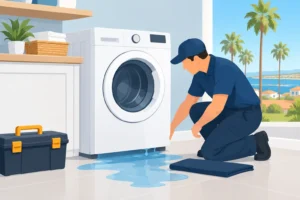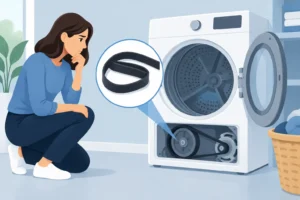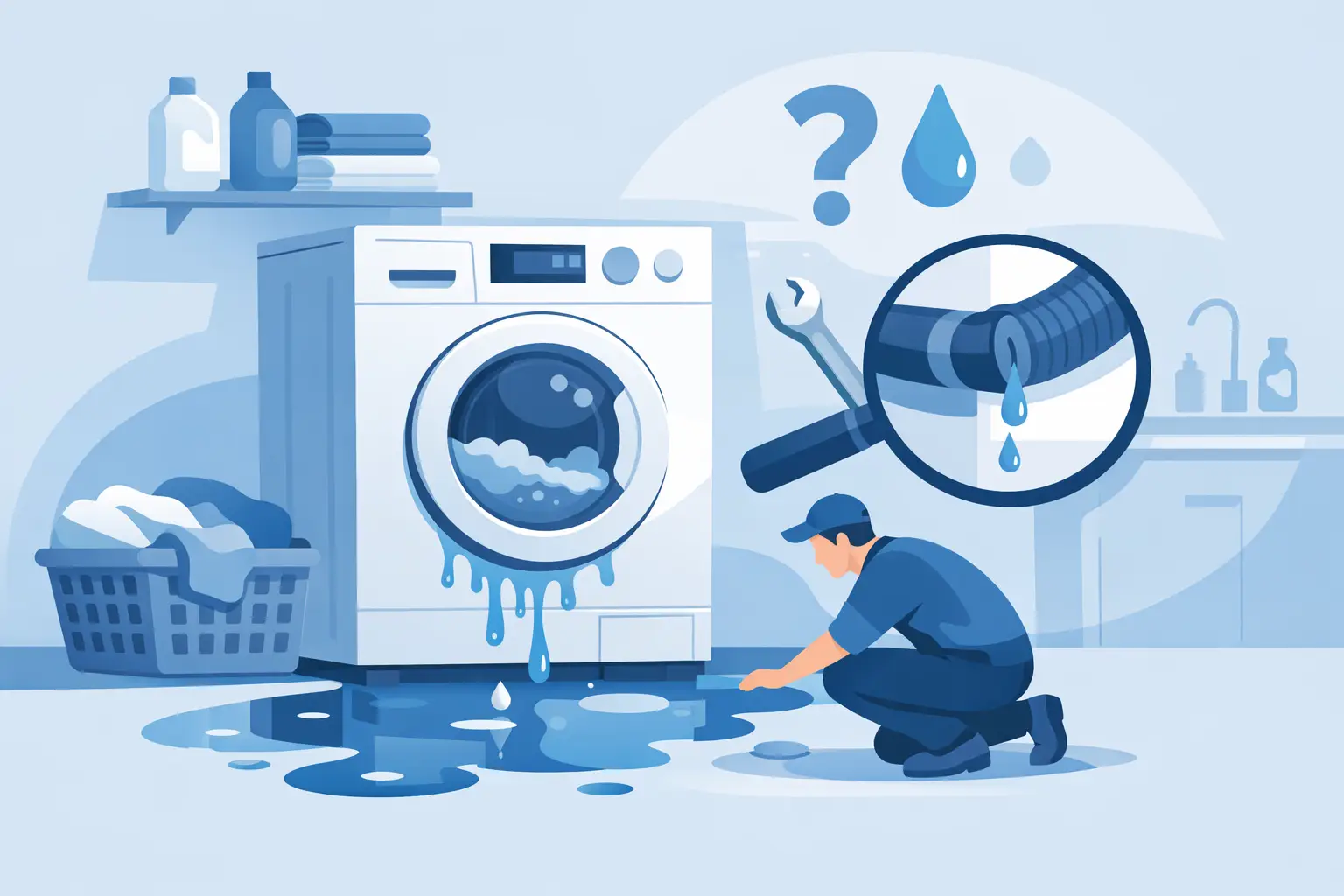
A puddle beside the washing machine can turn a normal laundry day into a flooring, drywall, or downstairs-ceiling problem fast. If you are asking, “why is my washer leaking,” the location of the water and the point in the cycle when it appears can narrow down the cause. Some leaks come from an easy-to-correct hose connection. Others come from a worn internal part that needs professional replacement before the washer causes more damage.
First, protect your home from the leak
Do not start another load to see whether the problem repeats. Turn the washer off, shut off the hot and cold water valves behind the machine, and mop up standing water. If it is safe to reach the plug without stepping in water, unplug the washer as well.
Move towels, laundry baskets, and anything absorbent away from the area. If water has traveled under the washer or into an adjoining room, take photos for your records and look for signs of swelling baseboards, damp carpet, or water below the laundry area. A slow leak can be just as damaging as a dramatic one because it may go unnoticed for days.
Once the water is under control, look at where it first appears. Water at the back, front, underneath, or near the drain pipe points to different washer repair needs.
Why is my washer leaking from the back?
A leak behind the washer is often related to the water supply hoses. These hoses carry hot and cold water from the wall valves to the appliance. Their rubber washers can wear out, connections can loosen, and older hoses can crack or bulge.
With the water turned off, check whether either hose connection feels loose. You may see mineral buildup, rust, or moisture around the fittings. A connection may only leak while the washer is filling, so a dry floor after the cycle does not always rule it out. Avoid overtightening plastic fittings, which can crack and create a bigger problem.
The drain hose is another common source at the back of the machine. If it has slipped too far into the standpipe, is kinked, or is not secured properly, water can spill out when the washer drains. A clogged household drain can also force water back up and out of the standpipe. In that situation, the washer itself may be working normally, but continuing to run it can send more water onto the floor.
Leaks at the front of a front-load washer
Front-load washers use a flexible rubber door boot, also called a door gasket, to keep water inside the drum. Small tears, worn folds, trapped hairpins, or debris caught along the gasket can create a leak near the door. Water may appear during the wash or rinse portion of the cycle, often directly beneath the door.
Open the door and inspect the gasket carefully with a dry cloth. Check the folds for coins, buttons, pet hair, and sharp items that could have damaged the rubber. Do not use a knife or other sharp tool to clean it. If the gasket is torn or no longer sealing correctly, it generally needs replacement rather than a patch.
The detergent dispenser can also overflow at the front of some models. Too much detergent, especially regular detergent used in a high-efficiency machine, creates excess suds. Those suds can push water out through the dispenser or door area. Fabric softener or detergent residue can clog the dispenser channels over time, causing water to back up instead of flowing into the tub.
Using the recommended amount of HE detergent may solve an oversudsing problem, but a recurring dispenser overflow deserves an inspection. A clogged inlet, damaged dispenser housing, or water-flow issue can look similar from the outside.
Water leaking from underneath the washer
Water under the center or front edge of the washer is harder to diagnose because several internal components may be involved. A worn drain pump, loose pump hose, damaged tub-to-pump hose, or failing tub seal can allow water to escape beneath the cabinet.
A drain pump leak often becomes noticeable when the washer empties. You may hear unusual humming, grinding, or rattling during draining before you see water. Small objects left in pockets can make their way into the pump area and damage parts or interfere with drainage.
A tub seal leak may be accompanied by a noisy spin cycle, vibration, or rust-colored streaks beneath the washer. This repair can involve significant disassembly, particularly on premium or tightly installed machines. It is not a good candidate for trial-and-error repairs, since moving the appliance or removing panels incorrectly can damage hoses, wiring, or flooring.
For top-load washers, a leak under the cabinet may also come from a damaged tub, worn seal, or hose that leaks only when the tub is full. The timing matters. Water that appears during filling points toward a supply, dispenser, or tub issue, while water that appears only during draining more often points to the pump, drain hose, or plumbing connection.
A washer can leak because it is overloaded or unlevel
Not every leak means a failed part. Overloading the washer can prevent clothing from moving properly and may cause water to splash over the tub or force a front-load door seal out of position. Bulky blankets, comforters, and bath mats are frequent troublemakers when they are packed tightly into the drum.
An unlevel washer can also vibrate excessively during spin. Over time, that movement can loosen hose connections or place added stress on internal components. If the washer rocks when you press on opposite corners, it should be leveled before it is used again. Still, leveling will not fix a torn gasket, failed pump, or clogged drain line, so it is best viewed as one possible factor rather than a cure-all.
What you can check and what to leave to a technician
Homeowners can safely check visible hoses, confirm that water valves are off, remove obvious debris from the door gasket, and use the correct detergent in the correct amount. You can also make a note of the exact cycle stage when the leak happens. That information helps speed up diagnosis.
Internal leaks should be handled by a qualified washer repair technician. Removing the cabinet, accessing the pump, replacing a door boot, or diagnosing a tub seal requires the right tools and model-specific knowledge. This is especially true for high-end brands, where parts and access procedures vary widely.
A technician can identify whether the repair is a simple hose or clamp issue, a pump replacement, a gasket repair, or a plumbing-related backup. The goal is not just to stop the visible water, but to correct the source so the leak does not return during the next full load.
When to schedule washer repair right away
Schedule service promptly if water is coming from underneath the machine, the leak returns after you tighten a visible connection, or the washer is making new noises while draining or spinning. You should also call for help if water is backing up from the standpipe, the door gasket is torn, or the leak has reached flooring or walls.
For Orange County households, AK Appliance Repair provides in-home washer diagnostics and clear repair recommendations for standard and premium laundry appliances. The $75 service fee is waived when you proceed with a repair, and a technician can determine whether a genuine replacement part will restore the machine safely.
A washer leak rarely improves on its own. Keeping the water off and getting the source diagnosed early gives you the best chance to protect your home and get laundry back to normal without an avoidable, larger repair.