A dinner that takes twice as long to cook, cookies that burn on one side, or an oven that will not reach temperature can turn a normal evening into a frustrating one. These oven repair warning signs often start small, but they can lead to wasted food, interrupted routines, and safety concerns if they are ignored. A prompt professional diagnosis can often restore the appliance before a minor part failure becomes a larger repair.
Oven Repair Warning Signs You Should Not Ignore
1. Your oven does not heat up
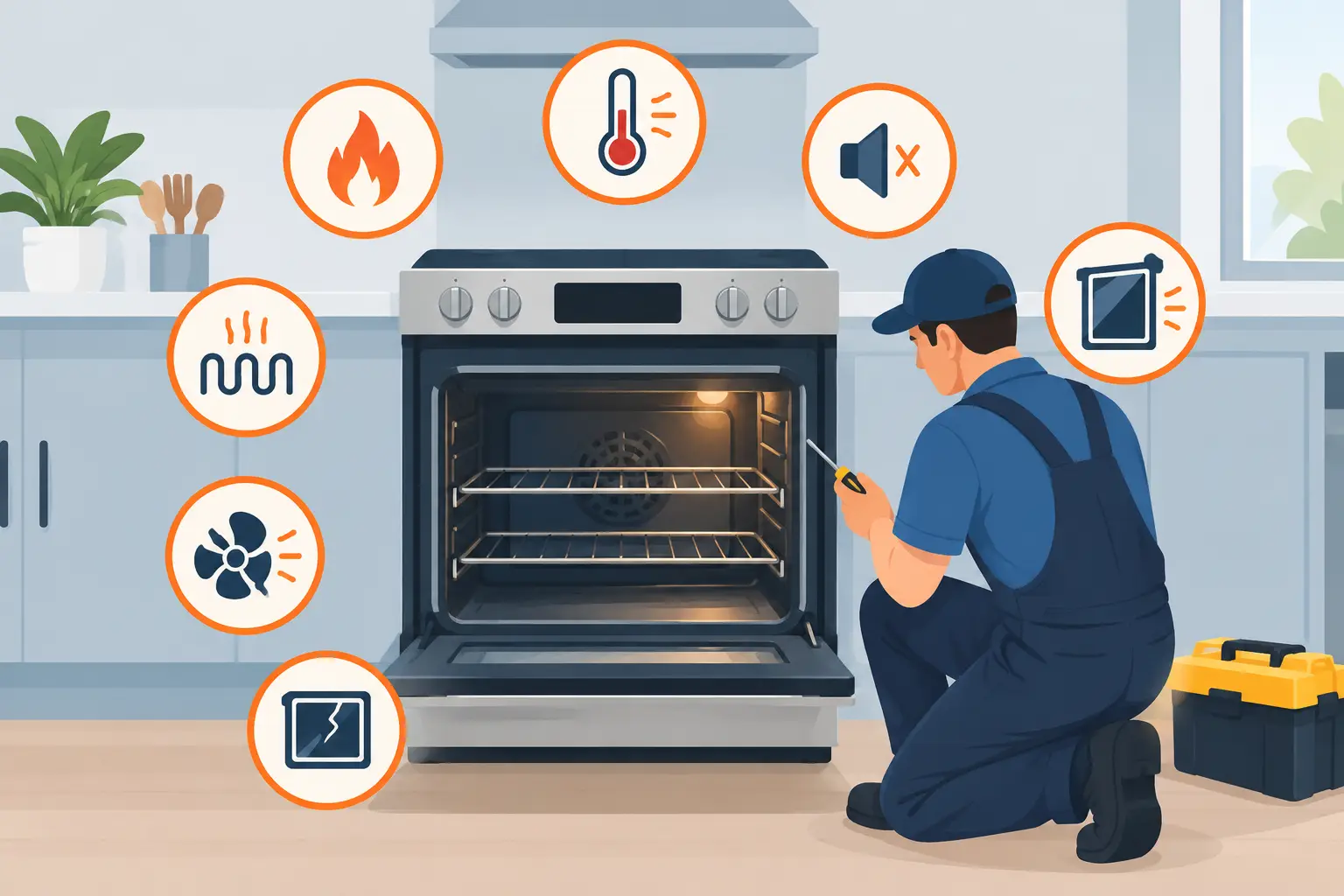
If the display says the oven is preheating but the cavity stays cool, the problem may involve a failed bake or broil element, igniter, temperature sensor, control board, or power supply. On an electric oven, an element may look visibly damaged, blistered, or broken. On a gas model, you may hear the igniter clicking without the burner lighting.
Do not keep restarting the oven in hopes that it will catch up. Repeated attempts can strain failing components, and a gas oven that does not ignite correctly deserves prompt attention.
2. Food cooks unevenly
One of the most common symptoms homeowners notice is uneven cooking. A casserole may be hot around the edges and cold in the center, or one side of a sheet pan may brown much faster than the other. This is not always a recipe or cookware issue, especially when it happens consistently.
Uneven heat can point to a weak element, a failing convection fan, poor air circulation, or a sensor that is sending inaccurate information to the controls. Before calling for service, try moving oven racks and using a separate oven thermometer to confirm the pattern. If the temperature still varies from one area to another, a technician can identify the source.
3. Preheating takes much longer than usual
Most ovens need time to preheat, but a noticeable change matters. If a unit that normally reaches 350 degrees in 10 to 15 minutes now needs 30 minutes or more, it may be operating with only one heating component working properly.
This can be particularly confusing because the oven may eventually reach the selected temperature. Even so, slow preheating often means a component is weakening. Scheduling a repair early can help prevent a complete no-heat failure before a holiday meal, family gathering, or busy weeknight.
4. The displayed temperature does not match the actual temperature
An oven can appear to work while still running too hot or too cool. Signs include undercooked centers, burned bottoms, baking that takes far longer than expected, or recipes that fail despite using familiar settings. A basic oven thermometer can help confirm whether the oven is holding near the chosen temperature.
A difference of a few degrees can be normal, since ovens cycle on and off to maintain heat. A consistent gap of 25 degrees or more, frequent temperature swings, or heat that keeps climbing past the setting calls for service. Depending on the model, calibration may help, but a faulty sensor, thermostat, relay, or control board may need repair or replacement.
5. You smell gas or notice delayed ignition
A brief gas smell when a gas oven first lights can occur, but a strong, lingering, or repeated gas odor is not something to troubleshoot yourself. Turn the oven off, avoid flames and electrical switches near the appliance, ventilate the area if it is safe to do so, and follow the gas utility’s safety guidance.
Delayed ignition is another concern. If the oven clicks repeatedly, lights with a whoosh, or takes several seconds to ignite, a weak igniter or burner issue may be involved. Gas appliance repairs require the right testing procedures to protect your home and household.
6. The oven door will not close or lock correctly
A loose, crooked, or poorly sealed door lets heat escape. You may notice longer cooking times, hot air around the front of the range, or unusually warm cabinets nearby. Damaged hinges, worn door springs, a warped door, or a failing gasket can all contribute.
For self-cleaning ovens, a door that will not lock or unlock can leave the appliance unusable. Avoid forcing the latch. A technician can inspect the lock assembly and related controls without damaging the door or finish.
7. The oven trips the breaker or shows an error code
A breaker that trips once may have a simple cause, but recurring trips should be taken seriously. The issue could involve a shorted heating element, damaged wiring, moisture, or an internal electrical component. Resetting the breaker repeatedly is not a repair and can mask an electrical hazard.
Error codes also provide a useful clue, but they do not always identify the exact failed part. Write down the code, the brand and model number, and what the oven was doing when the message appeared. That information helps a repair technician arrive prepared for an efficient diagnosis.
8. You see sparks, smoke, or damaged heating elements
Sparks, popping sounds, visible arcing, or smoke from inside an electric oven require immediate attention. Turn the appliance off and disconnect power if you can do so safely. A damaged element can short against the oven cavity, while smoke may come from burned food residue or a failing electrical part.
The trade-off is simple: a small amount of smoke from spilled grease may clear after the oven cools and is cleaned, but sparks, repeated smoke, or a burning-plastic smell are not routine maintenance issues. Do not operate the oven again until the cause has been checked.
9. The controls are unresponsive or act on their own
A touchscreen, keypad, dial, or display that does not respond can stop meal preparation quickly. More concerning are controls that change settings, turn on unexpectedly, reset the clock, or continue heating after the oven should be off.
Sometimes the cause is limited to a worn keypad or loose connection. In other cases, a control board failure is involved. Because modern ovens rely heavily on electronic controls, correct diagnosis matters, particularly for premium and built-in models where the wrong part replacement can be costly.
10. The self-clean cycle causes problems
The self-clean setting uses extremely high heat, which can expose a weak door lock, thermal fuse, control board, or heating component. If the oven stops working after a self-clean cycle, will not unlock, or displays an error message, avoid repeatedly running the cycle or forcing the door open.
For some older ovens, regular manual cleaning is easier on aging components. For newer models, following the manufacturer’s cleaning instructions is still the best approach. Either way, a failure after self-cleaning is a good reason to request an in-home inspection.
When to Call for Oven Repair
Call promptly for gas odors, sparks, breaker trips, smoke with an electrical smell, a door that will not unlock, or an oven that continues heating when turned off. These symptoms may involve safety risks and should not wait for a convenient time.
For slow preheating, uneven baking, inaccurate temperatures, and intermittent error codes, service is still worthwhile before the oven fails completely. Repair is often the practical choice when the appliance is otherwise in good condition and the needed part is available. With older units or major control failures, the best option depends on the oven’s age, repair cost, condition, and the value of replacing it.
AK Appliance Repair provides in-home oven diagnostics for Orange County households, including service for standard, premium, and luxury brands. You receive a clear estimate before repair work begins, and the $75 service fee is waived when you proceed with the repair.
If your oven is changing the way you cook, do not wait until it quits before addressing it. A timely inspection can help you plan confidently, protect your kitchen routine, and get back to cooking meals with reliable heat.