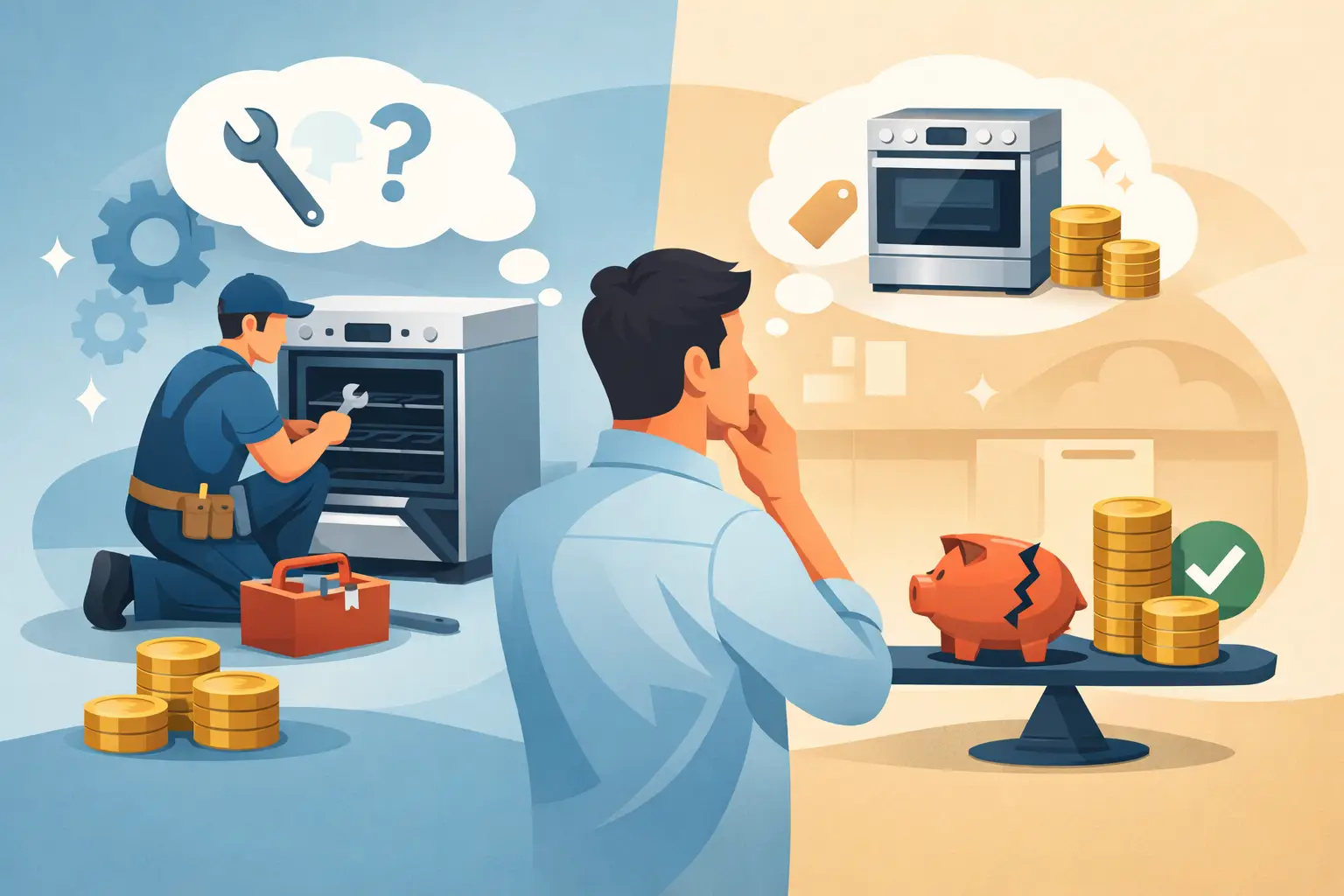
A dinner plan can unravel quickly when an oven will not heat, takes twice as long to bake, or fills the kitchen with an unusual smell. Is oven repair worth it when a replacement may seem simpler? For many Orange County households, the answer is yes, especially when the problem is limited to a replaceable part and the oven otherwise fits the kitchen, performs well, and has years of useful life left.
The right decision is not based on age alone. It comes down to the type of failure, the condition of the appliance, the cost of a proper repair, and whether there is any safety concern. A clear in-home diagnosis takes the guesswork out of the choice.
Is Oven Repair Worth It? Start With the Actual Problem
Some of the most frustrating oven problems have relatively straightforward causes. An electric oven that will not heat may have a failed bake element, broil element, temperature sensor, relay, or control issue. A gas oven that will not ignite may need attention to its igniter, burner, wiring, or safety components. Uneven baking can result from a weak heating element, a faulty sensor, damaged door gasket, or poor airflow.
Those parts matter, but they do not automatically mean the appliance is finished. In many cases, replacing the failed component restores normal cooking without the expense and disruption of shopping for, delivering, and installing a new wall oven or range.
A professional diagnosis is especially useful when symptoms overlap. For example, an oven that runs too hot may appear to have a thermostat problem, but the temperature sensor or electronic control board could be responsible. Replacing parts without confirming the cause can turn a manageable repair into wasted expense.
When Repair Is Usually the Better Value
Repair is often the practical choice when the oven is under 10 years old, has been reliable until now, and needs one identifiable component. It can also make sense for a newer appliance with a more expensive part if replacement would require electrical, cabinet, gas-line, or installation work.
Built-in wall ovens deserve special consideration. Replacing one is not always as simple as ordering a similar model. Cabinet cutout dimensions, trim, wiring, ventilation requirements, and matching appliances can all affect the real cost. A repair that keeps a built-in unit operating can be substantially less disruptive than a full replacement project.
The same is true for premium and luxury brands. Ovens from Miele, Thermador, Wolf, Viking, Bosch, and similar manufacturers are designed with specialized components and may be worth repairing well beyond the point at which a basic entry-level oven would be replaced. The key is using a technician who understands the brand and can source the correct factory part.
Repair may be the stronger option when the appliance matches the rest of a kitchen suite, has features your household uses regularly, or is difficult to replace without remodeling. Convection modes, steam functions, warming drawers, double-oven configurations, and custom panels are worth factoring into the decision, not just the price of a new appliance.
When Replacing an Oven Can Make More Sense
There are cases where replacement is the more sensible long-term move. If an older oven has several recurring failures, severe rust or interior damage, a failing control board plus other worn parts, or an unavailable component, putting more money into it may not be the best value.
An oven nearing the end of its expected service life can also be a poor repair candidate when the estimate is high relative to a comparable replacement. As a general guideline, homeowners often reconsider repair when the cost approaches half the price of a new unit. That is not a strict rule. A $900 repair on a premium built-in oven can be reasonable, while a $400 repair on a basic 15-year-old range may not be.
Replacement is also worth considering if the oven no longer meets your household’s needs. A growing family may need greater capacity. An older model may lack the cooking modes or energy performance you want. If the appliance has caused repeated interruptions to meals and the latest repair would only address one of several problems, a new unit can offer more confidence.
Safety Problems Should Not Be a Cost Comparison
Do not keep using an oven with a possible gas leak, burning-wire odor, smoke from the control area, frequent tripped breakers, sparks, or a door that will not close securely. These issues require prompt professional attention, whether the final outcome is repair or replacement.
For gas ovens, a delayed ignition, clicking without ignition, yellow or uneven flames, or a gas odor should be treated seriously. Turn the appliance off, avoid using open flames or electrical switches near a suspected leak, and follow local gas safety guidance. A technician can inspect the ignition system, burner operation, gas connections, and related components to identify the source safely.
Electric ovens can also create hazards when wiring overheats or a damaged element arcs. Continuing to cook through the problem can damage additional parts and raise the final repair cost. Fast diagnosis is not only about getting dinner back on schedule. It can help prevent a small issue from becoming a larger one.
Consider the Full Cost, Not Just the Repair Estimate
A repair estimate should be clear about what is included: diagnosis, labor, required parts, and any applicable warranty. Then compare it with the complete cost of replacement, not just the sticker price of a new oven.
A replacement may involve removal and disposal of the old appliance, delivery charges, installation, electrical or gas connections, cabinet modifications, trim adjustments, and time away from home for delivery windows. For wall ovens and high-end ranges, these added costs can be significant.
It also helps to consider what a working oven is worth to your daily routine. A household preparing meals every night may value a same-day repair differently than someone who rarely cooks. If you are relying on takeout, borrowing a neighbor’s kitchen, or rearranging family meals around a broken appliance, quick restoration has real value.
AK Appliance Repair provides in-home diagnostics and clear estimates so homeowners can make that comparison with the facts in front of them. The $75 service fee is waived when you proceed with a repair, which keeps the decision focused on the work needed rather than an extra charge for finding the problem.
Age Matters, but Maintenance History Matters Too
Most ovens can provide many years of service, but their useful life varies by brand, usage, installation quality, and maintenance. A carefully used 12-year-old oven with one failed heating element may be a better repair candidate than a heavily used 7-year-old unit with multiple electrical and control problems.
Think about its history. Has it needed repeated service in the last year? Does the door seal properly? Are the racks, hinges, knobs, and display in good condition? Has the oven maintained temperature consistently until this failure? Honest answers provide a more useful picture than age alone.
Self-cleaning cycles are another factor worth mentioning. The extreme heat can sometimes stress sensors, fuses, and electronic controls, particularly in older ovens. If problems began immediately after a self-clean cycle, let the technician know. That detail can shorten diagnosis and help pinpoint the affected part.
Make the Decision After a Professional Diagnosis
An experienced technician should explain what failed, why it likely failed, what the repair involves, and whether there are signs of additional concerns. You should not feel pressured into repairing an appliance that is clearly near the end of its life. You also should not be pushed toward replacement when a dependable repair is available.
Before scheduling service, note what happens when you use the oven. Does it fail to preheat? Does the display show an error code? Does one oven cavity work while the other does not? Does it heat inconsistently or trip the breaker? Include the brand, model number, approximate age, and whether the issue started after a power outage or self-clean cycle. These details help make the visit more efficient.
If your oven has interrupted meals, do not assume replacement is the only way forward. A timely diagnosis can reveal a repair that restores safe, reliable cooking and lets you keep the appliance and kitchen you already enjoy.