Clothes that take two or three cycles to dry, a drum that gets unusually hot, or a dryer that runs without producing heat can quickly disrupt a household routine. Knowing how to test dryer thermostat can help you narrow down the problem before scheduling service. But because dryers use high voltage, produce heat, and may have gas connections, the test should be limited to safe, power-off checks unless you have repair experience.
A thermostat is only one possible cause of a heating problem. A blocked vent, failed heating element, blown thermal fuse, damaged wiring, or gas burner issue can create nearly identical symptoms. The goal is not to replace parts based on a guess. It is to identify whether the thermostat is behaving normally and when a professional diagnosis is the safer choice.
What a dryer thermostat does
Most dryers have more than one temperature-safety component. The cycling thermostat turns the heat on and off to maintain the selected drying temperature. A high-limit thermostat is a safety device that opens if temperatures climb too high. Many dryers also have a thermal fuse, which usually opens permanently when overheating occurs.
These parts are often located near the blower housing, heating element housing, or exhaust duct. Their exact placement depends on the dryer model and whether it is electric or gas. On some premium and electronic dryers, a thermistor may monitor temperature instead of a traditional cycling thermostat. A thermistor is tested differently, so confirm the part before using a continuity test.
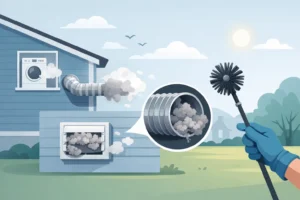
If a dryer is overheating, do not assume the thermostat is at fault. Restricted airflow is a common cause. Lint buildup in the vent line can trap heat, trip safety components, increase drying times, and create a fire risk. Cleaning the lint screen is not enough if the wall vent or exterior hood is blocked.
Tools and safety steps before testing
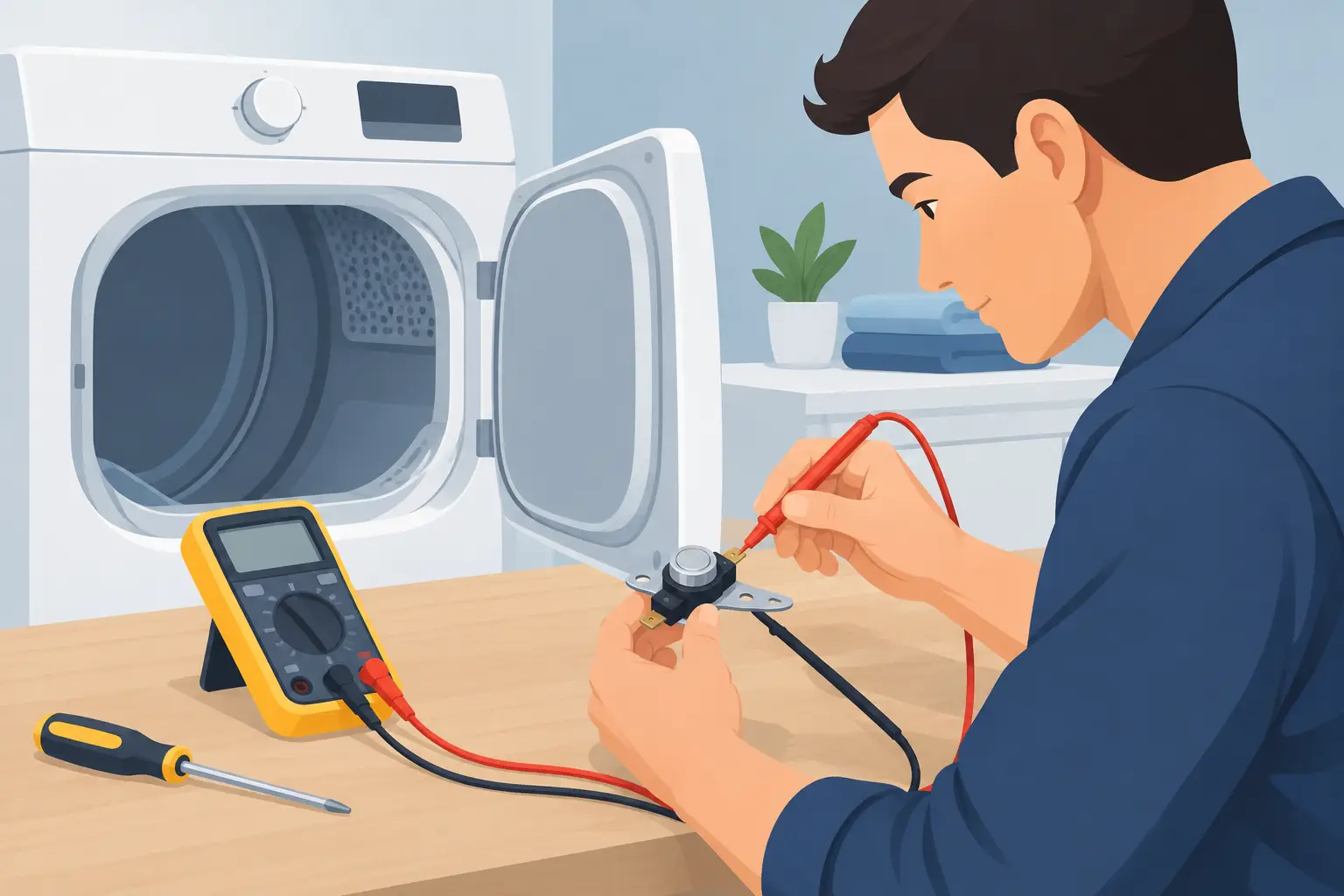
For a basic thermostat test, you need a multimeter with continuity and resistance settings, a screwdriver or nut driver, needle-nose pliers, and your dryer model number. A phone camera is useful for taking a clear photo of every wire connection before anything is removed.
Unplug an electric dryer from the wall outlet. For a gas dryer, unplug the power cord and close the gas shutoff valve if you will be moving the appliance or accessing the burner area. Never test internal dryer components with the appliance plugged in unless you are trained to perform live-voltage diagnostics.
Give the dryer time to cool completely. A thermostat near the heater housing may remain hot well after a cycle ends. Move the dryer carefully, especially if it has a rigid metal vent connection that could be bent or crushed.
Before opening the cabinet, check the model-specific service information if it is available. Access may be through the rear panel, lower front panel, or top of the cabinet. Forcing the wrong panel can damage clips, wiring, or a delicate control assembly.
How to test dryer thermostat with a multimeter
Once the dryer is unplugged and the correct panel is removed, locate the thermostat. It is typically a small round or oval metal component with two or more wire terminals. The high-limit thermostat often sits close to the heating element or burner housing, while the cycling thermostat is commonly mounted on the blower housing or exhaust path.
Disconnect the thermostat wires
Take a photo first, then pull the wire connectors from the thermostat terminals. Pull on the connector, not the wire itself. If a connector is tight, use needle-nose pliers carefully.
The thermostat should be electrically isolated for an accurate reading. Testing it while connected can allow current to travel through another component and produce a misleading result.
Set the multimeter to continuity or resistance
Set the meter to continuity mode. Many meters beep when the probes touch and there is a complete electrical path. If your meter does not have continuity mode, select the lowest resistance setting, usually measured in ohms.
Touch the two probes together first. The meter should beep or show a reading close to 0 ohms. This confirms the meter and probes are working.
Test the main thermostat terminals
Place one probe on each of the two main terminals. At room temperature, most cycling thermostats and high-limit thermostats should show continuity. A beep or a resistance reading close to 0 ohms usually means the switch is closed, which is the normal resting position for many dryer thermostats.
If the meter shows OL, open line, infinite resistance, or no beep at room temperature, the thermostat may be open and defective. That said, terminal layouts vary. Some thermostats have extra terminals for an internal bias heater or secondary circuit, and those terminals should not be assumed to be the main switch contacts. Check the markings on the part or the dryer wiring diagram before drawing a final conclusion.
Do not rely on a heat test alone
A thermostat may show continuity when cool but fail to open at the proper temperature. Testing its temperature response requires controlled heating, accurate temperature measurement, and care to avoid damaging the part or creating a burn hazard. It is not usually a worthwhile DIY test for a homeowner.
If your thermostat passes a cold continuity test but the dryer still overheats, runs too cool, or shuts off early, the issue could be airflow, a failed heater relay, an electronic control board, a thermistor, or a thermostat that is opening at the wrong temperature. This is where an in-home diagnosis can prevent unnecessary part replacement.
What your results may mean
An open high-limit thermostat or cycling thermostat at room temperature can point to a failed part, but it is also a warning to inspect the dryer vent system. A high-limit thermostat often fails after repeated overheating. Replacing it without clearing the airflow restriction may cause the new part to fail as well.
If the thermostat has continuity, do not immediately rule out a heat-control problem. A dryer that is too hot may have a vent blockage or a control issue that keeps the element energized too long. An electric dryer with no heat may have a broken heating element, open thermal fuse, loose power connection, or timer or control-board fault. A gas dryer may have an igniter, flame sensor, gas valve coil, or burner problem.
A thermal fuse deserves special attention. Unlike a thermostat, it normally does not reset. If it tests open, it must be replaced, but the cause of overheating should be corrected first. Bypassing a thermal fuse or thermostat is unsafe and can create a serious fire hazard.
When to stop and schedule dryer repair
Stop the test if you find burned terminals, melted wire insulation, a scorched smell, loose connections, or heavy lint inside the cabinet. These conditions need more than a replacement thermostat. They require a careful inspection of the heating circuit and airflow path.
Professional service is also the right call when the dryer is gas-powered, the machine has an electronic temperature sensor, the thermostat tests normally but symptoms continue, or access requires significant cabinet disassembly. Luxury and specialty brands can have model-specific sensor systems and parts that should be matched precisely.
For Orange County homeowners, AK Appliance Repair can diagnose dryer heating and airflow problems at your home, explain what failed, and provide a clear estimate before repair. The $75 service fee is waived when you proceed with the repair, helping you make a practical decision without replacing a dryer prematurely.
A thermostat test can provide useful information, but the safest repair is one that addresses the reason the dryer overheated or stopped heating in the first place. If clean airflow and a basic continuity check do not resolve the answer, a trained technician can help get laundry back on schedule without guesswork.