A refrigerator water dispenser that suddenly stops working can turn a simple glass of water into a daily annoyance. Before you try to fix refrigerator water dispenser problems yourself, check whether the issue is no water at all, a weak stream, bad-tasting water, or a leak around the door. Those symptoms point to different parts of the system, and the right first step can prevent wasted time, spilled water, or unnecessary replacement parts.
Start With the Simple Causes
Many dispenser failures have a straightforward cause. Make sure the refrigerator is receiving water by checking the shutoff valve behind or below the appliance. The valve should be fully open, and the supply line should not be bent, crushed, or pinched when the refrigerator was pushed back into place.
If your refrigerator has recently been installed, moved, or had its water filter replaced, air may be trapped in the line. Hold a large cup under the dispenser and press the lever for several short intervals. It can take a few minutes for water to flow consistently again. If water begins sputtering and then returns to normal, air in the line was likely the problem.
Also confirm that the control lock is not enabled. Many newer GE, LG, Samsung, Whirlpool, Bosch, and premium refrigerator models have a lock feature that disables the dispenser. A lock icon on the display or a nonresponsive dispenser paddle may be the only clue.
Replace an Overdue Water Filter
A clogged or incorrectly installed filter is one of the most common reasons for slow or stopped water flow. Filters collect sediment and contaminants over time, but once they are overdue, they can restrict water so much that the dispenser barely works.
Most refrigerator filters need replacement about every six months, although households with heavy water use or hard water may need a new filter sooner. If the filter indicator is on, the water has an unusual taste, or the flow became weaker gradually, start there. Use the correct filter for your refrigerator model and make sure it locks firmly into place.
After installing a new filter, dispense several gallons of water to flush the system according to the manufacturer’s directions. A little sputtering at first is normal. A steady low flow after a new filter is not. The filter may be defective, not seated properly, or the refrigerator may have another restriction.
Avoid removing the filter permanently as a long-term workaround. Some models use a bypass plug, while others will not send water through the system without the correct filter installed. Using an incompatible filter can create leaks or poor water flow.
How to Fix Refrigerator Water Dispenser Problems Caused by Frozen Lines
If the ice maker works but the water dispenser does not, a frozen water line in the refrigerator door is a strong possibility. This is especially common when the fresh-food section is set too cold. Water can freeze in the narrow tubing that runs through the door, blocking the dispenser while the rest of the refrigerator seems normal.
A quick clue is the temperature setting. The refrigerator compartment should generally be around 37 to 40 degrees Fahrenheit. If food near the door or back wall is freezing, raise the setting slightly and allow the refrigerator 24 hours to stabilize. Make sure vents inside the fresh-food compartment are not blocked by containers or overpacked shelves, since poor airflow can create cold spots.
Do not force the dispenser lever repeatedly or attempt to puncture a frozen line with a sharp object. That can break internal tubing and turn a no-water problem into a door leak. Controlled thawing may help on some models, but door tubing, insulation, and electronics are not easy to access safely. A technician can determine whether the line is frozen, kinked, or damaged and address the underlying temperature issue.
Check for Water Pressure and Supply Problems
Your refrigerator needs adequate household water pressure to fill the ice maker and dispense water correctly. A weak stream from the dispenser, small ice cubes, or an ice maker that stops producing ice can all indicate a supply issue.
Check whether another fixture in the kitchen has normal water flow. If the refrigerator is the only appliance affected, inspect the supply line and shutoff valve. Older saddle valves, which clamp onto an existing pipe, can clog or fail over time. They may look open while allowing only a trickle of water through.
A refrigerator that has been pulled forward for cleaning can also develop a pinched supply hose behind the cabinet. Turn off the water supply before repositioning the appliance or handling the connection. If you find moisture on the floor, around the valve, or beneath the refrigerator, leave the water turned off until the source is diagnosed. Even a slow leak can damage flooring and cabinetry.
When the Dispenser Switch, Valve, or Control Is Failing
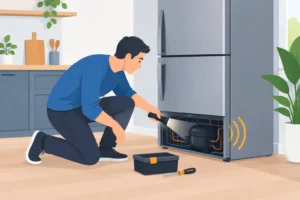
When the filter, supply line, and temperature all check out, the problem may be inside the refrigerator. Pressing the paddle normally activates a small dispenser switch. That switch signals the water inlet valve to open and send water to the door. If you hear a hum or click but no water comes out, the valve may be receiving power but blocked or failing. If there is no sound at all, the issue could involve the switch, wiring, door connection, or electronic control.
These parts are not interchangeable between models, even within the same brand. Luxury and built-in refrigerators can be especially complex because water routing, display controls, and door electronics are integrated into the appliance design. Replacing a part based only on a symptom can be expensive and may not solve the problem.
Professional diagnosis tests the water valve, electrical connections, dispenser switch, and control response before a repair is recommended. That matters when deciding whether a repair is practical, particularly for older refrigerators or models with multiple symptoms. A clear diagnosis lets you repair the failed component instead of replacing a refrigerator prematurely.
Watch for These Leak Warning Signs
A water dispenser should never leave puddles, drips inside the door, or moisture beneath the refrigerator. A few drops after filling a glass can be normal, but recurring water points to a problem that deserves prompt attention.
Water leaking from the dispenser area may come from a cracked tube, loose fitting, frozen line that has split, or a dispenser housing issue. Water under the refrigerator can come from the supply connection, inlet valve, filter housing, or a separate defrost-drain problem. The location of the water helps narrow it down, but it does not always identify the exact failed part.
Turn off the refrigerator’s water supply if the leak is active. Dry the floor and avoid using the dispenser until the source is repaired. Continuing to use it can allow water to reach electrical components or soak into nearby flooring.
When to Schedule Refrigerator Repair
A homeowner can often reset a control lock, replace an old filter, or confirm that a shutoff valve is open. Call for service when the dispenser has no water after those checks, the line appears frozen, the refrigerator leaks, or the problem returns after a filter replacement. It is also worth scheduling service when ice production and water dispensing fail together, since that often points to a supply or inlet-valve issue.
For Orange County households, AK Appliance Repair provides in-home refrigerator diagnostics and repairs for standard and premium brands. You receive an explanation of the likely cause and a clear estimate before repair work begins. The $75 service fee is waived when you proceed with the repair, helping you make a decision with the facts in hand.
A working dispenser is a small convenience until it is gone. Addressing weak flow, unusual noises, or the first signs of leaking early gives you the best chance to restore reliable water service before the issue becomes a larger kitchen repair.