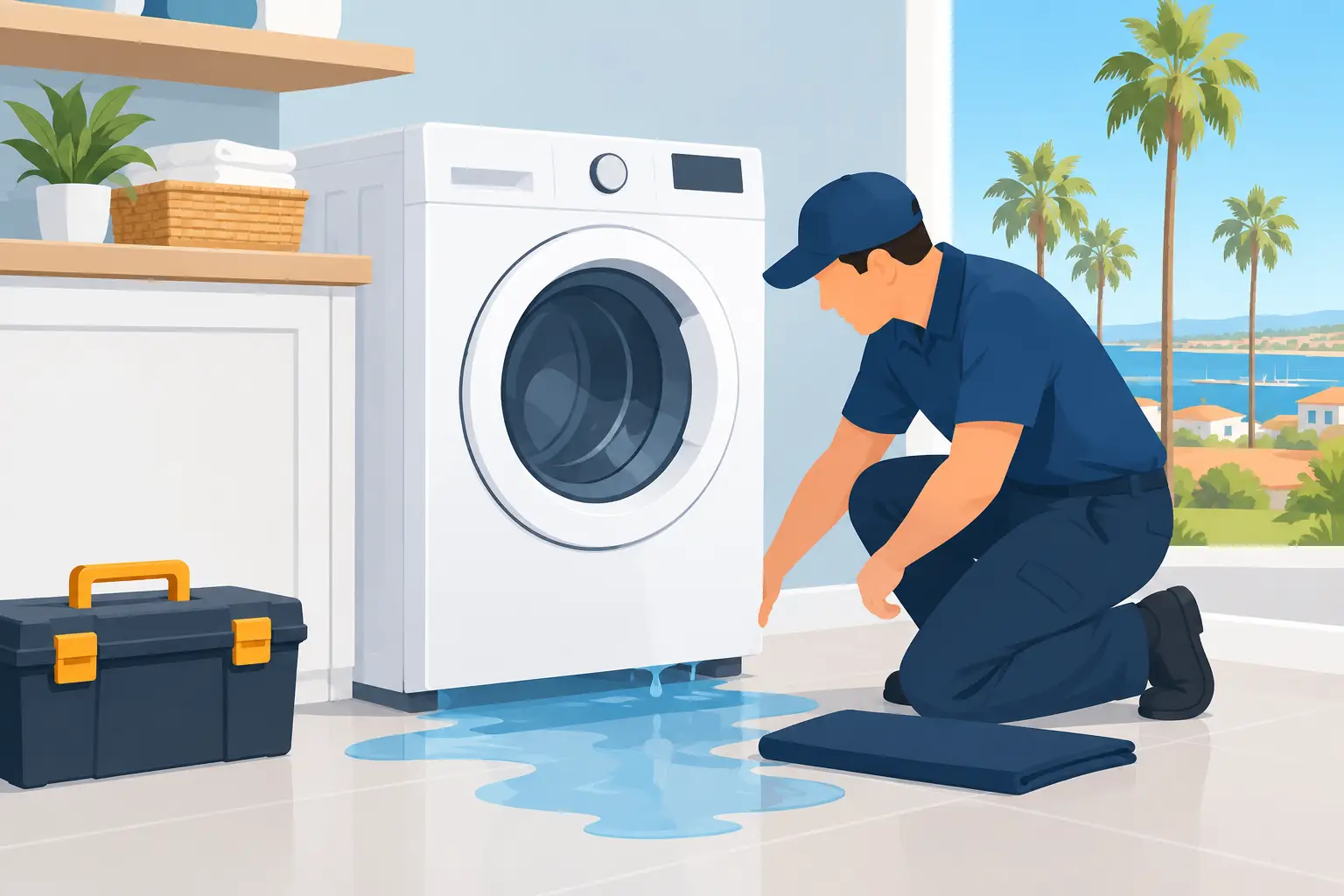
A puddle beside the washing machine can turn a normal laundry day into a flooring emergency. A proper washer leak diagnosis starts by locating when the water appears, not by assuming the washer itself is the only cause. Water can escape during filling, agitation, draining, or spinning, and each timing clue points to a different set of parts.
If water is spreading toward walls, electrical outlets, or adjacent rooms, stop the cycle, unplug the washer if it is safe to do so, and shut off both water supply valves. Towels and a shallow pan can limit the immediate mess, but a recurring leak deserves prompt attention. Even a small leak can damage baseboards, flooring, cabinetry, and the laundry-room subfloor over time.
Start Washer Leak Diagnosis With the Timing
The fastest way to narrow down a leak is to notice exactly when it happens. Do not run repeated cycles just to test the machine if water is already reaching the floor. Instead, look for visible moisture after a controlled check or note what happened during the last cycle.
A leak that begins as the washer fills often involves the supply hoses, hose connections, inlet valves, or a dispenser overflow. Water that appears while the drum is washing may come from a door seal on a front-load model, a damaged tub, or excess suds. A leak that occurs during draining or spinning more commonly points to the drain hose, drain pump, pump hose, or a problem with the home drain.
This distinction matters because a loose supply-hose connection is usually a straightforward repair, while a leaking tub seal or cracked outer tub can require more extensive parts and labor. The right recommendation depends on the appliance’s age, condition, brand, and the exact source of the water.
Check the Areas You Can See Safely
Before moving the machine, turn off the water and power. Pull the washer forward only if it can be done without straining a water line, electrical cord, or drain hose. Many leaks are visible around the outside of the appliance.
Supply Hoses and Wall Connections
Look at the hot and cold water hoses behind the washer. A hose may drip at the wall valve, at the washer connection, or from a split in the hose itself. Corrosion, bulging, cracking, and moisture around the fittings are warning signs. Rubber hoses can weaken with age, while braided hoses may still leak at their connections or fail if the inner lining is damaged.
A connection that feels loose may need to be tightened correctly, but avoid forcing it. Overtightening can damage threads or washers and create a larger problem. If a hose has visible wear, replacement is safer than waiting for a minor drip to become a burst line.
Drain Hose and Standpipe
If the leak shows up when the washer empties, inspect the drain hose. It can slip out of the standpipe, develop a split, or sit too far down inside the pipe. A blockage in the household drain can also cause water to back up and spill out around the standpipe, even though the washer’s pump is working normally.
The drain hose needs the correct height and secure placement. A hose that is kinked, crushed behind the machine, or installed incorrectly can interfere with draining. If you see water coming from the standpipe rather than the washer cabinet, the issue may be in the home’s drain line. A technician can help distinguish between an appliance drain problem and a plumbing backup.
Detergent Drawer, Door Seal, and Lid Area
Front-load washers can leak from a torn door boot seal or from debris trapped between the seal and the glass. Check for a small sock, pet hair, a sharp object, or buildup around the fold of the gasket. Do not puncture or pull the rubber seal while inspecting it.
A detergent dispenser can overflow when it is clogged with old detergent, loaded with too much product, or used with detergent that creates excessive suds. High-efficiency washers require HE detergent. Using too much detergent, even the correct type, can create foam that forces water out through the dispenser or door area.
Top-load washers may leak around the lid area if a load is severely unbalanced, if the tub is overloaded, or if water splashes out during agitation. That does not always mean a part has failed. Still, repeated splashing with normal loads can indicate a worn suspension system, a leveling issue, or a tub that is not operating as it should.
Leaks Hidden Inside the Washer
When the outside connections are dry but water appears beneath the machine, the source may be inside the cabinet. Common internal causes include a cracked pump housing, loose pump clamp, torn internal hose, leaking inlet valve, failed tub seal, or damaged outer tub.
Drain pumps are a frequent source of leaks because they handle lint, small objects, and continuous water flow. Coins, hairpins, and other items left in pockets can damage a pump or interfere with its seals. A pump leak may be most obvious during drain and spin cycles, but water can collect underneath the washer and make the source hard to identify from the front.
A tub seal leak is more serious. It can allow water to reach the bearings and drive components, sometimes causing rumbling, grinding, or a loud spin cycle before the leak becomes obvious. Continuing to run the washer can increase damage. This is one situation where professional diagnosis is particularly valuable because the repair may involve significant disassembly.
Do Not Overlook Leveling and Load Size
A washer that rocks or walks across the floor can pull on hoses and create splashing that looks like a mechanical leak. Press gently on the top corners of the machine. If it shifts, the leveling feet may need adjustment. The floor itself can also be uneven, especially in older homes.
Load size matters too. Overloading a washer can force water toward the door, lid, or dispenser and put extra stress on suspension components. On the other hand, washing one heavy item, such as a comforter or bath mat, can create an off-balance spin. Follow the load guidance for the model and distribute items evenly when possible.
Leveling and laundry habits may solve occasional splashing, but they will not repair a split hose, failing pump, or worn seal. If the same leak returns after normal loads and proper detergent use, it is time to look deeper.
When to Schedule Professional Washer Leak Repair
Call for service when the source is not obvious, the leak is coming from underneath the cabinet, or water appears during every cycle. You should also arrange a repair if you notice a burning smell, unusual noise, repeated drain failures, a damaged door gasket, or signs that water has reached electrical components.
Modern washers often use electronic valves, sensors, and model-specific pump assemblies. Premium brands may require specialized parts and procedures. Replacing the wrong component can waste time and leave the original leak unresolved. A trained technician can test the washer through the correct stages of operation, identify whether the failure is internal or plumbing-related, and provide a clear estimate before repair work begins.
For Orange County homeowners, AK Appliance Repair provides in-home washer diagnostics and repair for many standard and premium brands. The $75 service fee is waived when you proceed with a repair, helping you make a practical decision without guessing at the cause.
A washer leak rarely improves on its own. Addressing the first puddle promptly protects more than the appliance – it helps keep your laundry routine, floors, and home dry.