A washer that completes the wash cycle but leaves clothing dripping wet can derail an entire day. Washer spin failures are especially frustrating because the problem often looks simple from the outside: the machine fills, washes, and drains, yet never reaches the high-speed spin that removes water from each load. The cause may be as minor as an uneven load or as involved as a worn drive component, failed lid lock, or electronic control issue.
Before running load after load through a dryer or wringing clothes out by hand, take a few safe checks. If the problem continues, an in-home diagnosis can identify the failed part and help prevent a small washer issue from turning into a leak, damaged clothing, or a complete breakdown.
What a Spin Failure Looks Like
Not every spinning complaint means the same thing. Some washers do not spin at all. Others spin briefly, make a grinding or banging sound, then stop. A front-load washer may tumble slowly but fail to accelerate, while a top-load model may agitate normally and refuse to enter the final spin cycle.
You may also notice an error code, a locked door that will not release, water remaining in the drum, or clothing that is much wetter than usual. These details matter. A washer will often cancel or limit the spin cycle when it detects excess water, an unbalanced load, an open lid, or a mechanical condition that could damage the machine.
Common Causes of Washer Spin Failures
An unbalanced or overloaded load
Large comforters, bath mats, jeans, and towels can gather on one side of the drum. When that happens, the washer senses excessive movement and may stop spinning to protect its suspension system. This is common with both top-load and front-load machines.
Pause the cycle, redistribute the items evenly, and remove a few pieces if the drum is tightly packed. Then try the spin or drain-and-spin setting again. If the washer spins normally with a balanced load but regularly stops with ordinary laundry, the suspension rods, shock absorbers, or leveling may need professional attention.
Water is not draining properly
A washer generally will not enter a full spin while water remains inside. A clogged drain pump filter, blocked drain hose, damaged pump, or obstruction such as a small sock or coin can keep the machine from draining as it should.
Check whether the drain hose is kinked behind the washer. If your model has an accessible pump filter and the owner’s manual allows homeowner cleaning, follow the manufacturer instructions carefully and have towels ready for trapped water. Do not force open panels or continue operating a washer that is leaking. A drain issue can look like a spin issue, but the repair depends on why the water is not leaving the tub.
A faulty lid switch or door lock
Top-load washers use a lid switch or lid lock to confirm the lid is closed before spinning. Front-load washers rely on a door-lock assembly. If that safety component is worn, misaligned, or electrically faulty, the washer may wash normally and stop as soon as it should spin.
A clicking sound near the lid or door, a lock indicator that flashes, or a cycle that pauses at the same point are useful clues. Do not bypass a lid switch or door lock. These are safety devices designed to prevent the drum from spinning while the appliance is open.
Worn belts, couplers, or motor components
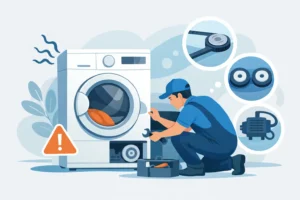
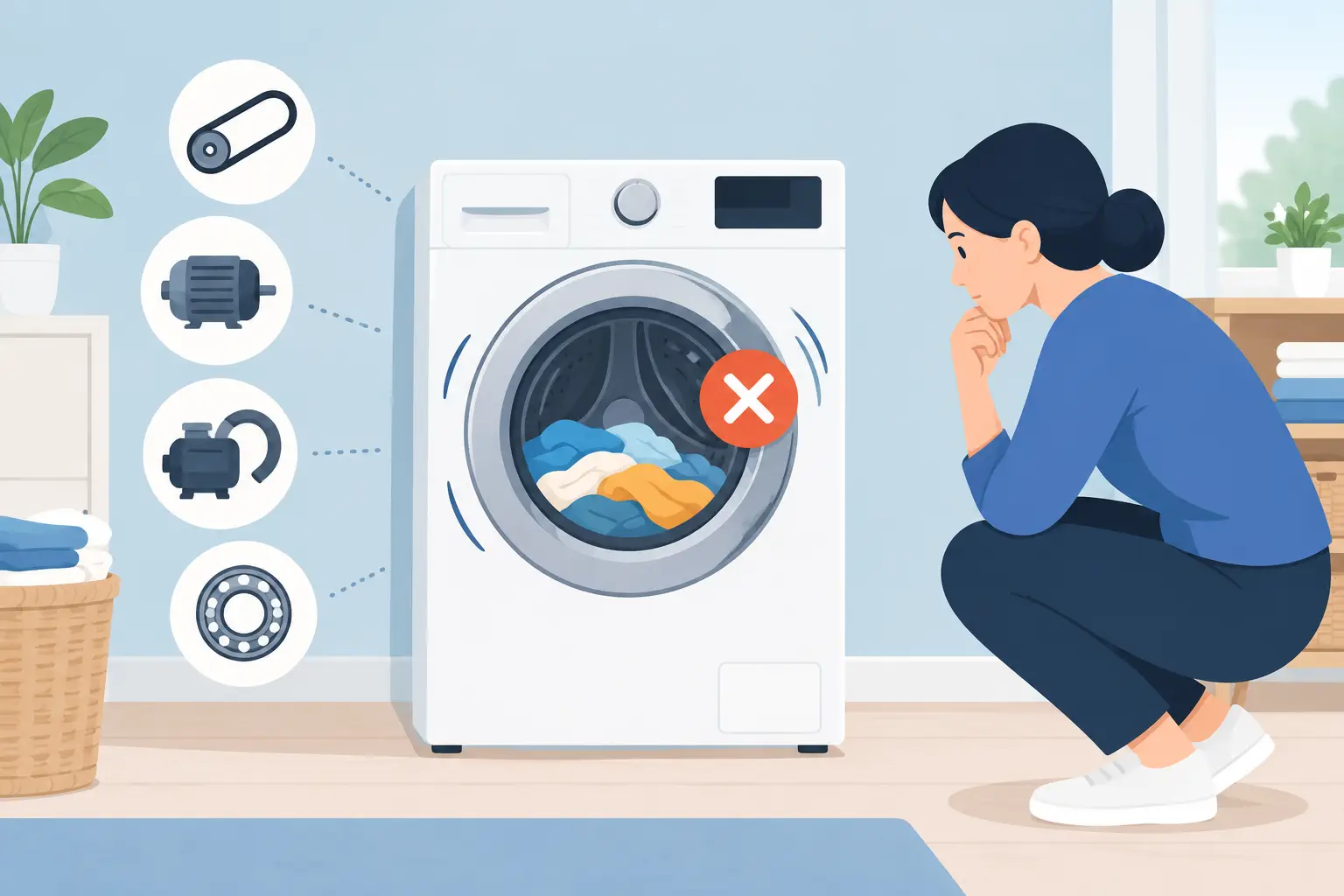
Depending on the washer model, the drum may be driven by a belt, motor coupler, clutch, stator, rotor, or direct-drive motor system. Wear in any of these parts can cause weak spinning, squealing, burning smells, grinding, or a drum that does not move even though the machine powers on.
Older belt-driven washers may need a belt replacement. Newer high-efficiency and premium washers can require more specialized testing of the motor circuit and control signals. The right repair is not always obvious from the symptom alone, which is why replacing parts without diagnosis can become expensive quickly.
Failed shocks, suspension, or bearings
If the washer shakes violently, walks across the floor, or bangs hard during spin, do not ignore it. A machine that is slightly out of level may be corrected by adjusting its feet. But severe movement can point to worn suspension parts, failed shocks, loose counterweights, or drum-bearing problems.
Bearings are a more serious concern. A loud roaring or rumbling sound that grows during the spin cycle can indicate bearing wear. Continuing to use the washer may place added strain on the motor, tub, and surrounding components. In some cases, the age of the appliance and the extent of the damage affect whether repair is the practical choice.
Control board or sensor problems
Modern washers depend on sensors and electronic controls to manage water levels, drum speed, balance, and door locking. A faulty pressure sensor may incorrectly report that water is still in the tub. A failed control board may stop sending power to the motor or drain pump at the correct time.
These problems can resemble a simple mechanical failure. Error codes can help narrow the issue, but they are not always a final diagnosis. A trained technician can test the machine’s components rather than guessing based only on the code displayed.
Safe Steps to Try Before Scheduling Service
Start by checking the basics. Make sure the washer is level, the load is balanced, and the selected cycle includes a spin function. Some delicate, hand-wash, or no-spin settings intentionally use reduced spin speeds. If the washer has stopped with water inside, turn it off and avoid repeatedly restarting the cycle.
Inspect the visible portion of the drain hose for kinks or crushing. Check the power connection and make sure the circuit breaker has not tripped. If you see water leaking, smell burning, hear metal scraping, or find the washer repeatedly shutting down, stop using it until it can be inspected.
Avoid taking apart the cabinet, disconnecting internal wiring, or bypassing safety locks. Washers combine water, electricity, moving parts, and heavy components. What begins as a quick attempt to fix a spin problem can create a larger repair or a household safety risk.
When to Call for Washer Repair
A one-time imbalance after washing a bulky item may not require service. Repeated washer spin failures, however, usually need a closer look. Schedule repair if the washer will not spin with a normal balanced load, leaves water in the tub, produces unusual noise, displays recurring errors, leaks, or stops mid-cycle.
For Orange County households, fast diagnosis matters when laundry is already piling up. AK Appliance Repair provides in-home washer service for major and premium brands, with clear estimates before repair work begins. The $75 service fee is waived when you proceed with the repair, helping you make a practical decision based on the appliance’s condition rather than uncertainty.
A washer does not have to be completely dead to need attention. Addressing a weak spin, drain problem, or unusual noise early can often restore dependable laundry days before the failure becomes more disruptive.