A roast that will not cook through, a display that goes blank mid-preheat, or an oven that gets far hotter than the selected temperature can bring dinner plans to a stop. In many cases, oven control boards are the component behind these frustrating problems. This electronic board is the oven’s command center, telling heating elements, igniters, fans, relays, and the display when to operate.
A failed control board does not always mean the entire appliance needs to be replaced. The right repair depends on the oven’s age, brand, condition, and the exact cause of the malfunction. A professional diagnosis helps separate a board problem from a failed sensor, heating element, wiring issue, or power supply problem before money is spent on parts that will not solve the issue.
What Oven Control Boards Actually Do
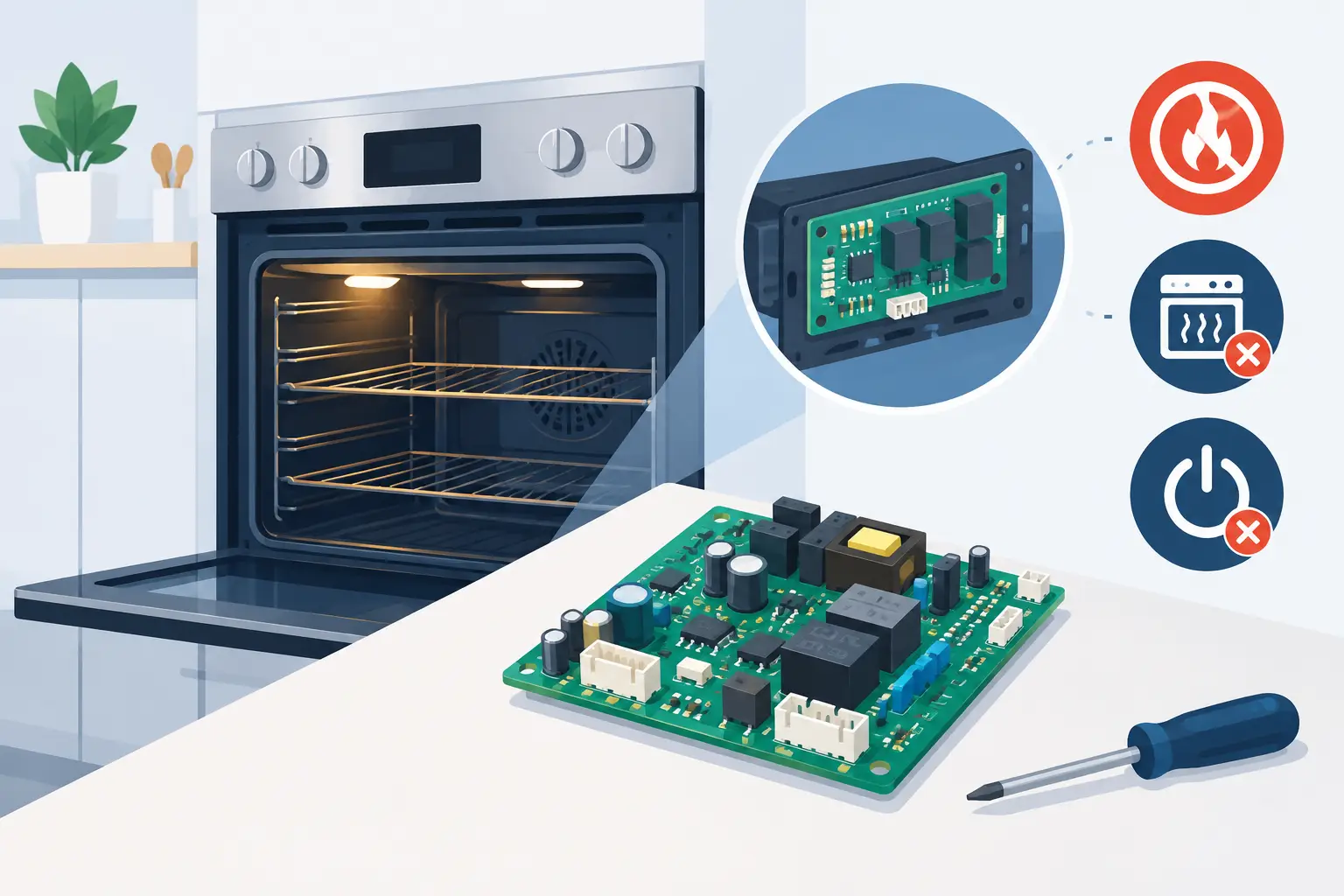
Modern ovens rely on an electronic control board to translate your settings into action. When you select Bake at 350 degrees, the board reads information from the temperature sensor and cycles power to the bake or broil element as needed to hold that temperature. On a gas oven, it may control the igniter and gas valve sequence. It also manages features such as convection fans, timers, self-clean cycles, lock mechanisms, touch controls, and error-code displays.
Because the board communicates with several other parts, its symptoms can look different from one household to another. A wall oven may show an error code and refuse to start. A range may heat normally one day and fail the next. A premium appliance may still power on but lose a specific mode, such as convection bake or broil.
The board is not usually a homeowner-serviceable part. It carries electrical connections, may require programming or calibration, and must match the appliance’s exact model number. Installing the wrong board can leave the oven inoperable or create a safety concern.
Signs Your Oven Control Board May Be Failing
An oven that will not turn on is a common warning sign, but it is not the only one. The most telling problems are inconsistent ones: settings that change on their own, heat that does not match the display, or functions that work intermittently.
If the oven display is completely dead, the issue could be the control board, incoming power, a blown fuse, or damaged wiring. Electric ranges require the correct voltage supply, while gas ovens still need electricity for the controls and ignition system. A technician checks these basics before recommending a replacement board.
Temperature problems also deserve attention. If food repeatedly comes out undercooked or burned despite following the same recipe, the oven may not be regulating heat accurately. A bad temperature sensor can cause that condition, but a control board that fails to read the sensor correctly can produce the same result. An oven thermometer can help confirm that there is a problem, but it cannot identify the failed component.
Other symptoms that often point toward a control issue include a flashing display, buttons that do not respond, random beeping, an error code that returns after resetting power, or a heating element that stays on after the oven has been turned off. The last symptom is particularly urgent. Turn off power to the appliance at the breaker and arrange service promptly if an electric oven continues heating unexpectedly.
Why a Reset Does Not Always Fix the Problem
Turning the breaker off for a few minutes can clear a temporary electronic glitch. It is a reasonable first step when the display freezes or an error code appears after a power outage. If the oven resumes normal operation and stays that way, no further repair may be necessary.
But repeated resets are not a repair. When an error code returns, the oven loses temperature control, or the panel becomes unreliable again, there is likely an underlying electrical or component failure. Continuing to reset the appliance can delay a needed repair and leave you without a dependable oven when you need it most.
Power surges, moisture, heat exposure, aging solder connections, and normal wear can all affect electronic boards over time. In coastal and inland Orange County homes alike, kitchen heat and frequent cooking put steady demand on range and wall-oven components. Self-clean cycles can also expose the control area to extremely high temperatures. That does not mean self-cleaning always causes a board failure, but an older appliance with a marginal component may fail during or shortly after the cycle.
Control Board Failure or Another Oven Problem?
Control boards are expensive enough that a careful diagnosis matters. Several parts can produce symptoms that resemble a failed board.
A faulty oven sensor may cause inaccurate temperatures or an error code. A burned-out bake or broil element may leave the oven unable to heat, even though the display and controls work normally. On gas models, a weak igniter can prevent the burner from lighting. A failed door latch or lock assembly may interrupt self-cleaning or keep the oven from operating after a cleaning cycle.
A trained technician tests the appliance rather than relying on symptoms alone. That process may include checking the power supply, inspecting wiring and connections, testing resistance at the temperature sensor, verifying element operation, and confirming whether the control board is sending the correct voltage. This approach protects homeowners from replacing a costly board when a smaller, more affordable part is the actual problem.
For luxury and premium brands, accurate diagnosis is even more important. Appliances from Wolf, Viking, Thermador, Miele, Bosch, and similar manufacturers can use model-specific boards, user interfaces, and communication systems. A part that looks similar may not be compatible, and some replacements need setup steps after installation.
Can an Oven Control Board Be Repaired?
Sometimes, but replacement is often the more dependable option. Certain electronics specialists can repair damaged relays or board-level components. However, that route may require shipping the board away, waiting for it to return, and reinstalling it without a guarantee that another aged component will not fail soon after.
Replacing the board with a genuine factory part is usually the practical choice when the part is available and the oven is otherwise in good condition. It keeps the repair on-site, maintains proper compatibility, and gives the technician an opportunity to test every cooking function before leaving.
Whether repair makes financial sense depends on the appliance. A relatively new built-in wall oven or a high-end range is often worth repairing, particularly when cabinetry, gas connections, or matching appliances make replacement more involved. For an older basic range with multiple problems, a technician may honestly recommend comparing the repair cost with replacement instead.
Clear estimates should include the diagnosed issue, the part required, labor, and any relevant service fee. At AK Appliance Repair, the $75 diagnostic service fee is waived when you proceed with the recommended repair, so homeowners can make the decision with a clear understanding of the cost.
What to Do Before Service Arrives
If the oven has stopped working, avoid taking the control panel apart or trying to bypass components. Electronic boards are connected to high voltage, and gas models add ignition and fuel-system considerations. If you smell gas, leave the area, avoid switches or flames, and contact your gas utility or emergency services as appropriate.
For a non-emergency control problem, write down the error code, note which cooking modes fail, and take a photo of the display if it is flashing. Have the model number ready as well. It is usually found around the oven door frame, behind the storage drawer on a range, or on the side trim of a wall oven. Those details help identify the correct part and can make scheduling more efficient.
An oven is easy to take for granted until a busy week, family dinner, or holiday meal exposes how much the household depends on it. When the controls become unreliable, prompt, accurate service can restore safe cooking and help you decide whether a targeted repair is the right next step.