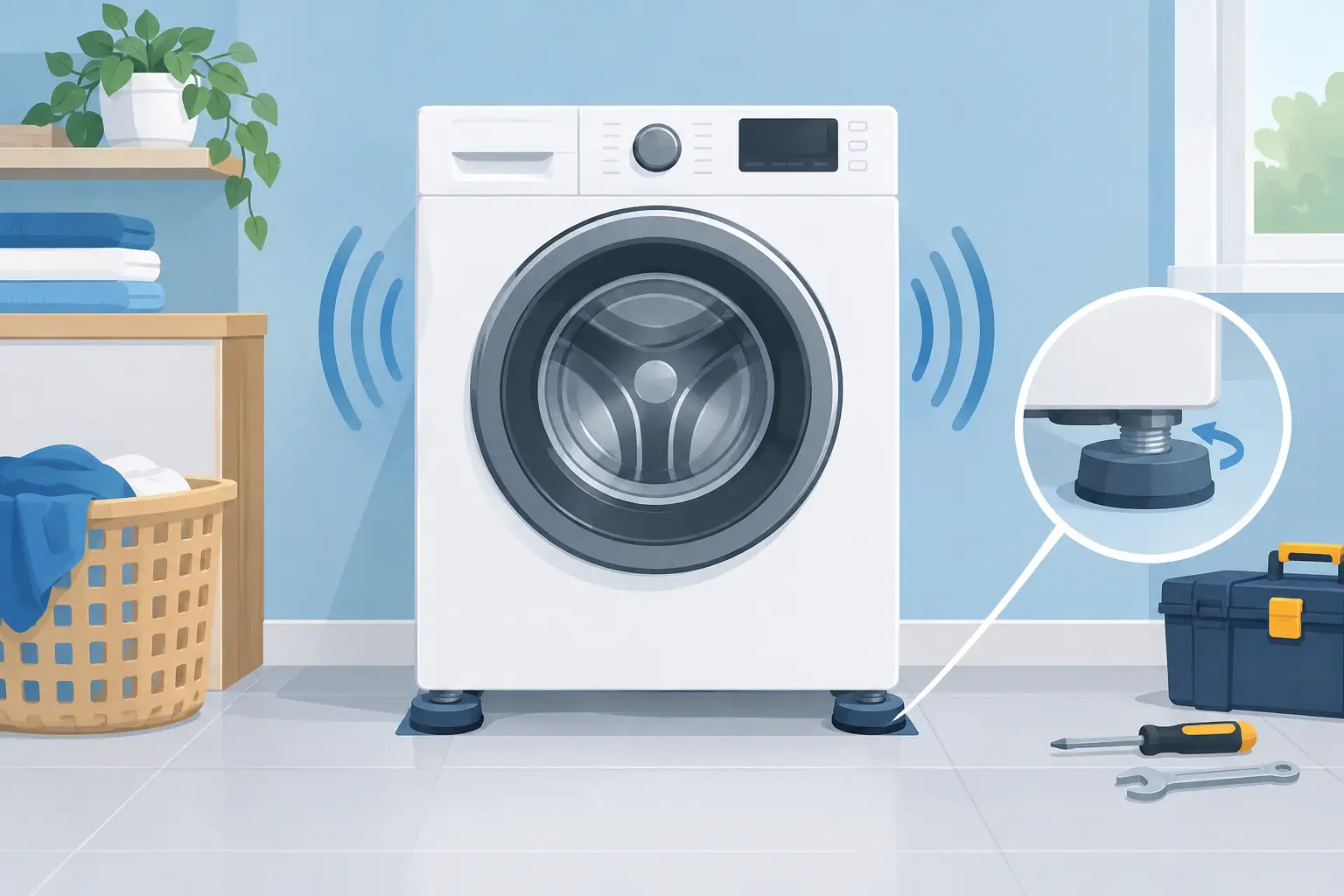
A washing machine that shakes hard enough to rattle cabinets, bang against the wall, or creep across the laundry room is more than an annoyance. If you need to stop washing machine vibration, start with the causes that are safe to check: an uneven load, unlevel feet, or an unstable floor. If the machine still pounds during the spin cycle, an internal part may be failing and continued use can turn a repairable problem into a damaged washer, floor, or water connection.
First, tell normal movement from a real vibration problem
Most washers move slightly as they accelerate into a high-speed spin. This is especially true with large towels, blankets, and high-efficiency front-load machines, which spin faster to remove more water. A mild hum or small amount of movement is usually normal.
The concern begins when the washer repeatedly slams, makes loud knocking sounds, visibly rocks from side to side, or shifts several inches from its original position. Stop the cycle if the appliance is walking across the floor, pulling on hoses, or striking nearby walls or cabinetry. A loose water hose can leak, and a strained drain hose can cause draining problems on top of the vibration.
Before checking the machine, turn it off. If you need to move it or inspect the back panel area, unplug it and turn off the water supply valves if they are easy to access.
Start with the laundry load
An unbalanced load is the most common reason a washer suddenly vibrates during a single cycle. One heavy item, such as a bath mat, comforter, sweatshirt, or pair of shoes, can collect on one side of the drum. When the washer reaches spin speed, that uneven weight pulls the basket off balance.
Pause the cycle and wait for the drum to stop completely. Open the door or lid, then redistribute the items evenly around the basket. For a bulky item, add two or three similar items to balance it rather than washing it alone. Avoid packing the washer tightly, but do not run a large blanket with almost nothing else in the drum unless the manufacturer specifically recommends it.
If vibration happens only with certain loads, the washer may be mechanically sound. Adjusting load size and placement may be all that is needed. If every load causes hard shaking, move on to the machine and floor checks.
Wash heavy items the right way
Large comforters and thick rugs can be difficult for a residential washer to balance, particularly when they absorb water. Check the care label and your washer’s capacity guidance. An item that technically fits inside the drum may still be too heavy once wet.
For very bulky bedding, a commercial-size machine may be the better choice. For rugs, never wash items with loose rubber backing that is crumbling or peeling, since the debris can clog the pump and create a separate repair issue.
Check whether the washer is level
A washer needs all four feet firmly planted on the floor. If one foot is slightly raised, the cabinet can rock during spin and exaggerate normal drum movement. This is common after moving a washer, installing new flooring, or shifting the appliance to clean behind it.
Place a level on top of the washer from side to side and front to back. Then press gently on each top corner. The cabinet should feel solid, with no rocking. If it rocks, adjust the leveling feet according to the owner’s manual. Many models use threaded feet that can be turned to raise or lower a corner, followed by a locking nut that keeps the adjustment in place.
Take your time with this step. A washer can appear level while still having one foot that is not carrying weight. After making an adjustment, press on the corners again and run a small test load. Do not use wood shims, folded cardboard, or other temporary materials under the feet. They can compress, shift, absorb moisture, and make the problem worse.
Look at the floor beneath the washer
A level washer still needs a stable surface. Concrete floors tend to handle spin-cycle vibration well. Older raised wood floors, second-floor laundry rooms, and uneven tile installations can transfer and amplify movement.
A sturdy anti-vibration pad may reduce noise and minor vibration when the washer is already level and mechanically sound. It is not a fix for a machine that is violently shaking, walking, or making metal-on-metal noises. Thick pads can also affect stability if they are poorly fitted or placed on an uneven surface.
If the washer is installed on a pedestal, make sure the pedestal is compatible with that specific model and securely fastened. An incorrect or loose pedestal can create significant movement. The same applies to stacked washer-dryer units: do not assume the stack is secure just because the appliances are sitting together. They require the correct manufacturer-approved stacking hardware.
Make sure shipping bolts were removed
This check is particularly important for a newly installed front-load washer. Shipping bolts hold the tub in place during transportation. They must be removed before operation. If they are left installed, the drum cannot move as designed and the washer may shake, bang, or suffer internal damage during spin.
The bolts are usually located on the rear of the machine and are identified in the installation instructions. Do not remove random screws or disassemble the cabinet to look for them. If you are unsure whether installation hardware was removed, a qualified technician can verify it quickly.
When vibration points to a worn or broken part
Once the load, leveling feet, floor, and installation have been checked, ongoing vibration usually needs professional diagnosis. Modern washers use suspension systems to keep the basket centered as it spins. On different models, this may include shock absorbers, suspension rods, springs, dampers, or counterweights.
When those components wear out or come loose, the tub can swing too far and strike the cabinet. You may hear repetitive banging during spin, even with a balanced load. A failed shock absorber may be more common in a front-load washer, while worn suspension rods are frequently found in top-load models. The exact repair depends on the washer’s design and should not be guessed at based on noise alone.
Other possible causes include a damaged tub bearing, a loose drive component, a cracked spider arm on certain front-load washers, or a counterweight that has shifted. These issues can produce grinding, roaring, scraping, or heavy thumping. Some repairs are straightforward; others depend on the age, condition, and value of the appliance. A clear diagnosis helps homeowners decide whether repair is the practical choice.
Signs to stop using the washer and schedule service
Stop running the washer until it is inspected if you notice any of the following:
- The washer moves far enough to tug, kink, or loosen its water and drain hoses.
- There is a burning smell, smoke, sparking, or a tripped breaker.
- The drum feels loose, scrapes the door seal or cabinet, or makes grinding sounds when turned by hand.
- Water is leaking beneath the washer or from the rear connections.
- The machine continues to slam violently after you redistribute the load and confirm it is level.
Running another cycle to “see if it improves” can place extra strain on the motor, basket, cabinet, and plumbing connections. A prompt repair is usually less disruptive than dealing with water damage or a washer that fails completely mid-load.
What a professional washer inspection should include
A proper vibration diagnosis is more than tightening a foot and leaving. The technician should check the washer’s level and installation, inspect the suspension and mounting components, examine the basket for excessive play, and look for evidence of worn bearings or damaged internal supports. They should also evaluate hoses, drain routing, and the condition of the surrounding floor where movement has occurred.
For Orange County homeowners, AK Appliance Repair provides in-home washer diagnostics and repairs for major household brands, including standard and premium machines. You should receive a clear estimate before repair work begins, along with an honest recommendation if the repair is not the best value for the appliance’s condition.
A washer should make laundry easier, not leave you listening for the next crash during the spin cycle. Address a new vibration early, keep the machine stable, and have persistent banging checked before it damages the appliance or the space around it.