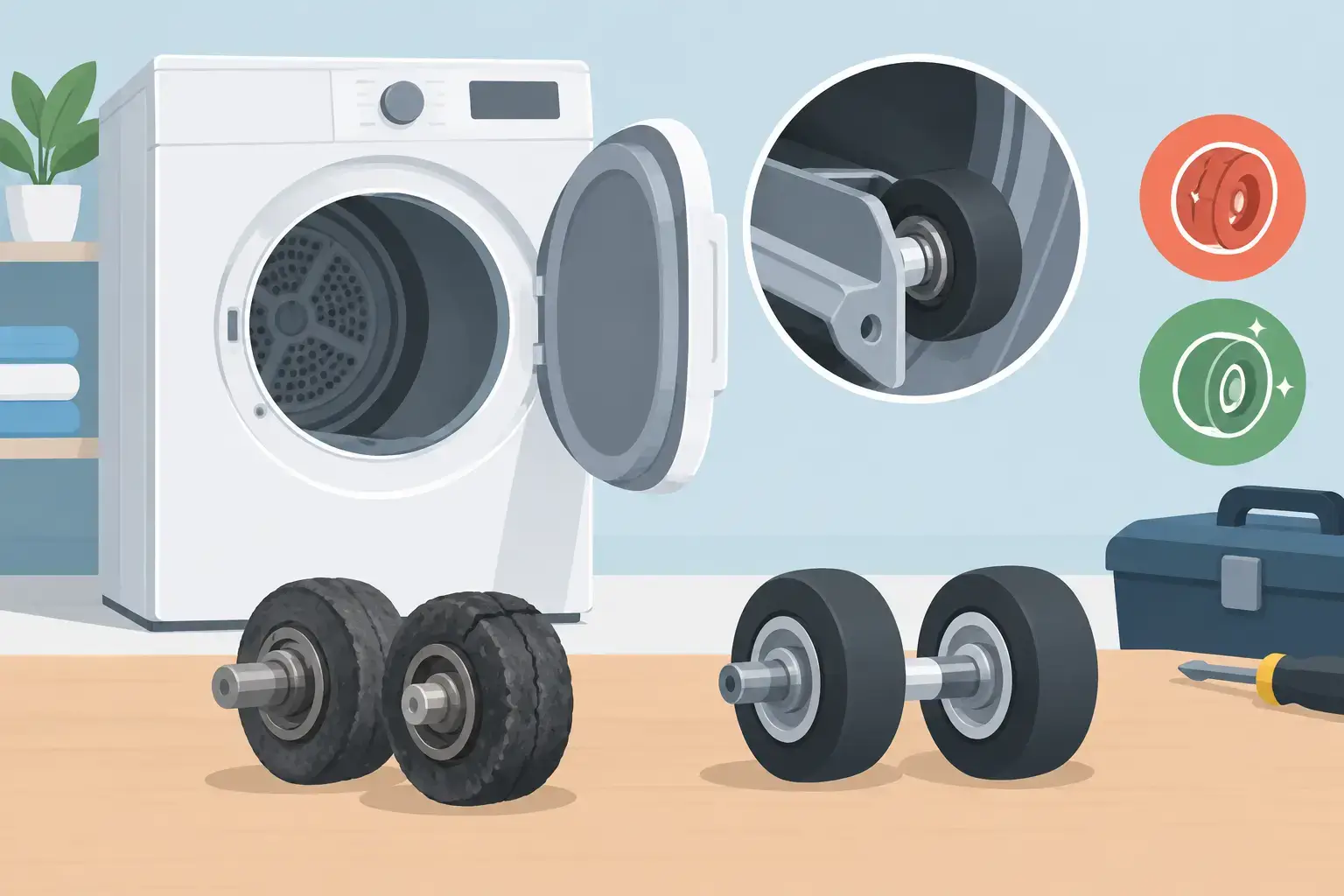
A dryer that suddenly thumps, squeals, or rumbles can make a normal laundry day feel like a breakdown waiting to happen. Knowing when to replace dryer rollers can help you address the noise before a worn support part damages the drum, drive belt, or other internal components. For Orange County households that rely on a dryer every day, an early repair is often simpler and less expensive than waiting until the appliance stops turning altogether.
Dryer rollers are small wheels that support the drum as it rotates. They do not get much attention when the dryer is working normally, but they carry a significant load with every cycle. Over time, heat, lint, moisture, and ordinary wear can cause the rollers to flatten, bind, crack, or lose their bearings. The result is usually a dryer that is louder, rougher, and less reliable than it used to be.
When to Replace Dryer Rollers: The Main Warning Signs
The clearest sign of worn dryer rollers is a repetitive thumping sound that follows the drum’s rotation. You may hear a bump every few seconds, especially when the dryer first starts. This often happens when a roller develops a flat spot and no longer turns smoothly under the weight of the drum.
A high-pitched squeal, scraping noise, or low rumble can also point to roller trouble. Squealing may come from a roller bearing that is drying out or failing. A scraping sound can occur when a damaged roller allows the drum to sit unevenly and rub against surrounding parts. Not every dryer noise means the rollers are at fault, but persistent sounds should not be ignored.
Pay attention to changes in how the drum moves. If the dryer shakes, vibrates more than usual, takes effort to start turning, or appears to wobble, the support rollers may be worn. Clothes may still dry at first, but continued use can place added strain on the motor and belt.
You should also schedule an inspection if the dryer drum will not turn but the appliance still hums or produces heat. A broken belt is one possible cause, but seized rollers can contribute to that failure by making the drum too difficult to rotate.
Why Worn Rollers Should Not Be Put Off
It is tempting to keep using a noisy dryer if it still produces heat. However, dryer rollers rarely improve on their own. Once a roller is worn or binding, every cycle adds friction and stress to the machine.
That extra resistance can wear down the drive belt prematurely. It can also overwork the motor, affect the drum seal, and create rubbing that damages adjacent components. What begins as an occasional thump may eventually become a dryer that stops mid-load, leaves clothing damp, or cannot turn at all.
There is also a practical issue for busy households. A dryer failure has a way of happening at the worst time – before work, after a child’s sports practice, or when guests are coming over. Addressing unusual dryer noises early gives you more control over the timing of the repair.
How Long Do Dryer Rollers Usually Last?
Dryer roller life depends on the model, how often the appliance is used, the size of regular loads, and how well the dryer is maintained. Many rollers last several years, and some can last much longer. A dryer used by a large family every day will naturally wear support parts sooner than one used once or twice a week.
Overloading matters as well. Heavy loads, including towels, bedding, and large comforters, place additional weight on the drum and rollers. That does not mean you should never dry bulky items, but consistently packing the drum too full can shorten the life of internal moving parts.
Lint buildup and restricted venting can make matters worse. When a dryer runs hotter or longer than it should, the internal components are exposed to more heat. Cleaning the lint screen after every load and maintaining proper exhaust venting supports the dryer’s overall performance, though it cannot reverse roller wear that has already occurred.
Can You Replace Only One Dryer Roller?
A technician may find that only one roller is visibly damaged, but replacing the full roller set is usually the more dependable repair. The rollers have experienced the same age, heat, and operating conditions. Installing one new roller beside an older, worn roller can leave the dryer uneven and may mean another repair is needed soon after.
The same approach can apply to related parts. If the belt shows cracking or glazing, or if the idler pulley is noisy, it may make sense to address those components during the same service visit. This is not about replacing parts unnecessarily. It is about making an honest recommendation based on the condition of the dryer once it is opened and inspected.
The right decision depends on the dryer’s age, the specific failure, parts availability, and the condition of the motor and drum. A clear estimate should explain what needs to be repaired now and what can reasonably wait.
Dryer Roller Noise vs. Other Dryer Problems
Several dryer components can create sounds that seem similar from outside the cabinet. A worn idler pulley often causes a sharp squeal. A damaged blower wheel may create rattling or knocking. Foreign objects, such as coins, bra wires, or buttons, can make scraping noises as they move inside the drum area.
The drive belt can also squeak, slap, or fail completely. On some dryers, drum glides, felt seals, or rear bearings wear instead of the roller system. Premium and specialty dryer models may use different drum support designs, so assumptions based on a generic noise can lead to the wrong repair.
That is why a professional diagnosis is helpful. Accessing dryer rollers generally requires disassembling part of the appliance cabinet. An experienced technician can inspect the rollers, belt, pulley, blower housing, and drum support system together, then identify the actual source of the problem. This helps avoid replacing a part that was not causing the noise.
What to Do Before Your Dryer Is Inspected
If the dryer is making a mild, occasional noise but still operates safely, avoid overloading it and pay attention to whether the sound becomes more frequent. Note when the noise occurs: at startup, only with heavy loads, throughout the cycle, or as the drum slows down. Those details can help narrow the diagnosis.
If you hear loud metal-on-metal scraping, smell burning rubber, notice smoke, or the dryer struggles to turn, stop using it. Unplug an electric dryer if it is safe to do so, or turn off the appliance and arrange service. Continuing to run a severely damaged dryer can turn a repairable issue into a larger mechanical problem.
Do not attempt to lubricate rollers from outside the dryer. Household lubricants can attract lint, create residue, and fail under dryer heat. The proper repair is to inspect the support assembly and replace worn parts with components made for your specific model.
Professional Dryer Roller Replacement in Orange County
Dryer roller repairs are commonly completed in the home once the correct parts are available. A trained technician can determine whether the rollers are the problem, inspect related wear items, and provide a clear estimate before work begins. For standard, premium, and luxury dryer brands, correct diagnosis and compatible factory parts are especially important.
AK Appliance Repair helps Orange County homeowners restore noisy or unreliable dryers with convenient in-home service, honest recommendations, and repairs designed to get the job done right the first time. The $75 service fee is waived when you proceed with a repair.
A thumping dryer does not always need to be replaced. Often, it is asking for attention before a small support issue becomes a laundry-day interruption. Scheduling service when the sound first becomes consistent can protect the dryer, reduce inconvenience, and help keep your household routine moving.